Full article about Carregado & Cadafais: Where Locomotives First Stalled
Ride into Carregado-Cadafais, taste sun-warmed Lisboa wine beside the Tagus rail cutting
Hide article Read full article
Where the trains first faltered
The whistle precedes the engine by seconds. At rush hour the Lisbon-Porto line slices through Carregado every quarter of an hour, a silver blade across ochre earth. On 28 October 1856, in the cutting known as Vala do Carregado, Portugal’s maiden locomotive gave up the ghost; the brass plaque recording the event is bolted to a warehouse wall behind platform 2. Today the station dispatches 600,000 passengers annually, yet the ticket office is staffed by exactly two people who share one swivel chair.
A name earned by weight
“Carregado” literally means “loaded”. In the eighteenth-century Tagus barges beached here, transferring casks of olive oil and crates of glazed tiles onto ox-carts bound for Torres Vedras and the Spanish frontier. Until the 1970s Raposeira’s sparkling-wine cellars ran a private siding; empty bottles rattled straight from freight wagons into bottling halls perfumed with yeast and cork dust. Upgraded to town in 1997, Carregado merged with Cadafais in 2013, producing a parish of 14,622 souls: 2,563 under fourteen, 1,987 over seventy. The arithmetic is visible—three primary schools at capacity, a health centre with queue-snaking corridors, fresh-rendered apartment blocks marching north towards the A1.
Vines in sun, pears in shade
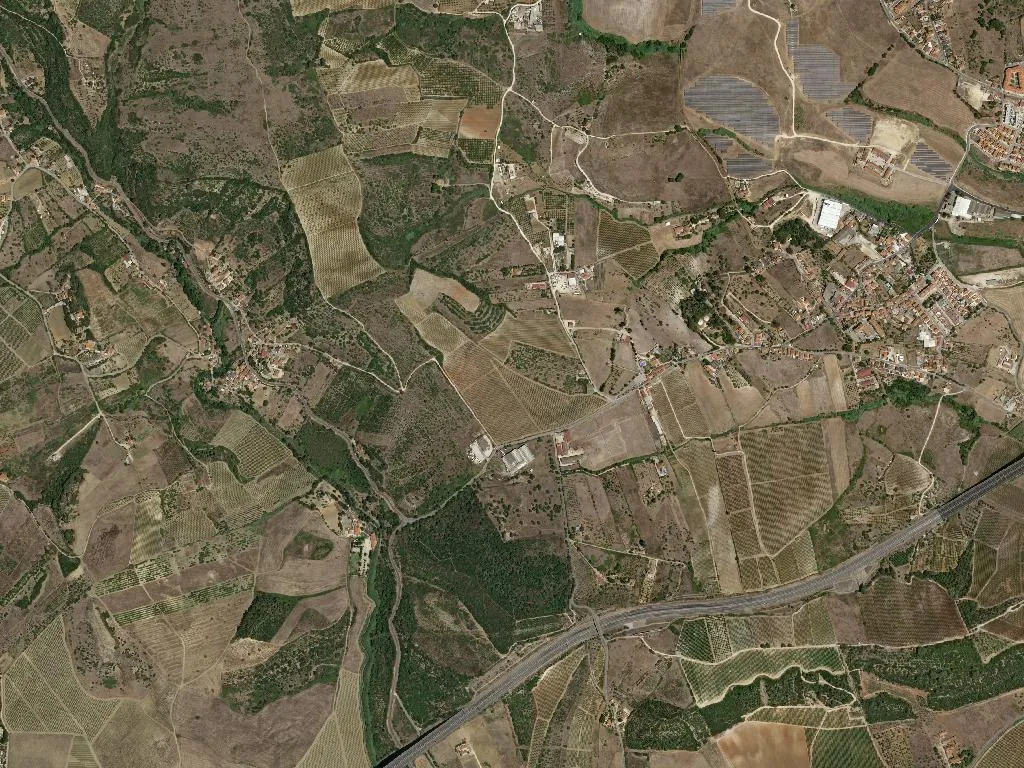
2,470 hectares remain under cultivation. Vineyards claim 40%, orchards 35%. Pêra Rocha do Oeste, the DOP pear, is hand-picked between 15 August and 30 September; co-ops pay €0.35 a kilo for grade-45 fruit. The wine carries the Lisboa VR seal and retails at €3–4 on the supermarket bottom shelf. Quinta do Carregado opens at 10:30 each Saturday: €7 buys a walk through stainless-steel vats and three glasses in the stone cistern. No reservation, no gift shop.
A flat pilgrim detour
The Torres Way, the medieval route from Lisbon to Santiago, detours through Carregado, crossing the motorway on a graffiti-scrawled footbridge and exiting 4 km later at Cadafais. Ninety minutes of shadeless plain; the yellow arrow is painted on the roundabout tarmac, already tyre-erased. Beneath the topsoil lies Miocene limestone—five-million-year-old oyster fossils surface in road-cuttings after winter storms.
Beds are scarce: six Airbnb flats (€45–65), three rooms on a Cadafais fruit farm (€30 with coffee and toast). The Hotel Carregado’s 30 rooms shutter whenever the industrial park has nothing to conference.
A town that keeps time by the timetable
At 17:30 Dr Joaquim Rocha street clogs with parents collecting children from the trio of primaries. Pingo Doce pulls its shutters at 21:00, Intermarché at 22:00. Tropical café has served espresso for €0.65 since 1998; the cup is warm, the spoon stainless, the gossip vintage 1974. In Cadafais the solitary café unlocks at 06:00 for fruit pickers, closes at 19:00 sharp. Miss the 23:45 to Santa Apolónia and you face a €40 taxi ride through the dark.
No castle, no miradouro, no souvenir tiles. Instead, a place that functions: pears boxed before dawn, wine bottled by noon, teenagers on the 07:18 to Lisbon, back by dusk because a two-bed flat here costs half the capital’s rent. When the 01:30 freight groans past, no one stirs; the whistle is simply the town breathing.