Full article about União das freguesias de Ribafria e Pereiro de Palhacana
Stone crosses, cold streams and wild pears bind Ribafria and Pereiro de Palhacana in quiet union.
Hide article Read full article
Two villages, one parish, one afternoon
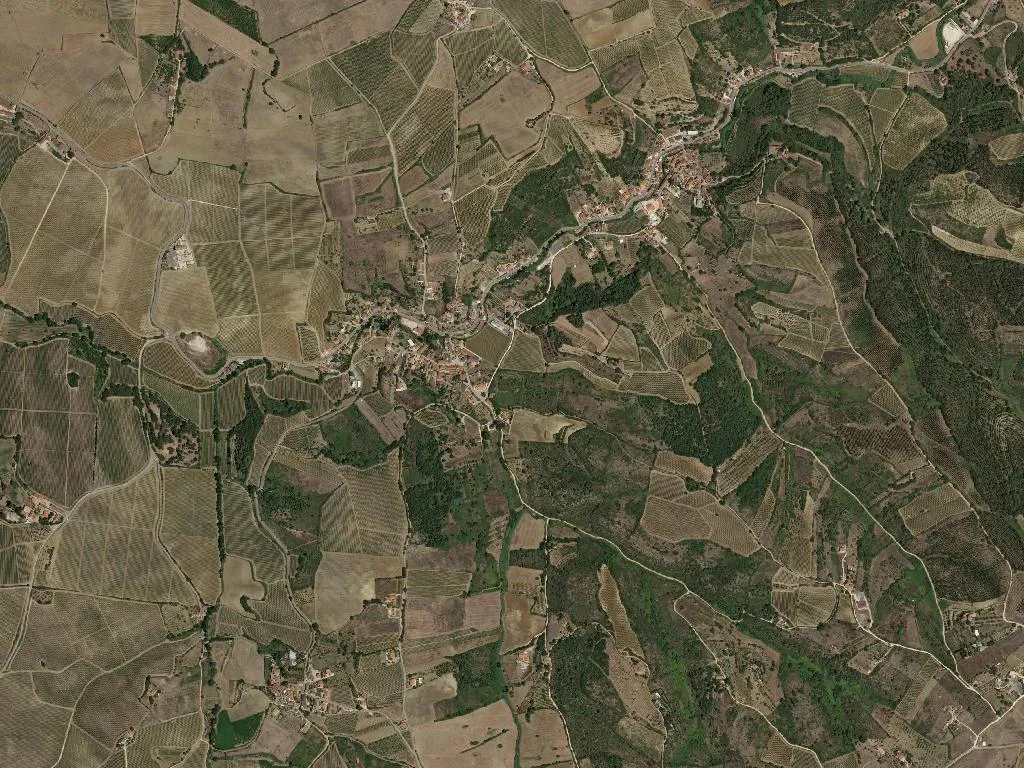
The western light turns the church walls the colour of bone. In Pereiro’s tiny square a stone cross tilts, its carvings rubbed illegible by 300 years of thumbs and Atlantic weather. A pear drops somewhere beyond the wall with a soft thud; the scent that rises is half fruit, half earth, like Calvados spilling on damp soil. This is the moment when the Serra de Montejunto loosens its grip and the land exhales into the Ribatejo plain, leaving two hamlets—Ribafria and Pereiro de Palhacana—still using separate footpaths even though the parish council files have called them the same place since 2013.
Paper marriage, living apart
Ribafria was only formalised in 1989 after nightly negotiations in Sr António’s front room—the one house that owned both headed notepaper and a rubber stamp. The name first surfaces in a 1483 charter as “Soriba Fria”, probably a nod to the ice-cold stream that still divides kitchen gardens. Pereiro, meanwhile, takes its title from the wild pear trees that colonise the watercourses. Until 1928 the mother church stood in Palhacana, now reduced to two cottages and a peeling sign that reads “Community Centre”. Lisbon’s bureaucrats merged the trio, yet locals still speak of “going up to Ribafria” or “coming down from Pereiro” as if crossing an internal border guarded only by scent and memory.
Churches that keep time without clocks
Inside Ribafria’s Igreja de Nossa Senhora do Egipta the air is weighted with beeswax and lavender starch. Whitewash throws the daylight back like a shallow ford. Palhacana’s São Miguel keeps its bell tethered with fencing wire—silent since Manuel plummeted from the belfry in 1997. A 10-minute scramble through cork oak brings you to the Convento de São Jerónimo do Mato, a 16th-century hermitage now being digested by its own olive grove; trunks burst through rose-pink limestone as though the trees were impatient bones. No guides, no turnstiles, just the hush of former liturgy replaced by blackcap song.
What the soil actually produces
The pear orchards march in drill formation, but the wind calls the rhythm. When the Rocha pears ripen, the ground turns to a green-gold mosaic; farm dogs gorge and stagger about in mild alcoholic stupor. Labels on the export crates read “Pêra Rocha do Oeste, DOP”, yet here the fruit is simply “a pêra” and eaten leaning against the tractor. Below the terraces, vines trained on low stakes give Arinto and Fernão Pires that will be co-fermented at the Alenquer cooperative and drunk, unlabelled, at Sunday lunch by the same hands that picked it.
Tracks that lose themselves on purpose
The Caminho de Torres—the old pilgrimage haul from Torres Vedras to Santarém—crosses the parish without signage. Instead, faint cairns of white quartz mark the route; most are toppled by cattle itches. Walkers looking for refreshment are directed to “the café”, unaware that it closed the day Dona Fernanda died in 2018. Ribafria’s coat of arms carries a cross whose origin no one can cite; Pereiro’s shows a windmill whose only remnant is a stone base now doing duty as a goalpost. José Gomes Castelo, the 19th-century philanthropist who endowed Lisbon’s foundlings, was born in a long-vanished manor here; the lane to the site is still signed “Caminho do Castelo”, though the castle is scrub and rumours.
What remains when the day leaves
Dusk warms the stone to the temperature of skin. The silence is not empty—it is the small orchestra of leaves shifting, a distant chainsaw, the terrier next door announcing the tractor’s return. The cross-shadow of Pereiro’s calvary creeps across the dust like a gnomon, telling a time measured only by hunger and shortening light. Between vineyard and pear row the same wind carries the same October it has always carried: a smell of caramelised orchards and unspoken farewells, the unmistakable signature of a place that will still be here when every map has forgotten how to name it.