Full article about Ventosa: Fossil-Crusted Hills & Pear-Scented Lanes
Granite cottages, schist vineyards and PDO Pêra Rocha pears above Alenquer’s Cretaceous seabed
Hide article Read full article
Where the granite keeps the conversation
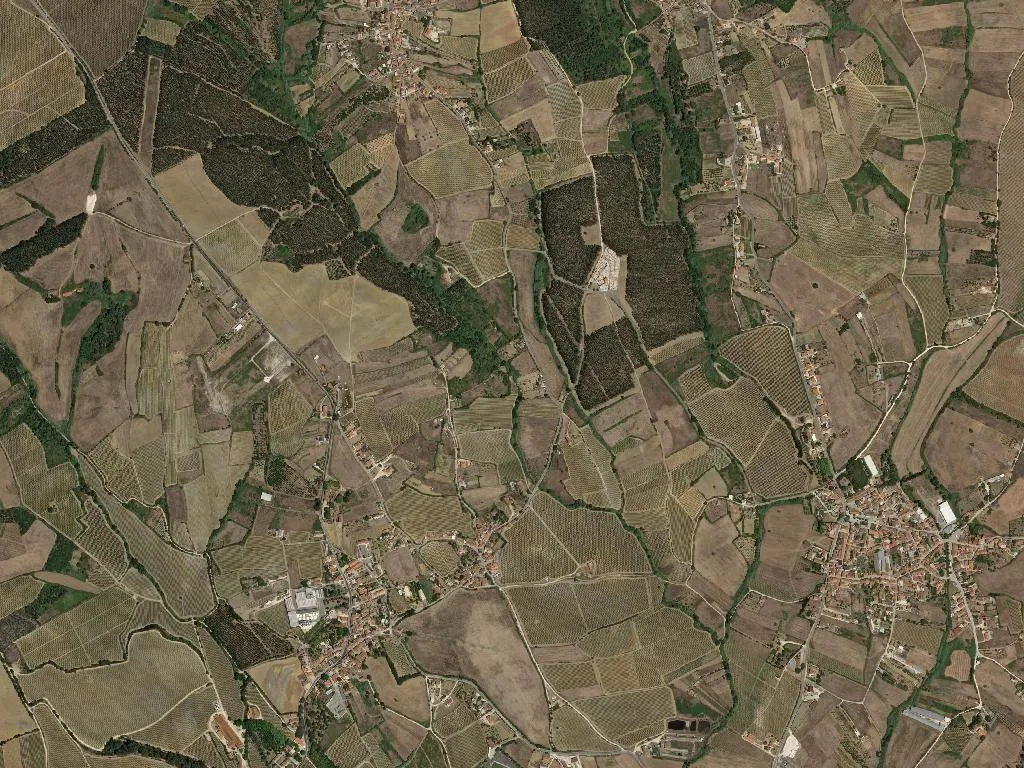
Granite walls shoulder the late sun like an old man prolonging a story. Ventosa, 105 m above sea-level, spreads across seven folds of limestone that were once a Cretaceous seabed—farmers still turn up fossilised cockles when they plough for barley. Two thousand people live here, all of whom fit, standing-room-only, into Zé’s café when the parish saint’s day rolls around. Twenty-two square kilometres is just enough for the wind to gather Atlantic salt on its way inland and for neighbours to recognise the flap of each other’s sheets on the line.
Stone with a memory
This is the Lisboa wine region, but forget glossy estates with bilingual websites. The vineyards are family handkerchiefs stitched into schist terraces that look more like land-art than agriculture. No railway of river-cruise coaches; instead, a cousin trims the vines at dawn and knows every row the way she knows her grand-daughter’s handwriting. The reds will never see Decanter, yet they rescue any autumn lamb stew; the whites taste of iron soil and sudden showers.
Queen of the parish is Pêra Rocha, the PDO pear that ripens to a waxen glow. September tractors nose-to-tail along the lanes carry crates that smell of russet and bee-stung skin. Buy at the gate and you pay half Lisbon market price—plus a five-minute forecast of rain and the current state of Sporting’s defence.
Walking through centuries
The Torres pilgrim trail cuts across the parish, but don’t expect trekking poles and hydration bladders. More likely you’ll meet António and his mongrel doing the daily bread run. Granite way-markers are still carved with the scallop shell or the mason’s initials; the path is locals’ cardio rather than bucket-list fodder—though a lost German once asked for water in textbook Portuguese.
Ninety residents per square kilometre means your “Bom dia!” comes back as echo. Houses sit at conversational distance; privacy is theoretical. The primary school enrols twenty-odd pupils—when the bell rings at four, the whole village exhales: grandparents heat milk, Maria biscuits wait on tin plates.
Taste of territory
Daily cooking never saw a stylist. Pêra Rocha slips into jam, into tarte fine, into rice-pudding when the cook feels theatrical. Lamb is reared two fields back on rosemary and wild thyme, so the flavour arrives before the herb rack does. The roadside winery’s house red could thrombose a bishop—still, it costs five euros a litre if you bring your own plastic flagon.
Nine beds are scattered through small guest rooms. Check-in is a front-door key and the instruction: “Neighbours are there—shout if you need.” Dawn starts with an ink-black coffee and bread that melts hand-churned butter faster than you can spread it. Breakfast lasts as long as it lasts; no one stands up to go.
The sun clocks off without hurry. The church bell fires six rounds that dissolve among the vines. A van raises a brief chalk cloud that settles on the orchards. On the breeze comes the sweet, metallic scent of must from a quinta where grapes are still trodden barefoot. Ventosa refuses to be a city, and time—slow, deliberate, entire—keeps its own counsel between stones that have outlasted pears, wines and every generation that leaves, stays, or quietly finds its way back.