Full article about Vila Verde dos Francos: Limestone, Wine & Silence
Morning mist lifts over fossil-rich terraces where Arinto vines root into ancient seabed
Hide article Read full article
Morning light on limestone terraces
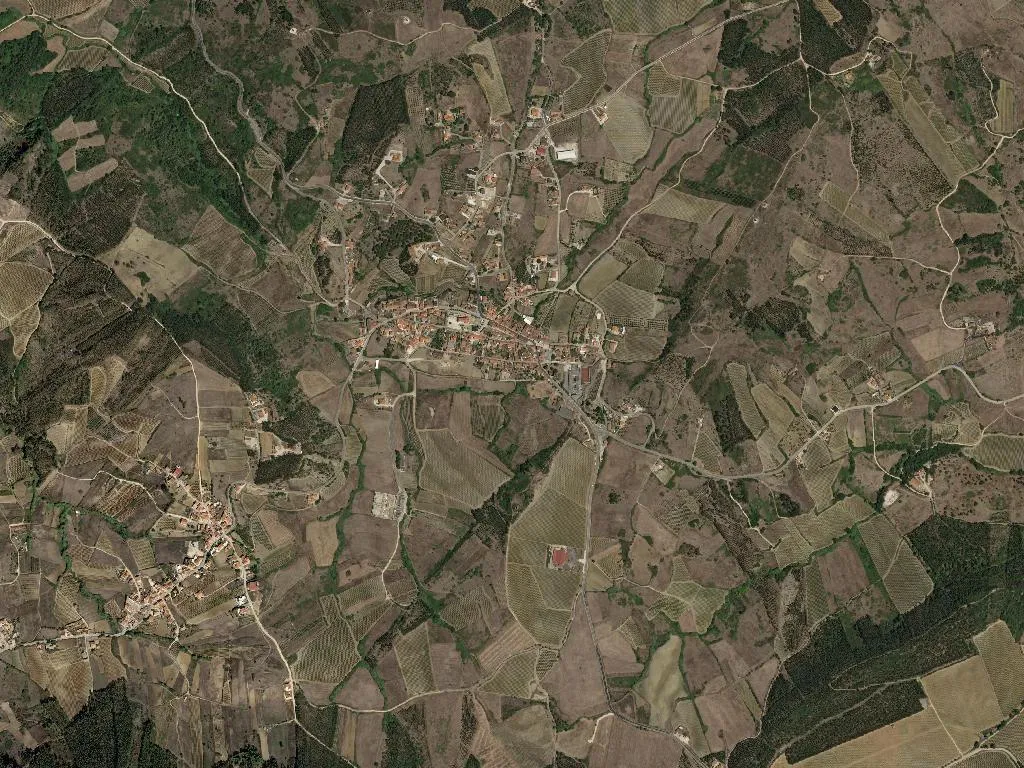
The first sunbeams slice through the valley mist, exposing a chequerboard of vines stitched across soft hills. At 186 m above sea level the air smells of damp earth and crushed leaf—an aroma that only exists between rows of vines still wet with dew. Vila Verde dos Francos spreads over 2,813 ha where white limestone benches jut from the soil, fossil evidence that the Atlantic once lapped here. Today the territory is part of the 1,900-sq-km UNESCO-listed Oeste Geopark, recognised in 2022.
The Frankish imprint
A parchment from 1258, the Inquirição of Afonso III, records the place as “Villa Verde de Francos”. The “Franks” were free settlers—mostly Galicians and Leonese—who answered 12th-century calls by King Sancho I to till the land in exchange for royal charters. Their legacy survives less in documents than in the limestone-and-schist church of São Lourenço, listed in 1982. Its disproportionate scale for a village of 1,049 people underlines how population has ebbed: 295 over-65s to 116 children, a ratio that betrays the rural exodus of the 1960-80s.
Wine and pears
The Lisboa wine region shapes every slope. Rows of arinto and touriga nacional follow the sun, roots digging into the same limestone that gives Quinta do Monte d’Oiro’s reds their iodine snap—Parker 92-point wines born 4 km from the village centre. Pears also thrive: 45 ha of Pêra Rocha do Oeste DOP orchards supply Peniche fishmongers and Rungis market in Paris. Come August, pickers load crates into refrigerated lorries while the air is thick with warm fruit and diesel.
Footsteps to Santiago
The Caminho de Torres, a Portuguese detour to Santiago, crosses the parish for 3.2 km. Annual footfall is barely 150, so your only companions are stonechat birds and the occasional tractor. The path runs between schist walls upholstered with polypody ferns; waymarks are yellow arrows painted on electricity posts. No cafés, no hostels—just the sound of your boots on packed clay.
Where to stay, what to eat
Tourism here is measured in single digits. Three houses—Casa do Largo, a 2018 restoration of a baker’s townhouse; Quinta do Covanco, a working vineyard stay; and Casa da Eira, a threshing-floor cottage turned studio—offer a combined eight rooms. Breakfast is a €3 affair at O Padrão: galão coffee and a papo-seco straight from the village oven. Sunday lunch means Adega Regional’s wood-oven kid goat, preceded by serra goat’s cheese and a glass of Quinta do Monte d’Oiro Reserva 2018, the pear still sun-warm in your other hand.
Afternoon light stretches the vine shadows into long stripes. A whitewashed wall turns honey-coloured, the temperature drops a degree, and the countryside exhales. Nothing else happens—and that is the point.