Full article about Dust, vines and thistle roots in Cardosas
Ochre roads, olive-gold dusk and home-poached eggs in Arruda’s tiniest parish
Hide article Read full article
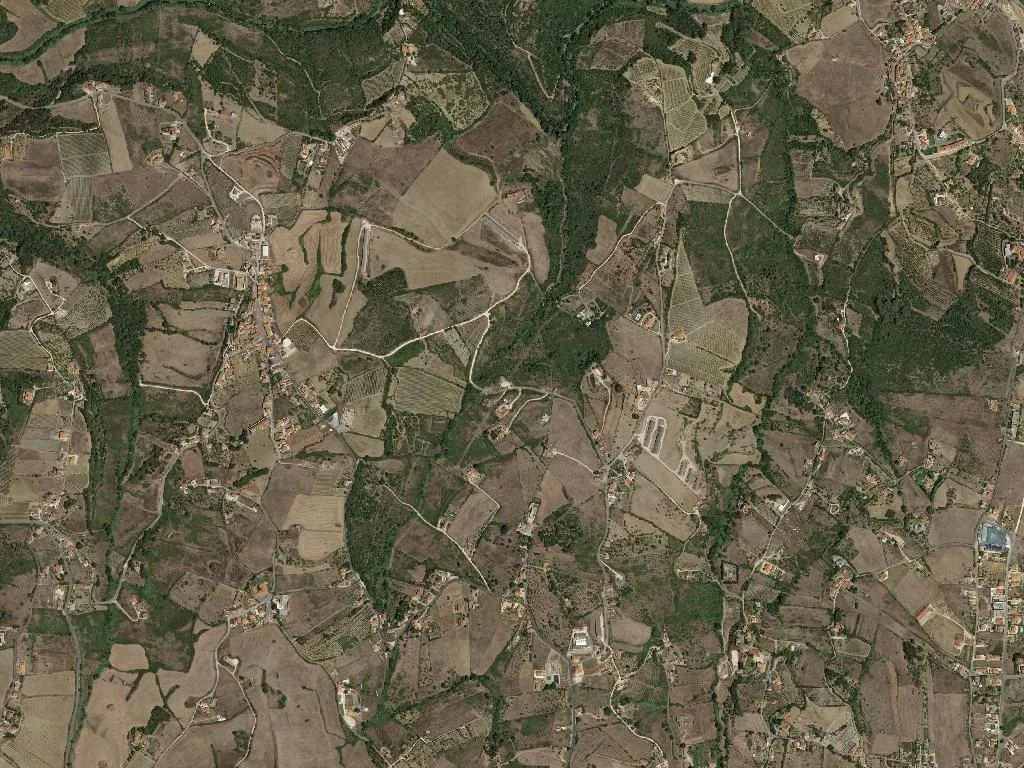
Every vehicle that passes through Cardosas lifts a pale ochre haze. The dust settles on the lower limestone walls and on the forward-leaning vines that stripe the hills at 122 m above sea level. When the sun drops, the olive groves smelt into gold and the afternoon feels momentarily weightless, as though someone has loosened the screws on time.
How the thistle christened the village
The name travels straight from Latin carduus—the spear-leaved thistle whose dried stems still rattle along the verges in winter. No royal charter marks Cardosas’ birth; parish archives simply thicken during the 1600s as families began measuring wealth by the hectare of vineyard, olive terrace and wheat plot they could coax from the clay. The settlement never outgrew its footprint: 601 ha, the smallest civil parish in Arruda dos Vinhos. Today 819 residents occupy a scatter of single-storey houses and freshly rendered villas, negotiating a quiet demographic seesaw—227 pensioners, 105 under-25s—made possible only because the A10 and A1 motorways haul commuters to Lisbon in 35 minutes. They leave at dawn, return after dusk, and still find someone willing to poach an egg in rich tomato rice when they walk back through the door.
The discreet geology of a UNESCO Geopark
Cardosas lies inside the Western Geopark, 2,600 km² of limestone, sand and basalt given UNESCO status for its textbook sedimentary stories. Yet drama is in short supply here: no limestone cliffs, no corkscrew river canyon—just a lullaby of low ridges stitched with vines and interrupted by pocket-sized oak-and-pine barricas. Farmers use the dirt tracks; walkers may borrow them. There are no glossy panels, no Instagram decks—carry water, because the nearest coffee is 3 km away and the owner locks up on Mondays.
Wine, Rocha pear and fighting-bull beef
The parish belongs to the Lisboa wine region, and every second holding seems to ferment its own red from the local Aragonez or Touriga Nacional. Look beyond the bottle, though, and two DOP products dominate Saturday shopping lists. Pêra Rocha do Oeste—the pear with the freckled skin and granite-crisp bite—arrives at Arruda market in 5 kg paper sacks. Less delicate but more talked about is Carne de Bravo do Ribatejo DOP, the almost burgundy flesh of fighting bulls retired from the arena. When a neighbour slaughters, half the village queues with newspaper and a cloth bag; the meat is hung just long enough to intensify its mineral, iron-rich taste.
Way-marked only by thistles
Cardosas is not a pilgrimage target, yet one of the Portuguese routes to Santiago threads through its fields. The Torres leg leaves Lisbon cathedral, crosses the Tagus at Vila Franca de Xira and limps into Cardosas after 28 km of hard agricultural track. There is no hostel, no yellow arrow sprayed on stone—only a beaten earth path arrow-straight between wheat stubble. Most walkers stumble on, but if you stop, the Café da Rotunda on the square will pull an espresso (€0.60) and refill a water bottle without comment. Outside, dry thistle heads click in the wind like castanets, keeping slow, stubborn time for a parish that refuses to hurry.