Full article about S. Tiago dos Velhos
Footsteps echo on medieval limestone where monks, pilgrims and pear orchards share the breeze.
Hide article Read full article
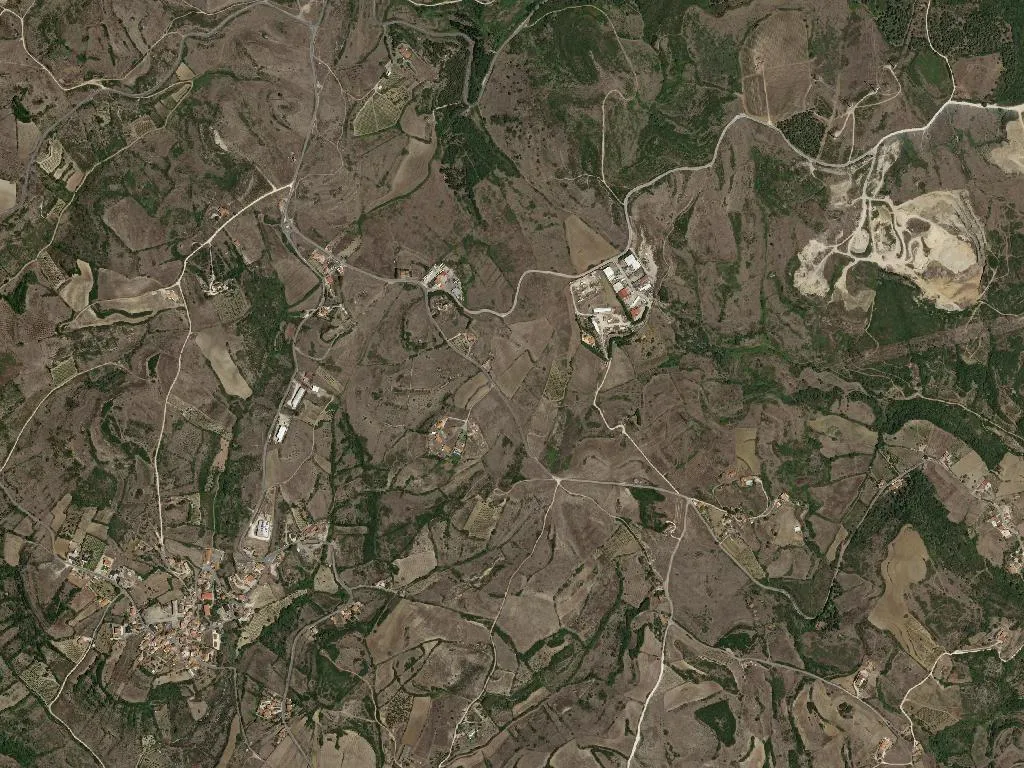
The air at 350 m on the Serra de Arganil ridge is thick enough to muffle a tractor. Stand still and you’ll catalogue the soundtrack of S. Tiago dos Velhos: a gate hinge, water slopping against the lip of a stone tank, your own boots scuffing the calcada that zig-zags to the parish church. Only 1,289 souls share sixteen square kilometres here, giving every smallholding – quinta – its own wedge of horizon over the Ribatejo hills.
Of elders and wayfarers
Nobody can prove why the place is called “dos Velhos” – of the elders. Local memory insists it was once a retreat for grey-bearded monks or simply a village where time is counted in generations, not seasons. The other half of the name is clearer: the church is dedicated to St James, patron of pilgrims. The Caminho de Torres, the lesser-known inland branch of the Portuguese Way, still crosses the parish on its westward haul to the Atlantic. Medieval feet, Napoleonic boots and today’s carbon-fibre walking poles have all pressed the same limestone dust into print.
The church itself, begun in the early 1500s and given a Baroque facelift two centuries later, keeps its Manueline sacristy intact. Outside, a 1732 crucifix marks the spot where coffins once rested before burial; the practice ended only when the cemetery was enlarged during the First Republic.
Vines, pears and fighting bulls
This is agricultural terrain, not scenery. Vine rows rule the gentler slopes, their roots in the same limestone that warms the Geopark Oeste. Come September the cooperativa in Arruda receives tonnes of fruit for its “Quinta do Convento” label, fermented in stainless steel but still trodden by foot at a handful of family lagares.
Orchards of Pêra Rocha do Oeste DOP sit in wind-sheltered pockets; bite into one and you get the snap that once pleased George V’s fruit merchant at Covent Garden. At table the district’s Carne de Bravo do Ribatejo DOP takes over – long-stewed in clay pots over holm-oak embers, its flavour deepened by the animals’ open-range life among the stone-pines. The winter soup is açorda ribatejana: yesterday’s bread, garlic crushed with a river stone, coriander from the irrigated allotment and a softly poached egg. Locals pair it with a tinta roriz-heavy red that clocks in at a modest 12.5 % – civilised lunchtime strength.
Footpaths that outnumber people
Three signed routes radiate from the church, but the best walking is on the unsigned goat tracks that link smallholdings. One climbs past Quinta do Covão, where the Cortes family has bottled red for five generations; another skirts the Eira da Serra, its circular stone threshing floor now a silent stage for barn owls. A third drops to the 1897 Chapel of Nossa Senhora da Conceição, azulejos still cobalt under the eaves.
With only eighty residents per square kilometre you can hike for an hour and meet no one. When contact occurs it is ceremonious: a lifted chin, a murmured “bom-dia”, sometimes an invitation to taste the new wine from a chilled garrafa de boca larga kept next to the spinach. Sunset ignites the whitewash pink and ochre; the village shows itself for what it has always been – not a destination, but a pause between two horizons measured in harvest memory rather than miles.