Full article about Alcoentre: Where Rice Fields Meet Pilgrim Dust
Roman drains, Moorish ditches and stork-guarded hayricks quietly shape Azambuja’s village.
Hide article Read full article
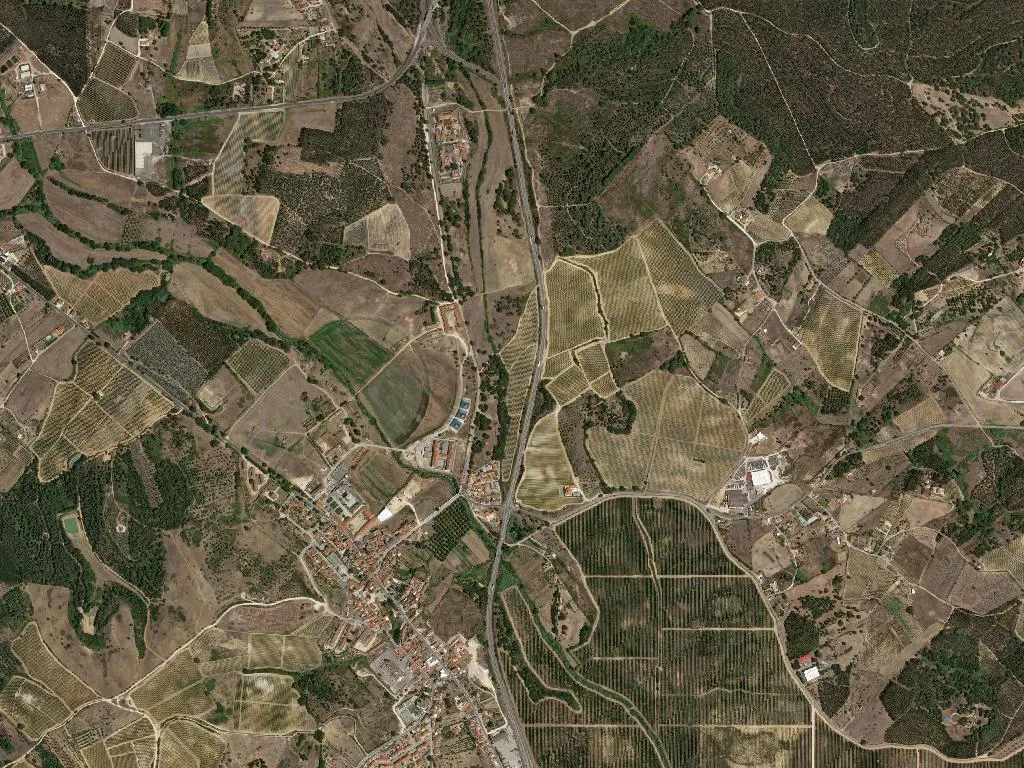
A pale ribbon of dust lifts from the lane as a line of pilgrims passes, the first walkers since dawn. Two hours earlier the rice growers had already sloshed into the paddies, adjusting the floodgates that keep the Carolino stalks ankle-deep until September. Beyond their boots the Ribatejo plain unrolls — not dramatic, simply obstinate — olive groves, storks on lamp posts, and the occasional thatched hayrick that looks as though it blew in on a south-westerly and forgot to leave. Alcoentre never announces itself; it accumulates, like the silt that widens the Tejo every century.
A place people pass through, then stay
Royal charters date the village to 1256, but the Romans were here first, calling it Alcuntre and leaving behind drainage tiles still unearthed by ploughs. The Moors refined the irrigation, turning marsh into pay-cheque. At 71 m above sea-level the land invites rather than intimidates: pilgrims heading north to Santiago, seasonal rice cutters from Santarém, Lisbon weekenders curious about provenance labels in Fortnum’s. All of them tread the same grid of farm tracks the grain wagons once followed to the threshing floors.
Architecture that knows its job
The parish church squats exactly where it should — between the only café and the only pharmacy — its limestone bell-tower classified since 1984, which means the council can’t replace it with a roundabout. Around the fields, chapels appear at crossroads or property lines where a promise was made and duly fulfilled: Senhora da Saúde for fevers, São Lourenço for the harvest. Farmhouses are rammed-earth, walls sixty centimetres thick that keep July heat outside and January wood-smoke inside. The hayricks are fewer now; some have become Airbnb pods with wi-fi, others elegant ruins for fashion shoots where cracked timber and flaking whitewash read as “authentic”.
The taste of the lezíria
Order arroz malandrinho in the single restaurant and you receive a shallow lake of Carolino rice, duck confit and a rim of coriander bright as jade. Lampreia season is March; the eels arrive from the Tejo estuary, bled, marinated in their own reduction, then folded into the same rice so the grains gloss purple. Olive oil is pressed 4 km away at Zé’s mill, cold and peppery enough to make you cough. Lamb comes from the Bravo do Ribatejo herd, a breed once used for bull-herding now valued for marbling. For pudding the pears are Rocha, freighted in from the west, but no one holds the journey against them.
Walking at the paddock’s pace
The paths were cut for tractors and schoolchildren, not for hikers; that pilgrims now use them is a bonus. The Central Portuguese Way is marked by intermittent yellow arrows painted on stone — after heavy rain you simply follow the logic of the dykes instead. Spring brings emerald rice shoots mirrored in still water; by late June the heads droop gold; winter fields are black and resting. Climb the low ridge of São Lourenço at dusk and the Tejo becomes a steel ribbon, the Atlantic a rumour beyond the haze. When Adelino parks his John Deere and the café dog curls across the threshold, the village exhales — not into silence, but into the satisfied hush of work completed before the next cock-crow.