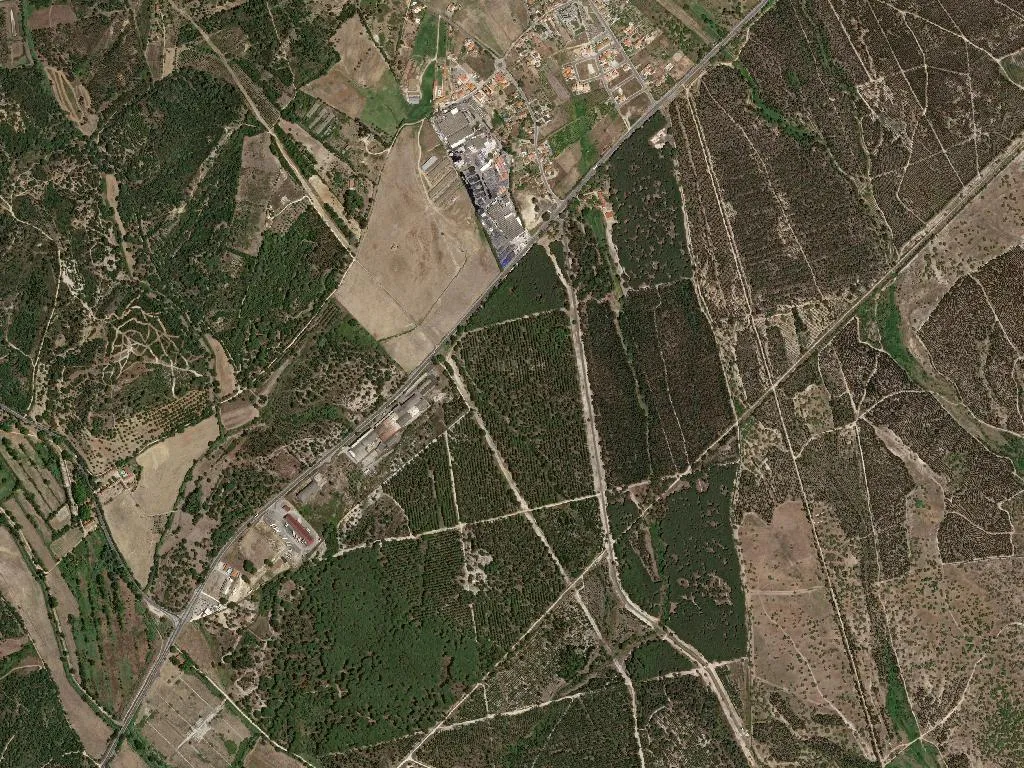
Full article about Aveiras de Baixo: Rice, Ducks & A1 Roar
Sluice-gate dawn, plank bridge, herons clocking in—lowland life on the Azambuja plain
Hide article Read full article
A1, Ducks and Rice: Morning in Aveiras de Baixo
At 09:00 sharp the wind swings north-east and the A1 begins to breathe petrol fumes over the parish. Forty metres above sea-level – one of the lowest shoulders in the Lisbon district – the Ribeira de Aveiras oozes so slowly that mallards stride across the weed instead of paddling. Stone sluices laid out in medieval grids still ration water to the plots: gate lifted at dawn, dropped at dusk. Strangers who ignore the rhythm leave with soaked trainers.
Crossing the Bridge
A single tractor fits on the plank-and-stone bridge that skims the stream. After rain the timbers skate; locals wedge spare boards between the granite to stop the wheels aquaplaning. On the north bank a peeling green gate guards the private track to Casal da Lagoa and the start of the Trilho dos Moinhos. Five kilometres of compacted earth wait until December rains turn them to chocolate mousse – bring proper boots. Fallen eucalyptus is cleared only when someone bothers; expect to detour.
Keys and Tiles
The parish church unlocks at 07:30 for Sunday mass; otherwise it’s shut. Knock at the white house opposite with the blue gate – the key lives there. The smaller Chapel of the Virtues belongs to Sr Joaquim (yellow house, green frames); if his car is in, he’ll let you in. Seventeenth-century azulejos inside are flaking like old paint; resist the urge to finger them.
Mill, Floods and Herons
Casal da Lagoa’s water mill lost its paddle in 1983. The wheel is now wired to the shaft and the wharf rots – keep your distance. Between October and April the rice plots flood; the council plants signs threatening a €60 fine for picking aquatic plants. Grey herons clock in when the tractors clock out: stand on the north bund at 17:00 with binoculars and you’ll count them at 200 m.
What to Buy, What to Eat
Carolino rice – the same short-grain used for arroz doce – is sold in 5 kg sacks at O Cantinho grocery on the old EN3. Price matches the Intermarché in Azambuja, but the grain came from the warehouse across the road. Eels are off the menu: fishing was banned in 2018 after stocks collapsed. For Thursday’s lamb stew, reach Café da Ribeira in Azambuja before 12:30; it sells out. Clay-oven bread is baked in nearby Póvoa: arrive at 06:00 with a basket and exact change.
Yellow Arrows and Power Lines
The Portuguese Way of St James slips into the parish down a wooden staircase bolted to the A1 embankment at kilometre 45. The aerial corridor has missing railings; a gust can bounce your pack like a kite. No bar, no fountain for seven kilometres – carry water. After the level crossing the next yellow arrow is sprayed on a concrete wall; if you lose it, follow the high-voltage pylons that stride across the paddy until a narrower path appears.
Last Train Out
Aveiras de Baixo offers no beds. The final comboio to Lisbon leaves Azambuja at 22:17; miss it and you’re walking. Taxis refuse to come without a prior booking – and at night, they rarely come at all.