Full article about Vale do Paraíso: Sunrise over Tagus rice-mirrors
Where paddy dykes glint at dawn and Camino walkers sip pumpkin jam beneath fig trees
Hide article Read full article
Dawn on the Lezíria
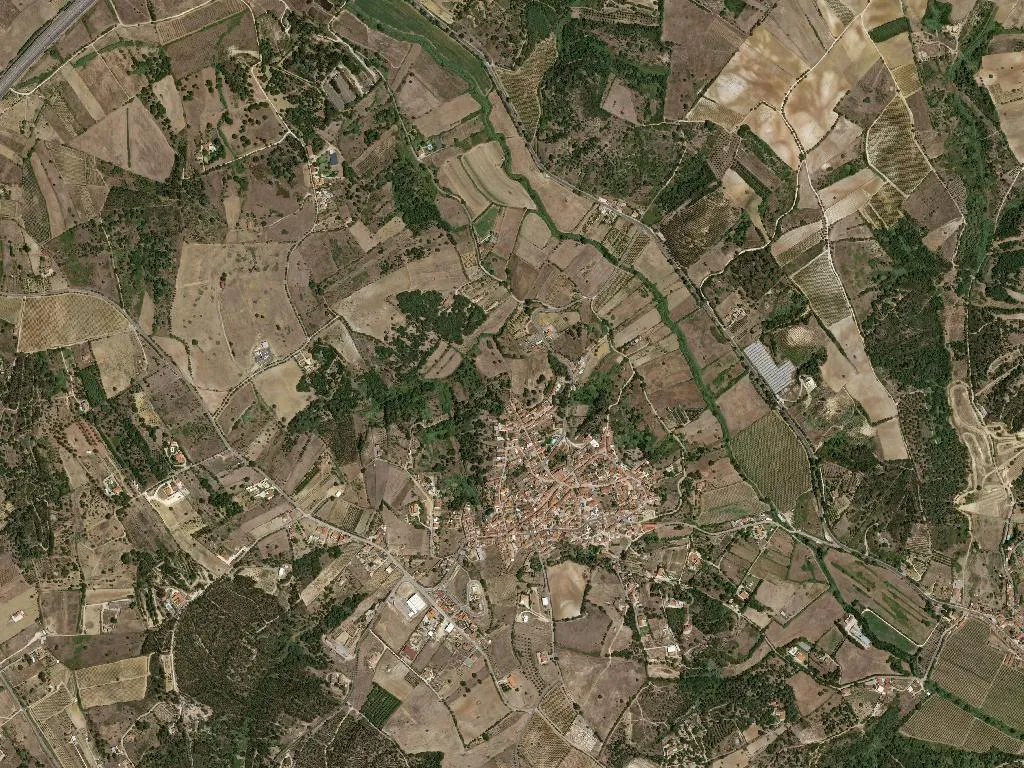
The first light flares across the Tagus flood-plain and hits Vale do Paraíso at a low, theatrical angle, turning the rice paddies into quicksilver. At barely 65 m above sea-level, this wedge of land between Azambuja and the river is the last gasp of flat earth before the Lisbon district begins its roll towards the Atlantic. There is no formal square, no marble fountain to announce you have arrived; instead the parish reveals itself in small, repeated clues—an irrigation ditch running ruler-straight, the sudden reflection of a heron in a paddy, the faint smell of fermented straw that drifts from a threshing yard.
Six hundred and seventy-three hectares are given over to the short-grained, pearly Carolino rice that carries the IGP stamp of the Ribatejo marshes. Locals will tell you, without irony, that it is the only grain capable of absorbing the stock of a proper canja—the restorative chicken broth served when someone has one foot in bed. Beyond the dykes, olive rows give the DOP oil that burns the throat when sipped from a spoon: early harvest, low acidity, the colour of liquid jade. Population density sits at 142 people per km², which translates to farmhouses spaced wide enough for a fig tree, an almond grove and a dog that barks a full minute before you reach the gate.
Footsteps that Refuse to Fade
For every child in Vale do Paraíso there are 2.5 residents over 65, yet the place is never entirely still. Two branches of the Portuguese Camino—the Central and the less trodden Interior—cross the parish. You will not meet crowds; instead, in April and late September, you exchange nods with sun-scorched walkers heading north, boots powdered with the same ochre dust that coats the tomato vines. A few stay the night at Dona Alice’s house—two spare rooms, lace counterpanes, breakfast served with pumpkin jam the colour of burnt amber—before pushing on to Azambuja’s 19th-century railway station and the 50-minute connection to Lisbon.
The only building on the official heritage list is the 16th-century Igreja de São Pedro, its Manueline portal bolted on to a plain white façade like a piece of jewellery worn with work clothes. Yet the parish’s real monument is continuity: rice seed sown by moon-phase, smoke-cured Carne de Bravo (a dark, lean DOP beef) hanging in an outbuilding, the wood-fired oven that Mr Joaquim heats for three days before sliding in a tray of meat rubbed with bay and his own garlic.
A Kitchen without a Menu
There are no restaurants in Vale do Paraíso—at least, none that appear on Google. Instead you eat by invitation, or by knocking. The rice turns up in caldeirada shellfish stew or in an açorda, thickened with cilantro torn seconds before it hits the pot. New-season oil is poured over toasted maize bread that leaves green fingerprints on your fingers. The Bravo beef is simmered in clay with wine from a neighbour’s barrel and a single clove; the pot was already old when the current cook’s grandmother was born. Dessert is a Pêra Rocha eaten straight from the tree, juice running down your wrist. If the river is generous in April, Dona Emília will make her eel stew, a recipe that exists only in her head and in the memory of anyone lucky enough to sit at her table.
Arrive Empty-Handed, Leave with Dust on Your Shoes
Coach parties do not come here: the parish scores 15 on the national congestion scale, where Lisbon maxes out at 100. Direction signs are hand-painted; the only traffic jam is caused by a tractor turning into a field. Bird-watchers arrive at dawn to read the paddies like open books—purple heron, black-winged stilt, the occasional glossy ibis. Everyone else comes for the slow exchange: a glass of throat-warming white wine offered at a whitewashed door, the sudden realisation that the horizon is unbroken by cranes or high-rises.
Late afternoon, when the sun drags long shadows from the olive trunks and the bread ovens exhale their last, the smell of damp earth mixes with woodsmoke. A single tractor putters home; the first bat flickers across a sky rinsed clean by heat. Vale do Paraíso shows itself then—not in spectacle, but in the quiet refusal to hurry. You leave with dust on your shoes and the certainty that somewhere between the rice shoots and the heron’s wingbeat, you were shown the difference between travelling and passing through.