Full article about Dawn over Painho-Figueiros limestone ridges
Pears scent the breeze above Arinto vines on Cadaval’s chalk escarpment
Hide article Read full article
Morning on white limestone
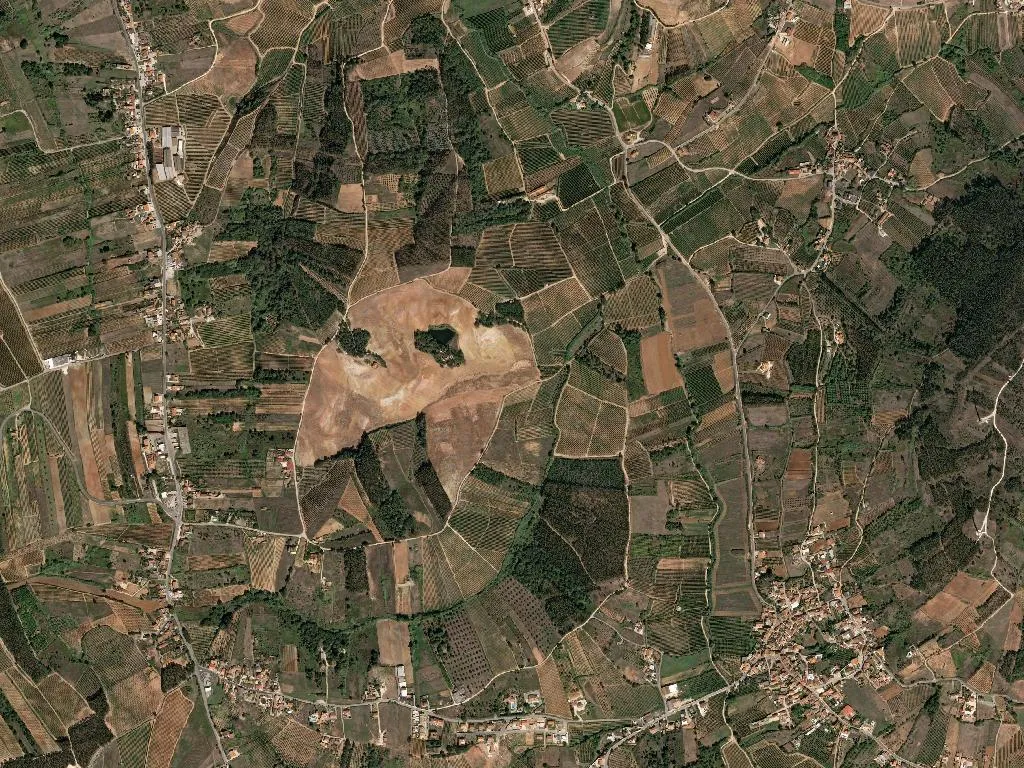
The first light catches the chalky ribs of the Serra de Montejunto, firing the vineyards that seam the slopes between Painho and Figueiros. Tractors have already passed, turning clay loam that smells of rain and iron; in the orchards beyond, Rocha pears hang heavy enough to sweeten the breeze. Every ridgeline is stitched with vines—Arinto, Fernão Pires, Touriga Nacional—whose order contrasts with the scatter of stone farmhouses whose chimneys begin to exhale the day’s first thread of oak smoke. This is the meeting point of Atlantic plain and limestone escarpment, 28 km as the gull fly from the cliffs at Carvoeiro, and the land is still parcelled according to a rhythm older than the Third Republic: prune in January, till in March, pick in September, press before the pilgrimage candles are lit.
A parish older than Portugal
Painho enters the written record in 1160, when Afonso Henriques granted the place to the abbot of São Martinho de Ceras. Locals prefer an earlier story: a shadowy Templar called Pão (or Pano) who supposedly held these fields before the Order was christened. Either way, the settlement was firmly embedded in the Cadaval municipality by the time of the 1255 Inquirições, the royal land survey that followed Lisbon’s elevation to capital. Figueiros, a kilometre to the south-west, matured around the same core of cereal terraces and vines, and the two parishes were formally fused in the 2013 administrative reshuffle.
The parish church of Painho, rebuilt in 1706 over a medieval chapel, keeps its distance from grandiosity: a single-nave rectangle of whitewash, a bell cot tiled in moss-green, and a gilt-carved retable whose 1720s azulejos borrow the blue-and-yellow star pattern shipped up from Seville for southern monasteries. Inside, the air is beeswax and extinguished wicks; outside, the only soundtrack is the creak of a cedar that was planted the year the monarchy fell.
Limestone terroir
The DOC Óbidos boundary, drawn in 1990, scoops Painho–Figueiros into a strip cooled by Atlantic draughts yet sheltered by the serra’s 666-metre wall. Calcium-rich soils force the vines into stress, thickening skins and concentrating the mineral spine that marks the whites. At family holdings such as Quinta do Painho or the 19th-century Quinta de Figueiros, pruning crews still speak of parcels by the names of long-dead share-croppers—"Vale da Bica", "Cabeço do Rato"—and the vintage clock is set by the 13 September procession of Nossa Senhora de Fátima. Stainless-steel has arrived, but the 1932 basket press stands oiled and ready; its walnut beams exhale a ghost of grape must every time the ratchet turns.
Sparkling Bruto Nature is the modern calling card: zero dosage, 24 months sur lie, a nose of green apple and wet stone that carries the same salinity you taste in the air on the ridge above. Pair it with a glass of Ginja served, Óbidos-fashion, in a petite dark-chocolate cup—an edible gimmick dreamt up by a local pastry chef in 1994 and now de rigueur from Alcobaça to Lisbon’s Time Out Market.
Tracks through the trees
Waymark 103, the old Roman road that once linked Óbidos to Santarém, cuts across the parish for 4 km; its limestone slabs are rutted by iron-shod wheels that predate the Visigoths. Follow it at blossom time and the verges are snowdrifts of pear flower, pollinators loud as outboard motors. South-east, a lattice of agricultural lanes threads down to the Figueiros stream, where willow and giant reed keep the water cool enough for emerald dragonflies. Climb the shoulder of Montejunto and the view opens west: the square white houses of Cadaval, the irrigated squares of tomato glasshouses, and beyond them the Atlantic seam that, on very clear winter days, glints like polished pewter.
Population 1,730, average age 56
Demographics here read like a rural Portuguese haiku: 511 residents over 65, only 180 under 20. The primary school in Painho locked its doors in 2012; children now catch the 07:15 bus to Cadaval, returning at 17:30 with geometry homework and earbuds leaking Brazilian funk. Afternoons fall silent except for the click of dominoes in the café-cum-post-office and the occasional clatter of a 125 cc Honda bringing the baker up from Vale Maceira. Yet longevity is high—something credited to daily vineyard walks, olive-oil breakfasts, and a shot of aguardente at dawn, "to thin the blood before the crows start complaining".
Dusk settles behind the serra; the vines turn molten, then bruise-coloured. Wood smoke drifts from chimneys, carrying resin of maritime pine and a whisper of rosemary thrown on the embers to scent the kitchen. Somewhere downhill, a fermentation tank sighs. In two millennia the soundtrack has barely changed: the same limestone, the same Atlantic wind, the same low voices discussing rain and the price of must.