Full article about Peral: Cadaval’s Whisper-Quiet Orchard Hamlet
Pear-heavy limestone, 54 souls per km², night silence broken only by clinking demijohns.
Hide article Read full article
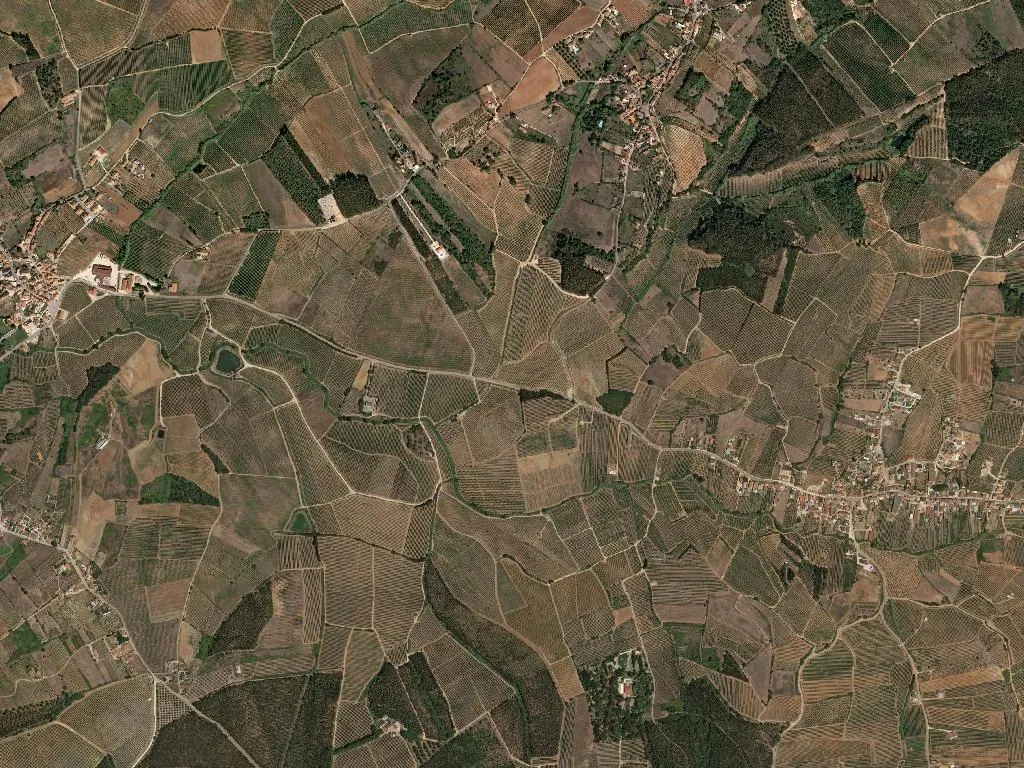
Morning light grazes the orchards and the air still carries last night’s chill. Peral spreads across 1,646 ha of gentle land at only 78 m above sea level—low ridges, chalky soil, Atlantic breezes softened by the first folds of the Montejunto massif. Barely 890 souls live here, scattered among vegetable plots and dirt tracks. No tour coaches, no souvenir stalls.
Orchards before vineyards
Although Peral sits inside the Lisbon wine zone, pears rule. The limestone that underlies Alcobaça continues here, giving Pêra Rocha DOP its crisp snap; the same orchards also qualify for the Maçã de Alcobaça IGP label. By mid-August branches bow to the ground. In farm kitchens local firewater is infused with sour cherries, then stashed in thick glass demijohns for winter sipping. Of the 890 residents, 263 are over 65; they still decide harvest dates by thumb-press rather than app.
West Geopark
Peral is a waypoint in UNESCO’s “Geopark Oeste”. There are no cliff-top theatrics, yet cream-coloured limestone peeks through every dry-stone wall. Population density: 54 per km². Seven low-key places to stay—two restored stone houses, a pair of rural hostels, three cottage rentals—serve travellers who treat Cadaval as a slow-circuit rather than a pit-stop. Secondary roads are smooth and sign-posted.
What you will and won’t find
No national monuments, no selfie decks. You will find roast pork shoulder punched with garlic and bay, vegetable soup that began life in the back garden, crusty Sunday bread. The village bar pulls espresso from a cloth filter and pours draught beer at 80 ¢ a glass. Most drivers pass straight through; those who stop are looking for precisely this: unvarnished ground, greetings from strangers, windows left open to the night. At nine the bar shutters descend, a cellar door creaks, and silence reclaims the lanes.