Full article about Vilar, Cadaval: Where Soil Scent Meets Sunset Gold
Low vines, limestone boulders and pear orchards shape life in this quiet Oeste Geopark village.
Hide article Read full article
The scent of turned earth
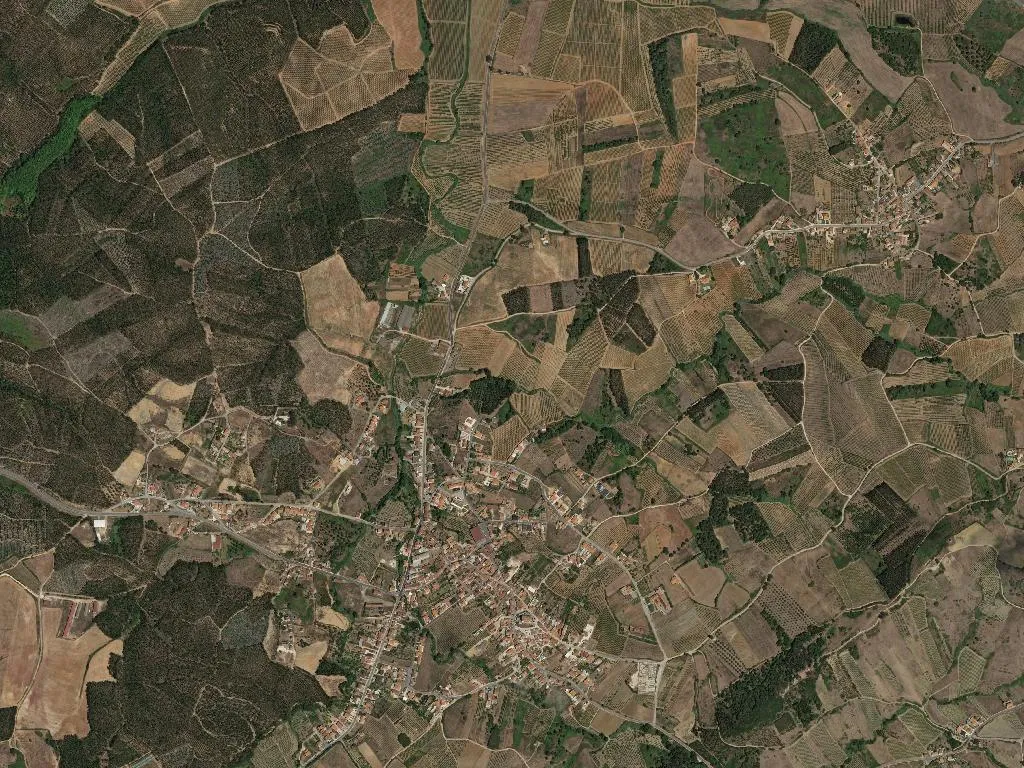
Wind combs the open fields and delivers the smell of newly-turned soil. At a modest 74 metres above sea level, Vilar unrolls across a gentle plain where the horizon takes its time and sunset burnishes the vineyards a shifting gold. This is the agricultural pulse of Cadaval: orchards, vines and vegetable plots laid out in neat terraces, their geometry refined by successive generations who still judge distance by the length of a hoe handle.
The parish sits inside the UNESCO-listed Oeste Geopark—a credential that looks impressive on paper yet baffles the card players in Café do Cruzeiro. Ask Zé, the baker, what it means and he’ll shrug: limestone blunts the blade, and the boulders that surface each winter make decent boundary stones. That’s geology enough.
What the land gives
The fields here come with certified taste. Pêra Rocha do Oeste DOP, the pear that underpinned the nation’s fruit bowls, ripens in local groves—firm, honey-sweet, with a tart snap that makes it ideal for both cheese boards and lunchboxes. The same Atlantic breezes and cool nights nurse Maçã de Alcobaça PGI, while sour cherries are macerated into Ginja de Óbidos e Alcobaça PGI, the inky liqueur sipped from chocolate cups along the coast. In village cellars the recipe changes: more brandy, less sugar, and always a bottle kept back for the harvest supper.
Vines are trained low and tight to survive the westerlies that can lift a flat cap clean across the road. Locals bypass the bureaucratic “Lisboa Wine Region” tag; they simply say “vinho do Cadaval”. After rain the clay soil clogs your soles like wet cement, but it gifts the reds a graphite spine and the whites a lemon-rind bite.
Generations in step
Census 2021 spells out the arithmetic: 142 children under 14, 553 residents over 65. Each dawn a single school bus inhales the young; by mid-afternoon the elderly reconvene outside the café, debating cloud formations and the price of pears. Wi-Fi now leaks through the doorway, and Joaquim’s grandson has installed a weather app—though Joaquim still trusts the ache in his knee over any icon of a sun.
Ageing is not disguised, yet inertia is resisted. Nine detached holiday homes—sympathetically restored stone houses with salt-water pools—signal a quiet influx of travellers fleeing the coastal scrum. Guests arrive for the silence, then marvel that such a commodity still comes without a spa menu. Neighbours, in turn, marvel at weekly rates that exceed a pensioner’s monthly income.
Logistics are refreshingly simple: Vilar lies five minutes south of Cadaval’s small grid of shops, reached by lanes that thread between orchards. There are no steepled monuments or sign-posted heritage trails; instead you share the tarmac with tractors, pass tobacco-drying sheds still in active service and catch the distant yap of a farm dog announcing your arrival. Hear a shotgun crack? Not banditry—just António discouraging pigeons from his maize.
Flavour memory
The kitchen canon is inscribed in chipped azulejos and grandmothers’ wrists. Pêra Rocha is baked with port, reduced into a sticky compote or simply crunched on a wall if the season allows. Local pork, ruby with paprika and garlic, is slow-steamed with potatoes and kale; the bread is a crusty shield designed for broth-soaking—or for fending off an over-curious hound. Wine arrives in thick glass, vintage unspecified. If Zé poured it, don’t ask the year: “Last year, like every year.”
When the sun drops and vine shadows stretch across russet soil, Vilar discloses its true currency: the tart snap of a just-picked pear, the coolness of limestone in shade, a silence audible only where the land still dictates the timetable. The church clock, unrepaired for three decades, keeps counting even though the congregation has long since dispersed.