Full article about Fanhões: Lisbon’s ridge where silence tastes of rosemary
Quince jelly, ghost vineyards and a monument that hides—daily life 281 m above the capital
Hide article Read full article
First light on the ridge
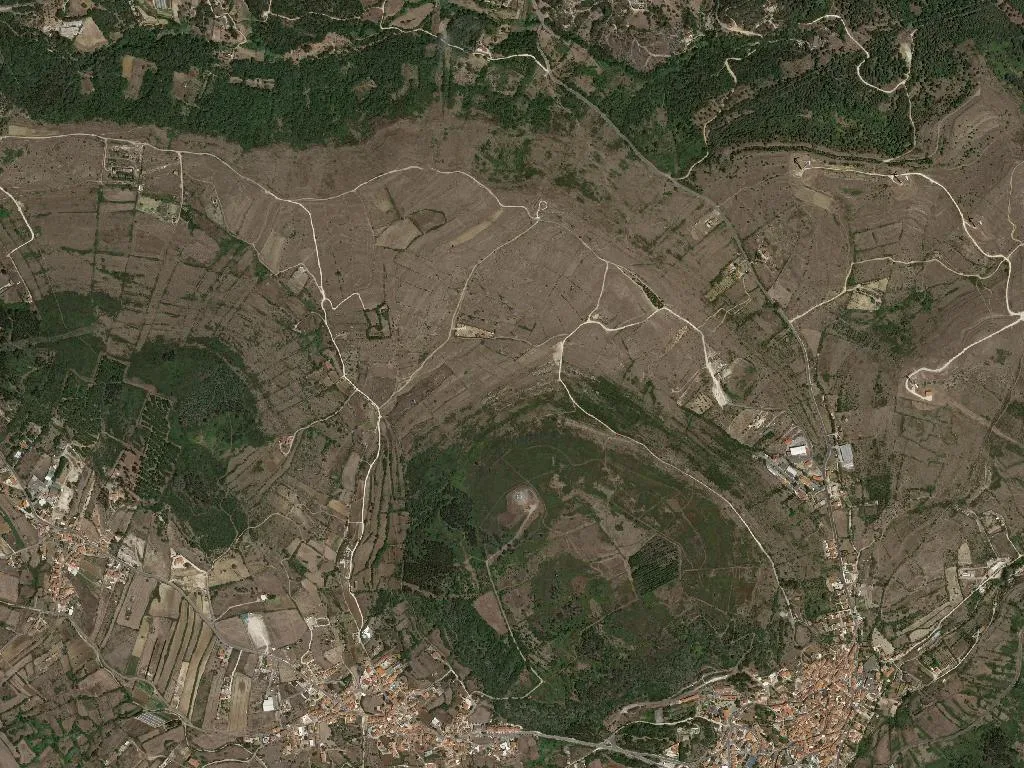
Morning sun glances off the hillside and Fanhões flickers awake like a low-watt bulb: just enough wattage to reveal you’re 281 m up and Lisbon still hasn’t managed to inhale this particular ridge. Technically it’s Loures, yet the air carries a different weight—wild rosemary, cooled earth, a silence thick enough to taste. The soundtrack is pragmatic: the café’s shutter rolling up, a tractor already clearing its throat somewhere below, a neighbour summoning a cat called Fernando.
The name they never dropped
Folklore insists it derives from fanum, a Roman temple. No one has located the altar, but the label stuck like a price-tag no one bothers to remove. In 1842 the civil parish was formalised and handed 1 163 hectares to stretch in; today 2 639 souls share 10 square kilometres—density lower than Alenquer, higher than downtown Loures, the perfect equilibrium for recognising everyone by sight if not by surname.
The monument that refuses to pose
The ledger lists one National Monument. No photograph, no grid reference, no helpful plaque. Ask in the bar and you’ll be pointed towards three contradictory lanes. Spend an hour chasing stone walls and hypotheses, then concede defeat over a coffee and a wedge of toucinho-do-céu almond cake. Some things are more convincing as rumour.
What still reaches the table
White quince jelly carries the IGP stamp of neighbouring Odivelas, yet the fruit is scrumped from Fanhões’ own gnarled trees. In kitchens where the hob still runs on firewood, the pulp is stirred for hours until it turns the colour of antique ivory. It isn’t sold; it’s wrapped in greaseproof for grandchildren or for the neighbour who helped stack logs. Wine? The last press closed decades ago—vines replaced by infinity pools—yet at sunset the terraces reappear as shadows, etched across the slope like ghost vineyards.
A quieter Camino
The Torres variant of the Portuguese Way cuts straight through. No hostel queues, no scallop-shell souvenir stalls: just the occasional pilgrim who knocks at a green door and leaves with a tumbler of red at nine in the morning. Two registered rural houses offer beds; breakfast arrives on first-name terms—village loaf, butter stamped into a seashell mould, and if your boots are soaked they’ll lend you a dry pair by the door.
Intelligence not on the parish website
- Café “O Pingo” lifts its shutter at seven, serves meia-de-leite in a thick mug, and imports pastéis still warm from Odivelas.
- Winter afternoons begin at four o’clock with the scent of burning eucalyptus drifting downhill like neighbourhood gossip.
- Certain gates have squeaked in the same spot for thirty years—an unpaid alarm clock for the late-returning.
- The chemist shuts for lunch; emergencies knock at Dona Rosa whose hallway drawer always contains surplus amoxicilina.
- The August fair proper starts on Sunday, yet fireworks are lit the previous Wednesday: the signal to drag chairs into the street and reserve a patch of tarmac for dancing.
Fanhões doesn’t audition for admiration. It simply carries on thinning carrots, shortening daylight, murmuring rosaries for the living and the dead. Stay long enough and the rhythm infects you: conversations that end only when the coffee pot is empty, evenings loud with cicadas rather than playlists, a place that asks nothing and quietly hands you an espresso whose price hasn’t shifted since the introduction of the euro.