Full article about Lousa’s ovens crackle with Festa do Pão scent
From Roman grove to wood-fired kid, Loures parish feeds soul and stomach alike
Hide article Read full article
The bread goes in as dough, comes out as bulletin
The communal oven door creaks open and the square inhales. September’s Festa do Pão has begun, and the women of Lousa still slide trays from the brick mouth as though repositioning continents. Crusts fracture with the dry snap of boots on granite; crumbs snow over the calçada. Behind them, the 1642 wayside cross throws a stub of shade. Midday sun drops vertically onto the Serra da Carregueira, lighting the olive terraces that stair down to the Trancão river like green amphitheatres.
A name that remembers the trees
Lucus, the Romans called it: a sacred grove. The parish never forgot. It materialised in the thirteenth century when the valley fed Lisbon with wheat and wine, and pack mules stopped here for water and confession. The parish church, Nossa Senhora da Conceição, raised in the 1500s on a medieval chapel, keeps that era in its Manueline doorway and in blue-and-white tiles that wrap the nave like a delft apron. When high light spears the incense, the gilded altarpiece answers back, flashing the same gold that dazzled sailors half a millennium ago.
Three kilometres north, Ponte de Lousa throws two unequal arches across the stream. Built in 1730 to serve the royal road that hauled stone to Mafra Palace, it was marked on eighteenth-century maps as “Lousa da Boa Viagem”, a staging post for Santiago-bound pilgrims. The modern Caminho de Torres still crosses the parish for five kilometres of shale-walled lanes and vegetable plots guarded by glossy quince. Walk it at dawn and you share the dust with ghosts in hemp sandals.
What the pot knows
Mountain pigs finished on acorns, vegetables that obey the calendar: Lousa’s kitchen is stubbornly terrestrial. Mint soup arrives with a poached egg wobbling in the centre; eel stew from the Trancão drifts coriander five metres ahead of itself. Kid goat blackens in a wood oven until the skin bubbles like blown gum. “Poor” migas—cabbage, bacon, olive oil—mop the juices, and a glass of sharp Bucelas white slices the fat like a barber’s razor.
In copper pans at the local farm cooperatives they still stir Odivelas white quince preserve, protected by IGP status. Olive-oil cakes, swollen with pumpkin jam, sit in the grocer’s like wrapped gifts. At Café O Serrano, a slab of the preserve meets fresh sheep’s cheese and a thimble of muscatel, closing Sunday afternoon with the finality of a full stop.
Between ridge and ripple
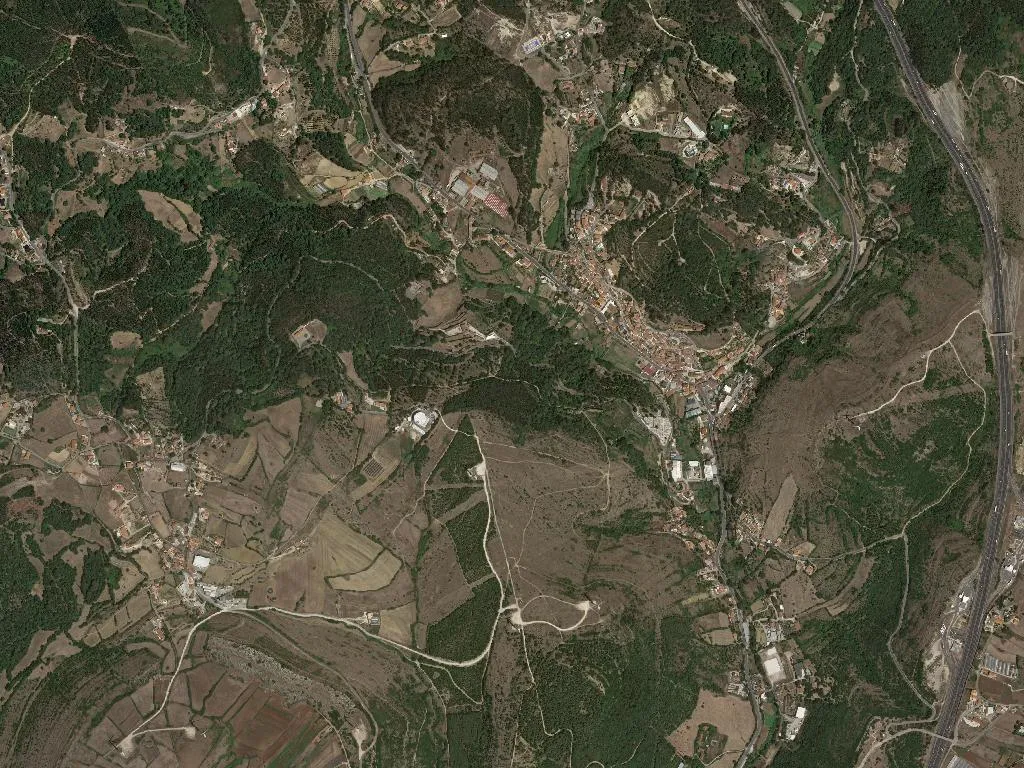
The parish undulates at 227 m, a topography of olives, vines and citrus groves stitched together by dry-stone walls. The Trancão and its tributary, the Alcoentre, seam the valleys; rockrose and lone cork oaks scent the air with resin. The circular Trilho da Lousa climbs Cabeço de Montachique and drops to the bridge, passing pastures where local campinos—stockmen in short jackets and knitted caps—work horses to the thin cry of a transverse flute. No ticket booth, no commentary.
At sunrise, fog pools between ridges then unravels uphill, releasing the smell of crushed rosemary and thyme. Rock sparrows clink from the walls; every footstep powders the air with Mediterranean herbs. It feels like inhaling a sauna, except the steam is sky.
What remains
By six o’clock the square has emptied. The church bell throws a metallic syllable against stucco; low voices settle under the eaves; wood smoke leaks from chimneys as night cools. At the bridge, water polishes the arch stones until they gleam like obsidian. Stone stays; water leaves—Lousa balances on that negotiation. Hands still knead, feet still walk, and the communal oven will fire again tomorrow, broadcasting the day’s first news.