Full article about Moscavide e Portela: Where the Tagus Still Whispers
River fog drifts past wheatfield ghosts and ochre estates in Lisbon’s most crowded parish.
Hide article Read full article
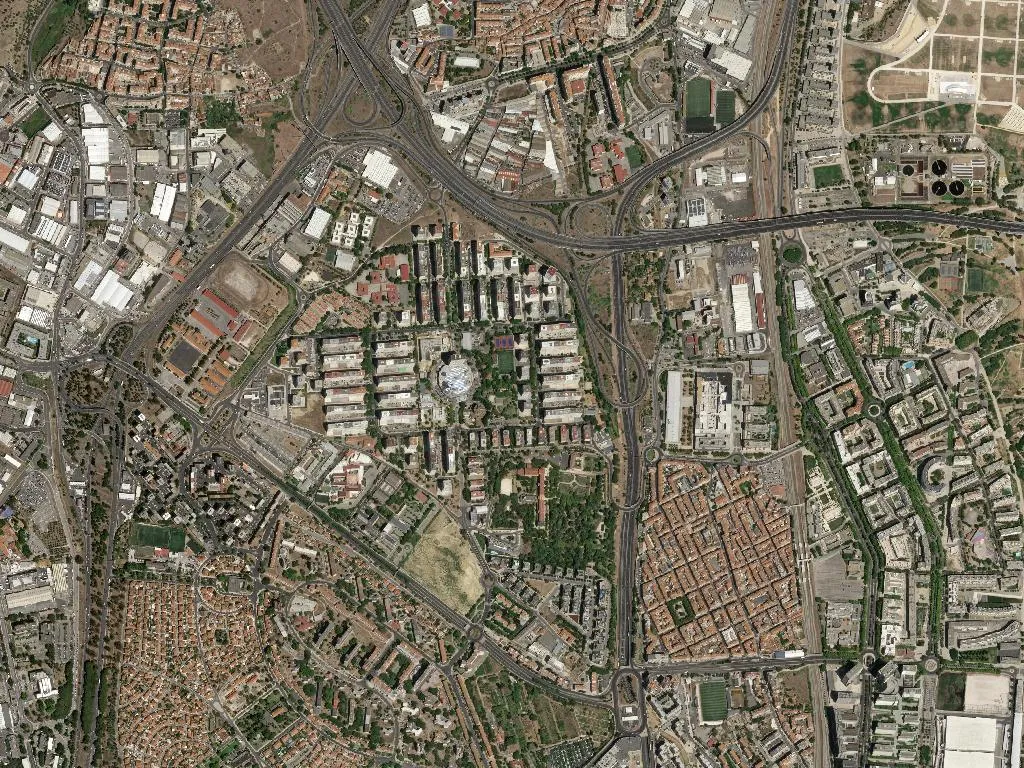
The bus exhales on Avenida de Moscavide and the doors sigh open to a slap of June air – diesel first, then something older, saltier, the Tagus exhaling two kilometres away. Traffic lights tick like metronomes, plastic shopping bags scrape the pavement, and somewhere a neighbour’s television leaks a fado through a wall that can’t be more than eight centimetres thick. This is the civil parish of Moscavide e Portela: 165 hectares, 21,000 bodies, 12,600 per square kilometre – one of the tightest weaves in greater Lisbon.
River memory, wheat memory
Moscavide was never meant to be a dormitory. A 1288 charter of King Dinis already records “Moscavidi” as a fishing hamlet within Lisbon’s term. Stand on the small rise in the new municipal park – barely 50 m above sea-level – and the river re-appears between tower blocks like a blade of mercury. Rua dos Pescadores still carries a plaque marking the embarkation quay that operated until the 1950s, when trawlers left for the cod grounds of Newfoundland.
Portela’s story is younger, greener. In 1758 the royal map labels it “Portella de Sacavem”: orchards and vegetable gardens folded inside the Tagus estuary. Wheat fields survived until the 1940s, when the Costa do Tejo urbanisation plan drew a grid across the mud. Between 1965 and 1975 the wheat was replaced by the Zambujal, Cruz Vermelha and Portela Nova estates – fast, flat social housing that still colours the skyline ochre and coral.
Four stones, four decrees
The parish guards only four classified monuments, but they are eloquent. The main church of Moscavide, rebuilt in 1723 after the 1755 earthquake, keeps its gilded baroque high altar and a 1745 tile cycle of St Peter’s life. In Portela the chapel of Nossa Senhora da Conceição (1593) is the sole Manueline fragment – inside, a 1620 Virgin carved in pau-santo wood still smells faintly of sandalwood when the sun warms it. The 1640 Fort of Portela, a squat star-shaped battery, formed part of Lisbon’s Restoration-era defence line; napoleonic troops turned the 16th-century Quinta das Torres into their headquarters in 1807, stabling horses in the frescoed salon.
Concrete, then cowbells
Appearances deceive: one variant of the Caminho de Santiago – the Torres route – crosses the parish. Pilgrims leave the red-brick pavements of Rua Dr. José Baptista de Sousa, skirt the Zambujal roundabout, duck under the railway bridge and head north toward Loures. Since 2018 the council has installed seven way-markers; Café O Ponto de Encontro, opposite the Galp garage, sells coffee and a bread roll for €1.50 to anyone brandishing a credencial.
Quince paste and a glass of Bucelas
Vines feel improbable here, yet the parish lies inside the Lisboa wine region. Drive ten minutes north and the apartment blocks give way to the chalky valleys that feed Bucelas, Colares and Carcavelos. Restaurant O Palheiro pours a lemon-sharp 2022 Arinto by the glass for €4; the wine list is a short lesson in Lisbon’s once-forgotten terroirs. Finish with a slab of marmelada branca de Odivelas – the opaque, honey-coloured quince paste whose PGI boundaries include Moscavide. At Mercearia da Avó, dona Alda cuts 100 g portions, wraps them in butter paper and charges €2.80, exactly as she did when she started behind the counter in 1970.
Demographics in slippers
The 2021 census reads like a warning: 6,570 residents over 65, only 2,438 under 14. Mornings belong to the retired – queues outside Farmácia Sousa form before 09.00, walking sticks tapping like knitting needles on the linoleum. Ninety-two short-let flats have been carved from 1980s stock; Airbnb lists them at €40–50 a night, booked by Rock-in-Rio or Web-Summit crowds who want the Parque das Nações site 15 minutes away on the red metro line, but not its price tag.
The 19.30 chorus
At dusk the sodium lamps tint the blocks the colour of bruised peaches. Traffic thins, and another sound rises: the slow shff-shff of flip-flops on pavement. It is 19.30, the television news has ended, ground-floor doors open and women in cotton dressing gowns step out to cool down. The soundtrack – part lullaby, part neighbourhood audit – drifts upwards: cod hissing in oven-fat in 3A, greens sputtering in olive oil in 5B, a charcoal chicken carried home from Intermarché. Somewhere a child practises scales on an electric keyboard; a dog barks once, then thinks better of it. The Tagus, still out of sight, continues its slow inhale and exhale, carrying the city’s salt breath over the rooftops long after the buses have stopped running.