Full article about Sacavém & Prior Velho: Estuary Echoes in Concrete
Paper lanterns, salt air and Arinto vines braid through Loures’ high-rise parish
Hide article Read full article
Sacavém & Prior Velho: where asphalt still remembers water
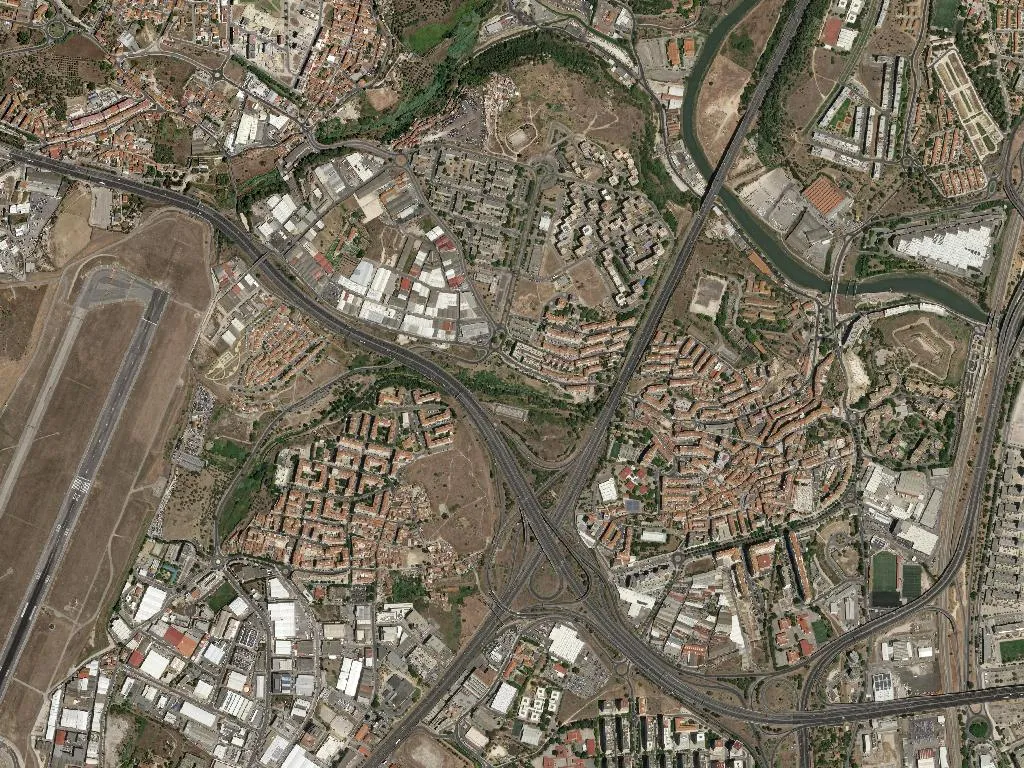
The scent of chestnuts drifts upwards between the blocks, thin as incense. It is mid-July, yet the smell fixes itself to clothes and skin the way November bonfire smoke does on St Martin’s Day. Less than ten kilometres from the Tagus, the combined parish of Sacavém and Prior Velho sits only thirty-nine metres above sea level; the air arrives salted by the estuary and threaded with the descending growl of aircraft slipping into Humberto Delgado. Twenty-five thousand people are packed into fewer than four square kilometres—north-Lisbon’s answer to a high-rise village—so mornings begin with the percussion of café shutters, the hiss of espresso machines and a perpetual pavement choreography of schoolbags, delivery crates and grandmothers towing tartan trolleys.
The water that named the place
Toponymists translate Sacavém as “water that comes”, a nod to the rivulets that once laced market gardens and fed a scatter of water-mills. Twelfth-century charters already list the settlement; Prior Velho is older still, its prefix recalling a medieval priory that oversaw both souls and acreage. The two localities were knitted into a single administrative unit in 2013, yet walk from the broad, anti-slip sidewalks of Sacavém’s Rua das Mirandas towards the narrower, vine-scented lanes of Prior Velho and the seam feels decades old, stitched by neighbourly borrowing of ladders, gossip and sugar, not by decree.
Proximity to the capital shaped the parish in three waves: orchards first, then light industry, finally the mid-century apartment blocks that still dominate. Between them survive pockets of Lisbon’s wine country—small, stubborn plots of arinto whose grapes once supplied the taverns of nearby Portela before the runways arrived.
June on Rua da Mina de São Domingos
If Sacavém exhales, it does so during the first week of June, when the Festas da Cidade swallow Rua da Mina de São Domingos. Paper lanterns zig-zag overhead, sardines bow over makeshift grills and plastic plates sag under caldo-verde. Children career between bumper cars while grandparents hold perimeter on white plastic chairs, plastic cups of lager balanced on knees. By midnight the air is fatty with chouriço smoke; only the Tagus breeze saves the revellers from total asphyxiation.
November brings a quieter ritual. On St Martin’s Day (11 Nov) residents haul braziers into courtyards for the magusta—chestnuts roasted until the skins split like tiny gunfire, washed down with jeropiga, the fortified wine that tastes of caramel and Protestant guilt. Luggage-handler shifts are swapped so the elderly can sit outside in shirt-sleeves, proof that the saint’s legendary “summer” still arrives between autumn storms.
Grills, quince and the taste of Prior Velho
Dining out here is not an event; it is rotation. At Grelha do Dany in Prior Velho the coals glow twenty-four hours, throwing up mineral plumes as pork belly drips. Across the roundabout, Restaurante Pêra Doce finishes the job with house-made aletria pudding, its cinnamon pattern as precise as azulejo geometry. Both places pour cloudy white quince jam from nearby Odivelas—IGP-protected, granular, the colour of old piano keys—served unobtrusively with coffee rather than fanfare. Ask for a bottle from the Lisboa wine belt—Bucelas arinto if you want citrus snap, or a Colares ramisco if you prefer your tannins as stubborn as the locals—and you will drink within ten kilometres of where the grapes were picked.
The care you can see in gestures
Demography tilts grey: roughly 4,800 residents are over sixty-five, outnumbering the under-fourteens. The parish council’s response is pragmatic, not performative. Every July free coaches shuttle pensioners to Costa da Caparica for the “Praia Sénior” scheme: deckchairs, parasols, medical students on standby, and a picnic box containing a still-warm pastel de nata. Children are accounted for too—three weeks of summer camp at Praia do Castelo, lunch included, so parents can keep shift work at the airport cargo zone without hiring three-generational childcare.
For pilgrims on the Portuguese coastal route to Santiago, Sacavém is an optional first stop after Lisbon. Yellow arrows appear on electricity cabinets; the parish provides forty-six beds—spread between low-rise guesthouses and spare rooms—so walkers can rinse airline grit from their socks before pressing north.
The last sound of the night
By 02:00 the flight timetable thins, the N10 finally quietens, and a different acoustic emerges: a television murmuring in a first-floor kitchen, the scrape of a metal chair on a narrow balcony, a dog barking two streets away. Then, almost below the threshold of hearing, a cool draught rides up from the valley where Sacavém’s lost streams still flow under tarmac, searching for the Tagus. It slips through half-open windows and settles on bedside tables, reminding whoever is awake that beneath the concrete this place remains estuary, orchard, village—an asphalt skin stretched over water.