Full article about Atalaia Ridge: Atlantic Sentinel Above Lourinhã
Taste salt wind, scan 15 km of coast from an 84 m Moorish lookout above vineyards.
Hide article Read full article
Atalaia: the lookout that still scans the Atlantic
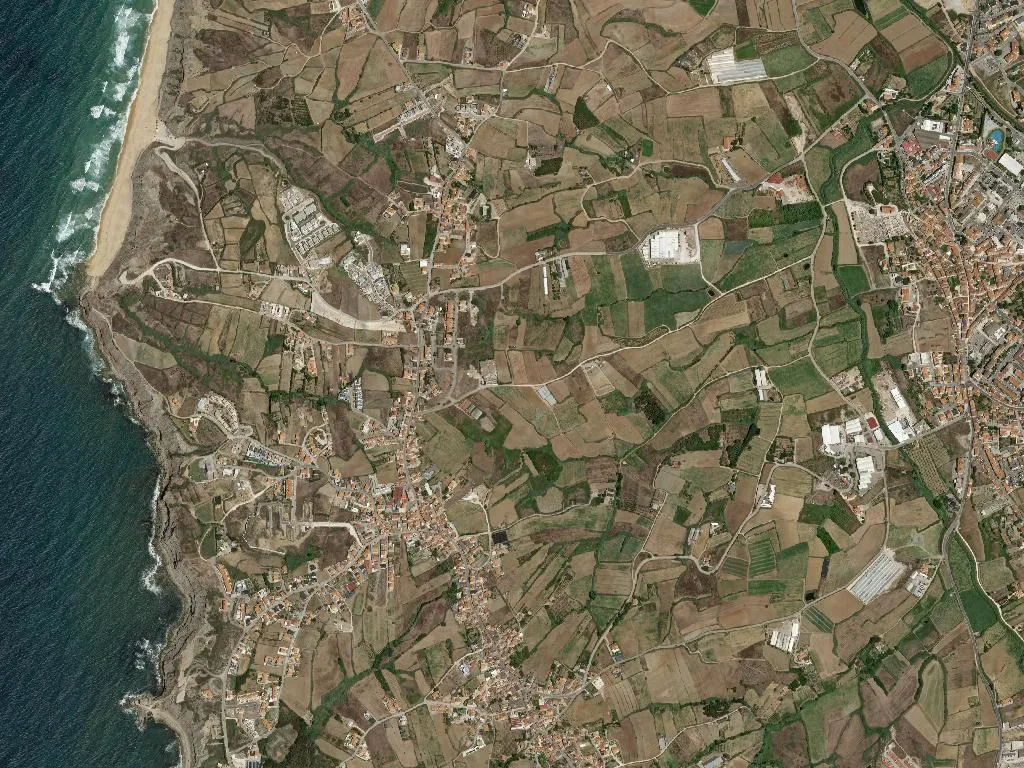
The wind arrives from the west, freighted with brine and the damp exhalation of breakers you cannot yet see. At 84 m above sea-level the air is a degree cooler than on the plain below, and it tastes of kelp and distant storms. Stand on the bare plateau at the top of the village lane and the horizon unpicks itself: to the south-west the silver seam of the ocean, to the north the clay-red roofs of Lourinhã, and in between a rolling patchwork of vines and pear orchards that looks, from this height, almost stitched together.
A name that came from Arabic — and from fear
“At-talaiya”: a watching place. The etymology is not ornamental. Whoever held this ridge could see every keel that rounded Cape Carvoeiro and every longboat that thought of beaching on the Rio Lisandro flats. Lusitanian tribes kept a fire here; medieval villagers built a stone platform; the logic never changed. Elevation is strategy, and 84 m is enough to give a fifteen-minute warning — time to ring the church bell, drive livestock into the churchyard, and melt the pewter.
A parish that is young, with a long memory
Administratively, Atalaia is barely forty years old. Created in October 1985 after a residents’ petition that began in the local café and ended on the floor of the Assembly of the Republic, it was re-absorbed into Lourinhã proper in the 2013 local-government cull. Twenty-eight years of independence: long enough to print its own letterhead, too short to fossilise a bureaucracy. The 2021 census counted 6,171 inhabitants packed into 7.4 km² — a density higher than Brighton’s — and the demographic ledger tilts towards the past: 1,522 over-65s to 832 under-18s. Morning in the parish is the clink of coffee cups in the Bar do Céu and the low murmur of retirees negotiating yesterday’s lottery results.
Our Lady of the Guide, patron of those who look seaward
The parish church is dedicated to Nossa Senhora da Guia, Mary in her role as pilot. Fishermen from neighbouring São Bartolomeu do Mar still carry her statue down to the water on 15 August, timed to the waning of the sardine season. The liturgy is a negotiation: give us safe return and we will give you gilthead bream and humility. Even men who have never crewed a trawler feel the compact; the ocean is only 4 km away, and its breath condenses on the windscreens of parked cars.
Where the Geopark meets the vineyard
Atalaia sits inside the aspiring West Lisbon Geopark, a coastline Unesco has fingered for its Jurassic cliffs and dinosaur quarries. Walk the track south of the cemetery and you tread over the stratum that yielded the first eggshells of Lourinhanosaurus — a predator named after this municipality because its embryos were found here, not in Montana or the Gobi.
Agriculture keeps pace with palaeontology. The slopes are parcelled into plots of Pêra Rocha do Oeste (the DOP-protected pear that ripens to a champagne flesh) and the Alcobaça apple, its skin the exact green of a late Picasso. Come late September the air smells like poached Williams and the roads slow to the speed of tractors balancing fruit bins. One of the Portuguese variants of the coastal Camino — the Fishermen’s Way — crosses the parish on its route from Porto Covo to the Cape; pilgrims pause at the solitary fountain to refill bottles and photograph the hand-painted tile explaining, in four languages, why there are oyster shells on a hill 90 m above sea-level.
The precise weight of silence
There are no municipal festas, no fireworks budget, no procession with a silver-laden canopy. Instead, the village offers what coastguard posts always offered: a platform and a pause. Drive up to the miradouro twenty minutes before sunset. Bring a jacket — even in July the Atlantic wind slices sideways. Below, the Lourinhã valley grids out in wheat-coloured squares; beyond, the cliffs drop to a stripe of surf that flashes like polished pewter. On a clear evening you can sight the lighthouse at Ericeira, 35 km to the south, its beam rotating like a slow metronome.
There is no café, no souvenir stall, no Instagram frame. The silence carries the same specific gravity it did when the watchman stamped his feet against the cold and listened for oars. You are not off the beaten track; you are simply where the track once mattered.