Full article about Miragaia & Marteleira: Pines, Clays & Dino Tracks
Atlantic breezes, Roman stones, Jurassic footprints and orchards lace Lourinhã’s twin parishes.
Hide article Read full article
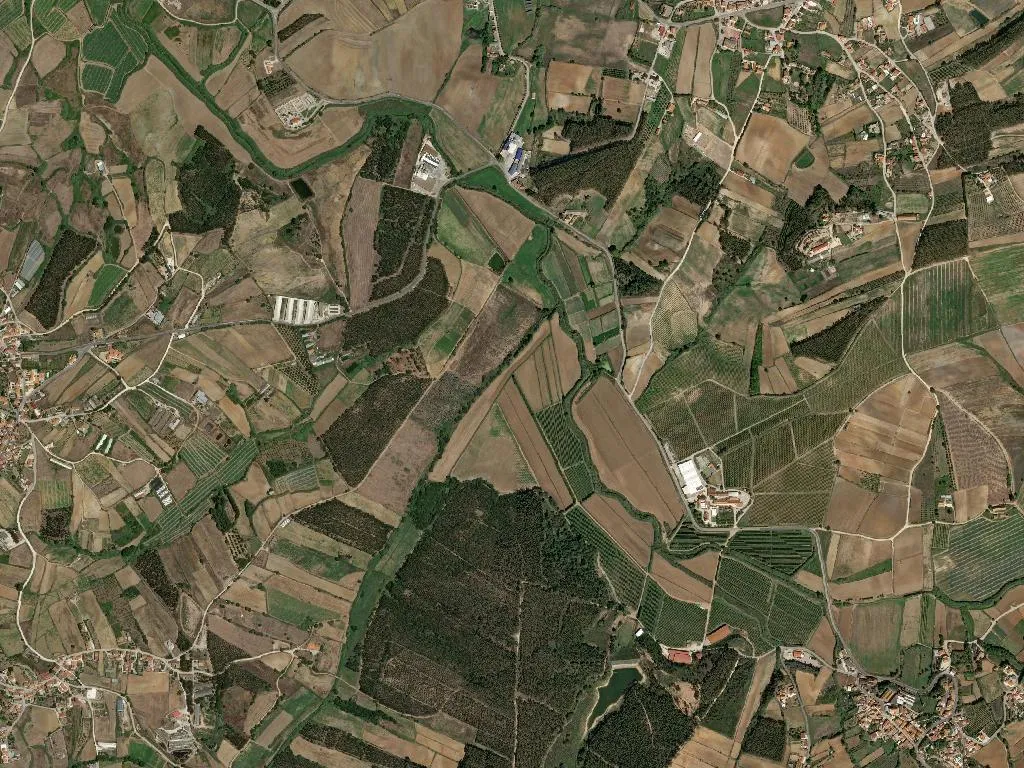
A pine creaks in the Atlantic wind, its needles hissing like foil. Thirty-three metres above sea-level, you stand on russet clay while the morning sun prints bar-code shadows between trunks. Holm oaks grip the ground so hard their roots split terra-cotta roof tiles abandoned in the hedge. Ten minutes west, the cliffs at Porto Dinheiro and Areia Branca keep the dinosaur tracks that turn schoolchildren into time travellers; salt drifts inland and settles on the skins of ripening apples.
Roman stone under whitewash
The parish church of São Lourenço dos Francos rises in clean white planes against an even cleaner sky. Built in the 1540s over a ninth-century convent, it carries two grey Roman votive stones mortared into the apse – letters half-erased, the Empire recycled as building material. Inside, 17th-century azulejos cool the air with blue geometry; 18th-century gilded saints watch the afternoon light slide down the high windows like slow honey. Beside the bell tower, low mounds and a sliced stone water channel map a villa that belonged to someone who also watched the horizon for storms two millennia ago.
Vine rows, apple ladders, pear canes
This is the Lisboa wine zone’s western rim: Atlantic air races the acidity, giving reds a briary snap and whites a scent of citrus skin and laurel. Between the wires, tractors strafe diagonals of loam; in the orchards, Alcobaça apples blush from green to Victorian wax, while Rocha pears – DOP-protected, the Portuguese answer to Comice – swell with just enough tannin in the flesh to make your gums tingle. In Vale de Ouro de Cima, the feed mill that founded the Valouro poultry group still hums; the place-name translates loosely as “Upper Gold Valley”, and every September the air smells of crushed grain and first-fire smoke.
Jurassic footprints and pilgrim boots
The Lourinhã Formation is a library of late-Jurassic mud. Drive a quarter of an hour and you can walk a 150-million-year-old lagoon bottom: sauropod potholes the diameter of tractor tyres, theropod three-toed signatures pressed next to them like an ancient guest book. The local museum displays eggs with the bones of unborn embryos still curled inside. Overhead, the Coastal Way of St James threads through pine and cork; hikers emerge, ask for directions in French or Korean, buy a Rocha pear, disappear northward under canvas rucksacks.
The smell of earth at vespers
When the sun shears low, pine trunks turn to gilded columns and the wind drops so suddenly you can hear the cork breathe. The church bell tolls three times – iron moving across centuries of the same clay. Out beyond the eucalyptus edge, the ocean is an invisible metronome, keeping slow time for 3,479 residents and for every Roman, monk, vine dresser and palaeontologist who has paused here, tasted salt on the lip, and decided to stay just a little longer.