Full article about Moita dos Ferreiros: Cork Groves & Masked Shrovetide
Blacksmith-iron, 1750 tiles, eucalyptus smoke and cow-bell echoes above the Atlantic
Hide article Read full article
Woodsmoke and White Heather
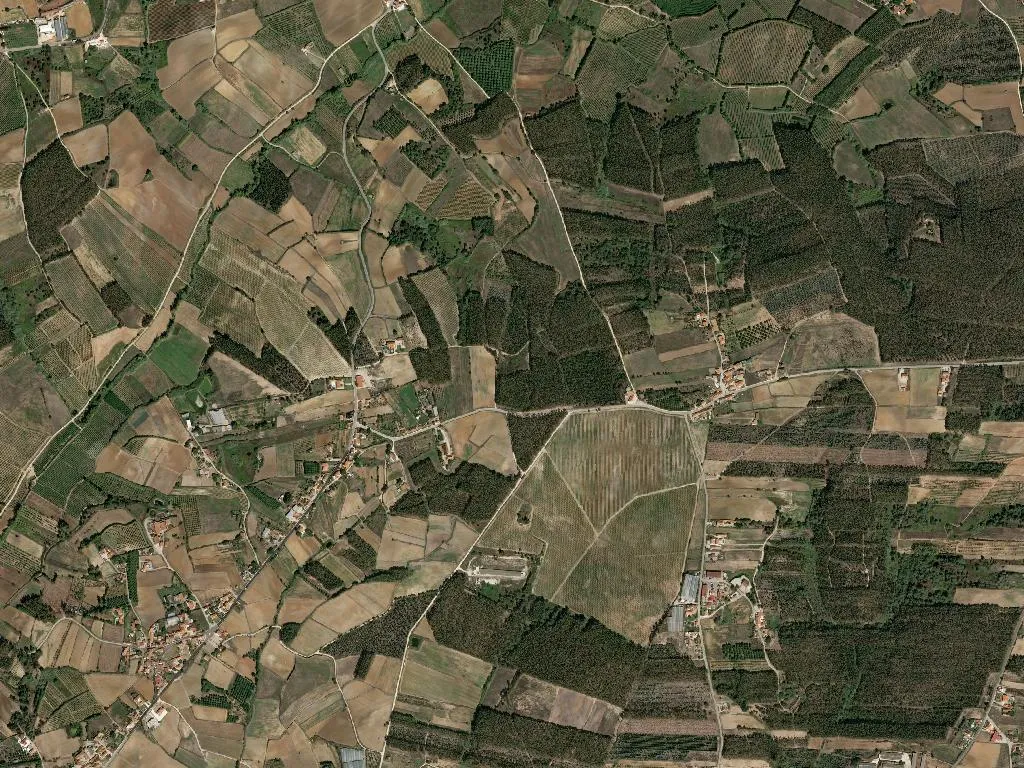
The scent of burning eucalyptus drifts uphill with the sweeter note of cistus as the lane climbs toward the Serra do Bouro. Beside the parish church an eighteenth-century fountain drips onto stone polished smooth by centuries of palms, while a stray cowbell tinkles on the wind — a ghost of Shrovetide, when masked men once zig-zagged through these hamlets to the wheeze of concertinas. Moita dos Ferreiros sits 125 m above the Atlantic, ringed by olive groves older than the republic and cork oaks whose bark still feeds the local coopers.
Iron, Stone and Cork
The name marries topography with trade: moita, the scrub-covered knoll you see from the road, and ferreiros, the blacksmiths who worked the ironstone outcrops long before tourism reached the Lisbon coast. Master-forger Manuel dos Santos (b. 1879) signed his wrought-iron leaves on the balustrade of the parish church of Nossa Senhora da Conceição and on the granite bridges that still carry farm tracks across seasonal streams. Inside, nineteenth-century restorers left gilded baroque altarpieces and 1750s blue-and-white tile panels that catch winter candle-light like porcelain mirrors.
Stone calvaries mark the lane to Pinhôa, where single-storey manor houses wear stone-edged gables that have defied salt wind and winter gales since the 1700s. In the hamlets of Casal da Lapa and Casal Vale da Eira, granite wine presses shaped like giant lizards still show the tread-marks of feet that crushed grapes for the Lourinhã red — a rustic cousin of the municipality’s more famous aguardiente — before the grapes head for family cellars tunnelled into the limestone.
Bells, Broken Bread and Winter Masquerades
The first Sunday in May turns the churchyard into a open-air drawing room for the Romaria de Nossa Senhora da Conceição. On the eve, the Círio dos Enfermos lights hundreds of tea-lights that flicker like low stars while murmured liturgies mix with the snap of paraffin. Three weeks earlier, on 3 February, the feast of St Blaise sees women snap loaves on doorsteps, blessing winter apples they then hand to neighbours — a carbohydrate chain-letter of goodwill.
Shrovetide is when the plateau remembers its own voice: bands of men in striped woollen masks and conical cowls clang iron rattles the size of dinner plates, advancing through frost to the rasp of concertinas. Locals call the custom a Chocalhada; anthropologists liken it to Iberian winter-solstice rituals designed to wake the earth. On Christmas Eve the Ceia das Lapas assembles neighbours at trestles for clay-pot kid stew fermented in talhas, river-caught shad açorda thickened with coriander-steeped bread, and lamb entrenched in Alentejan loaves — slow-food centuries before the term existed.
Between Cork Oaks and Jurassic Footprints
At 235 m the Serra do Bouro is hardly Everest, yet the ridge gives Atlantic views that stretch from the Berlenga islands to the Sintra escarpment. Wind-bones of stone mills punctuate the scrub; one still swivels its cap to face the prevailing Atlantic wind, a rare survivor on a coast where most mills lost their sails to the 1960s. The eight-kilometre Trilho dos Moinhos loops past these husks to viewpoints where kestrels hover above the Vale de São Domingos stream, pooling into cold granite tanks locals still use as summer swimming holes.
North of the village, clay pits in the Lourinhã Formation expose 150-million-year-old dinosaur trackways — sauropods and theropods crossing a late-Jurassic mudflat now tilted to the sky. The Geopark Oeste has bolted steel catwalks over the most fragile slabs; crouch and you can fit your palm inside a heel-print wider than a dinner plate, while 300-year-old cork oaks shade you from a sun that did not exist when the beast walked.
Lime Mortar and Clay Memory
In the 1950s the church forecourt doubled as an outdoor cinema: white bedsheets tacked to the bell tower became screens for Westerns that drew audiences from as far as Torres Vedras. Today the only reel is the monthly livestock and pottery fair that revives Moita’s 1682 royal charter. At Casal da Lapa a third-generation potter still wedges local river clay, repeating a sequence the parish priest Joaquim de Sousa Pinto watched when he opened the area’s first night school for field workers in 1892.
Dusk ignites the lime-wash of cottages to copper; the air carries new olive oil from the valley and the faint sweetness of corn-honey loaves cooling on racks. In the hamlet of Cantarola the silence is never total: it is stitched by the creak of a wrought-iron gate, the clink of a medronho glass, the remembered cadence of troubadours who once slept on the Royal Road. You leave with the taste of that bread on your tongue, aware that places this size do not need superlatives — only time, which Moita dos Ferreiros keeps in iron, stone and cork.