Full article about Reguengo Grande: Atlantic-salted orchards & Camino stones
Taste IGP Alcobaça apples, sniff salt on the wind and trace Camino boot-polish on limestone in Reguengo Grande, Lourinhã.
Hide article Read full article
Morning slips in unannounced
Dawn arrives the way a regular slips into the village bar: without knocking. Light pools across the orchards and throws long shadows between the apple rows. Eight kilometres away the Atlantic is close enough to scent the air with salt-damp earth, and the wind mutters a blunt forecast: bring a jacket or wear the rain. Inland from Lourinhã, time doesn’t march—it freewheels: spring detonates the apple blossom, autumn halts timber lorries so drivers can buy Rocha pears straight from the grower, winter sends even the dogs to bed early.
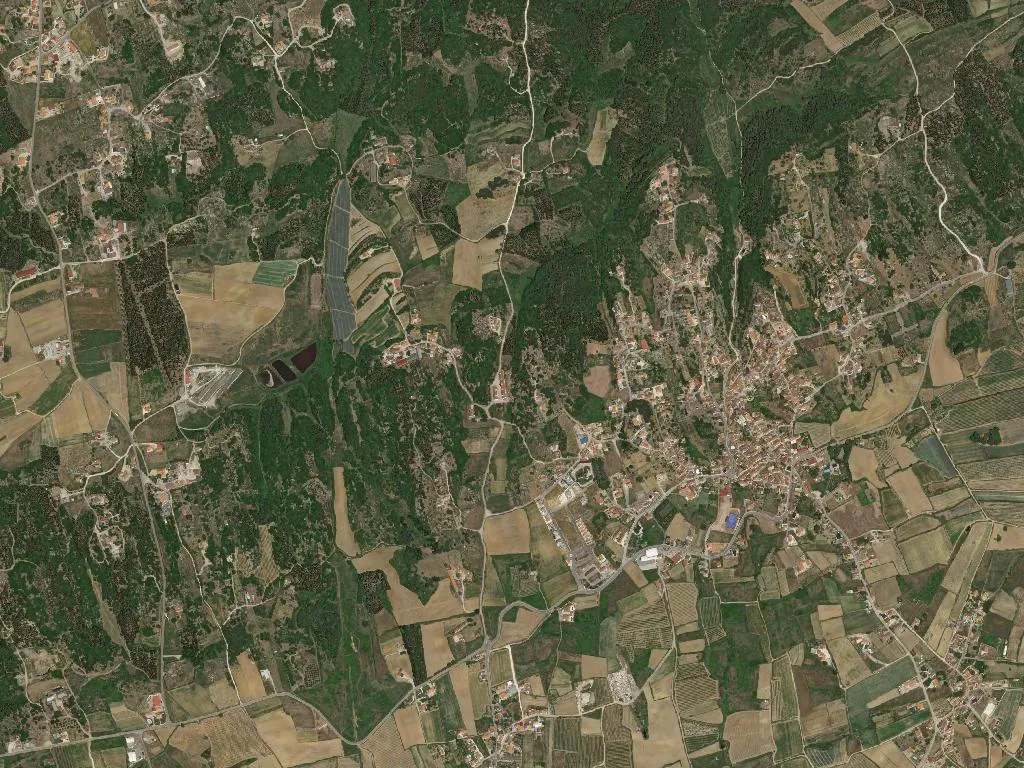
Reguengo Grande covers fifteen square kilometres of roller-coaster lanes that force delivery vans to drink diesel. At 147 m above sea level you can pick out the ocean’s silver blade on the horizon and, inland, the ridge that stops the gales from cartwheeling the plum trees away. The coastal variant of the Camino de Santiago cuts through; some hikers stride past with Nordic sticks, others simply duck behind a camellia for a pee. Boundary stones are polished smooth—locals call them the “English Stones” ever since a Liverpudlian pilgrim tripped, split a front tooth and left a swirl of Scouse curses in the morning air.
A landscape you can taste
What grows here is also a calling card: Alcobaça apple (IGP) and Pêra Rocha do Oeste (DOP) aren’t marketing tags but the stickers producers slap on crates at four a.m. in Queluz market. The orchards stand like weary infantry: crooked trunks, branches sagging in surrender. By late summer the fruit bends each bough and the air tastes of playground confession—sweet, sticky, impossible to deny. You carry the perfume home on your jumper; it drags you back to childhood when a bowl of pears on the kitchen table meant school holidays.
The parish sits inside the UNESCO-branded Geopark Oeste. Bureaucrats posed for photos, scoffed stone soup, pocketed a bottle of muscatel and left. The limestone scarps are the district’s ledger: read the layers and you’ll know how many times the Atlantic clocked in and out before humans decided to stay.
Between two clocks
The census claims 1,486 residents. Reality is lower—Lisbon leases bodies from Monday to Friday, returning them on Friday night to check whether the firewood stayed dry. One hundred and seventy-four children fill two primary classes and the playground at dusk when mothers holler that dinner’s on the table. The 446 retirees are human Wikipedia: they know which spring never fails, which graft keeps an apple tree fruiting into November, why the cemetery holds two identically named graves with different death dates.
Twenty-seven houses are listed on Airbnb. Most belong to Lisboetas who extended the kitchen, installed Wi-Fi and hung a cork board for the keys. Guests wake at seven to the neighbour’s rooster—an actual bird swapped by Zé Manel for a bottle of medronho firewater. Breakfast is bread fetched by Cláudia at six and quince marmalade rescued from the back of the larder and re-boiled because waste is a sin.
Afternoon slides in the colour of over-steeped tea. The church bell doesn’t toll—it coughs: three dry notes that travel the valley and announce half-past five. In the distance the bread van lifts a dust cloud that hangs like an unkept promise. After the engine dies you hear the real soundtrack: a spade scraping terracotta, the bar door sighing open, a glass meeting marble. Here time is not kept by watches but by the ripening apple, the wood-smoke drifting from chimneys, the conversation that lasts until the walnut shadow touches the school wall.