Full article about Apple-Smoke Afternoons in Santa Bárbara
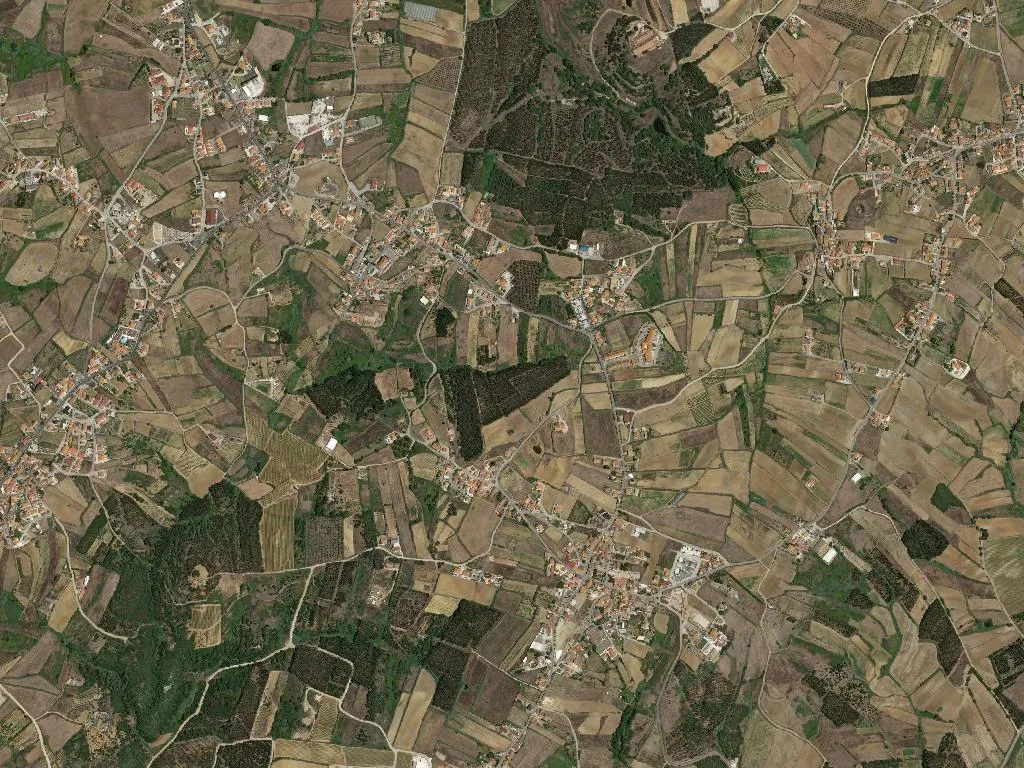
Terracotta roofs glow above orchards where Maçã de Alcobaça ripens between vineyard rows.
Hide article Read full article
Afternoon Heat, Apple Smoke
Granite cobbles drink in the late sun and give it back to your soles. In Santa Bárbara the light behaves like nowhere else on Lisbon’s west coast: not quite maritime, not fully inland, suspended between the Atlantic breeze that climbs from the beaches eight kilometres away and the slow warmth of orchards planted on schist and clay. One hundred and twenty-four metres of altitude is enough to create this in-between weather, letting the apples swell and the terracotta roofs rust quietly against the sky.
The parish covers barely seven square kilometres—room for 2,031 souls who live either in the tight centre or along single-track lanes that fade into vegetable plots. At 270 people per square kilometre you can still hear a neighbour’s radio without feeling crowded; doors stay open after siesta, voices carry, and the evening brings a soft collision of generations on the single pavement that passes for a high street.
Vine Rows & Apple Arches
Santa Bárbara sits inside the Lisboa wine region, but the landscape reads more like a fruit bowl. Rows of Maçã de Alcobaça IGP (a protected-origin apple famed for its honeyed bite) alternate with pergola-trained vines and regimented pear trees bearing the West’s DOP-branded Pêra Rocha. Between mid-September and early October the air is almost chewable: bruised pear, baked apple, dry earth and the first yellowing vine leaf sharp with chlorophyll. Small tractors towing plastic crates crawl along the lanes at dawn; by noon the fruit is already checked-in at the nearby cooperative, ready for Covent Garden or the Bergen wholesale market.
Only 32 guest beds are registered here—no design hotels, just two casas de campo and a handful of village rooms let through Airbnb. The appeal is logistical rather than Instagrammable: Lisbon airport is 45 minutes by hire car, Ericeira’s surfers’ beaches 20, and the medieval walled town of Óbidos 30. You come for silence after dinner, not for nightlife.
A Pilgrim’s Footnote
The coastal variant of the Camino de Santiago cuts through the parish on a farm track signed with a tiny yellow scallop. There are no baroque facades or sweeping plazas; instead walkers share the path with schoolchildren released at 16:00 and retirees hoeing kale patches. The Atlantic is invisible but present—salt on the wind, gorse instead of cork oak, horizons that feel wide even when hedged by apple boughs.
Santa Bárbara also lies within the West Portugal Geopark, the same limestone belt that yields dinosaur eggs at Lourinhã’s museum six kilometres away. Road-cuttings behind the cemetery expose ochre Jurassic layers; locals use the slabs as garden walls, unaware they’re mortaring 150 million years into place.
When the Lights Go Out
Dusk is the village’s only spectacle. Low sun ignites whitewash and terracotta, wood smoke drifts before anyone has thought of dinner, and the night silence arrives so complete you can trace a single dog’s bark from one hamlet to the next. Nothing here demands a photograph; what lingers is the texture of ordinary life—an iron gate clacking shut, the faint sweetness of apple wood on the air, the sense that time is measured in harvests rather than screen time.