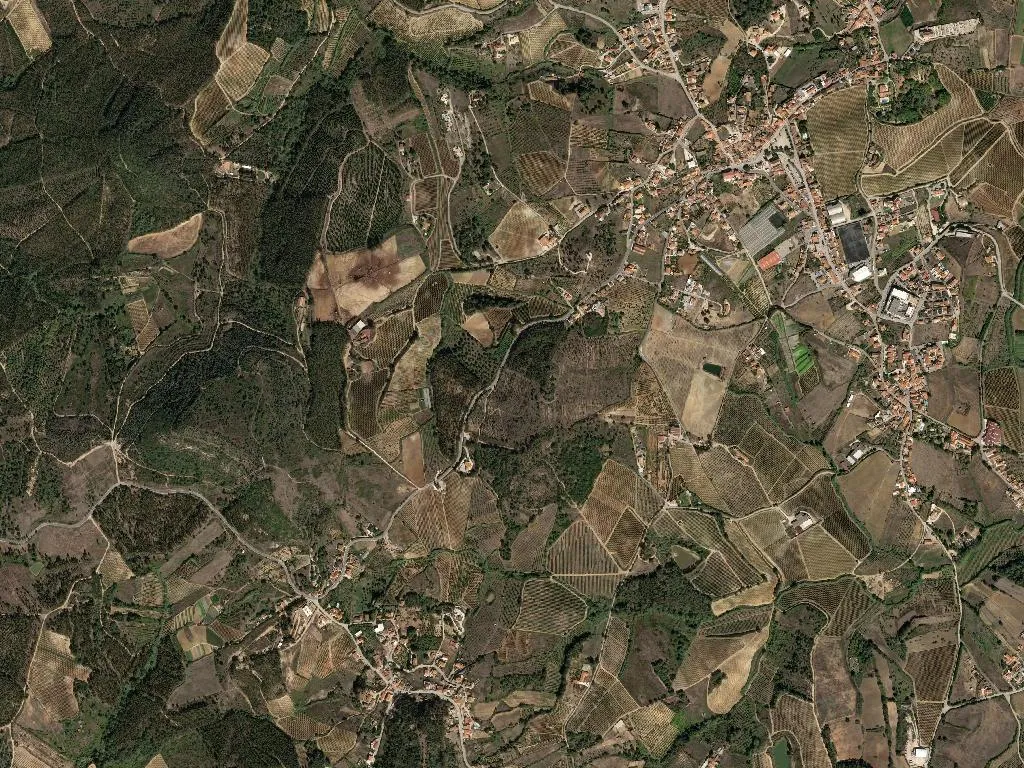
Full article about Azueira & Sobral: where pears, pine nuts and silence ripen
Walk between orchards and empty chapels in Mafra’s quietly defiant twin villages
Hide article Read full article
Two Villages, One Strip of Earth
The granite threshold is still warm from the afternoon sun. Inside Azueira’s church, light slips through modest stained glass and prints pale geometries on stone polished by generations of knees and footfall. Outside, the Rocha-pear orchards stand leafless in February. Wind carries the smell of turned soil, manure, wood-smoke – the same scent that drifted here when I was six and my grandfather pruned the first tree of the season.
A Paper Marriage
In 2013 Lisbon’s civil servants drew a single line around Azueira and Sobral da Abelheira and declared them one “union of parishes”. No one obliged. Locals still say “I’m going to Azueira” for bread or “I’ll be in Sobral” for coffee. Azueira keeps the bakery; Sobral makes do with a café-bar whose espresso machine dates to the 1988 European Championship. Stone houses endure among the red-brick cubes that crept in after Portugal joined the euro; roadside chapels remain unlocked but empty, their ex-voto hearts of tarnished silver beating unseen behind wooden doors.
Pilgrims Who Don’t Stay
The coastal variant of the Caminho Português cuts across the parish, way-marked by a discreet scallop-metal disc that squeaks when you open the gate. Walkers file through almond and stone-pine, yet there is no hostel, no lunch table, no invitation to linger. If you listen past their boots, you can hear ripe cones drop from the arbutus-shaped crowns of Pinus pinea – the stone pine whose seeds will end up in a Lisbon restaurant at €18 a saucer.
Pear, Pine-Nut, Stone Pot
Harvest comes in August. Tractors weave between rows, wooden crates stacked like makeshift fortifications. For two weeks the hum of diesel replaces birdsong, then silence reclaims the valley. The village grocery sells Pêra Rocha DOP for euros, not Instagram shots. Food is what it has always been: lamb stew thickened with bread, kale soup sharpened with chilli, a Saturday cozido that uses every inch of the household pig. Stone pots appear only for baptisms or wakes; the rest of the year they hang from ceiling hooks like rustic chandeliers.
Celebrations Held Indoors
Forget torch-lit processions or pop-up beer tents. The calendar here is private: a christening lunch that empties every garden of parsley, a funeral cortege that pauses so the grave-digger can finish his coffee. The closest public festival is Santo Isidro, five kilometres away in Mafra, where tractors are blessed with sprigs of rosemary and beer flows under striped awnings. In Azueira-Sobral, devotion is conducted in low voices behind closed shutters.
Between Palace and Atlantic
Fifteen minutes south: Mafra’s National Palace, 40,000 books humming in baroque silence. Twenty minutes west: Ericeira’s Atlantic rollers, wax-scented and salted with surf jargon. Here: nothing no guidebook flags. Ten guest beds scattered across three farmhouses; telephone reservation only. No one arrives by accident – the sat-nav gives up a kilometre early, and you still have to guess which turning smells of wood-smoke and pears.
The light drains from the fields; another cone drops. Then only the wind, rearranging the same dust my grandfather once lifted with his hoe.