Full article about Pear blossoms & pilgrim boots in Encarnação, Mafra
Sip spring water, taste chilled white, walk orchards beneath Mafra’s Baroque skyline
Hide article Read full article
Between Pear Blossoms and Pilgrim Boots
Morning light slips through the slats of timber shutters and stripes the floorboards. Outside, a diesel tractor coughs awake while sparrows quarrel on terracotta ridges. Encarnação stretches, half field, half forecourt to Mafra, the sort of place where you still park outside your own front door and hear next-door’s cockerel negotiate dawn.
Orchard Lines
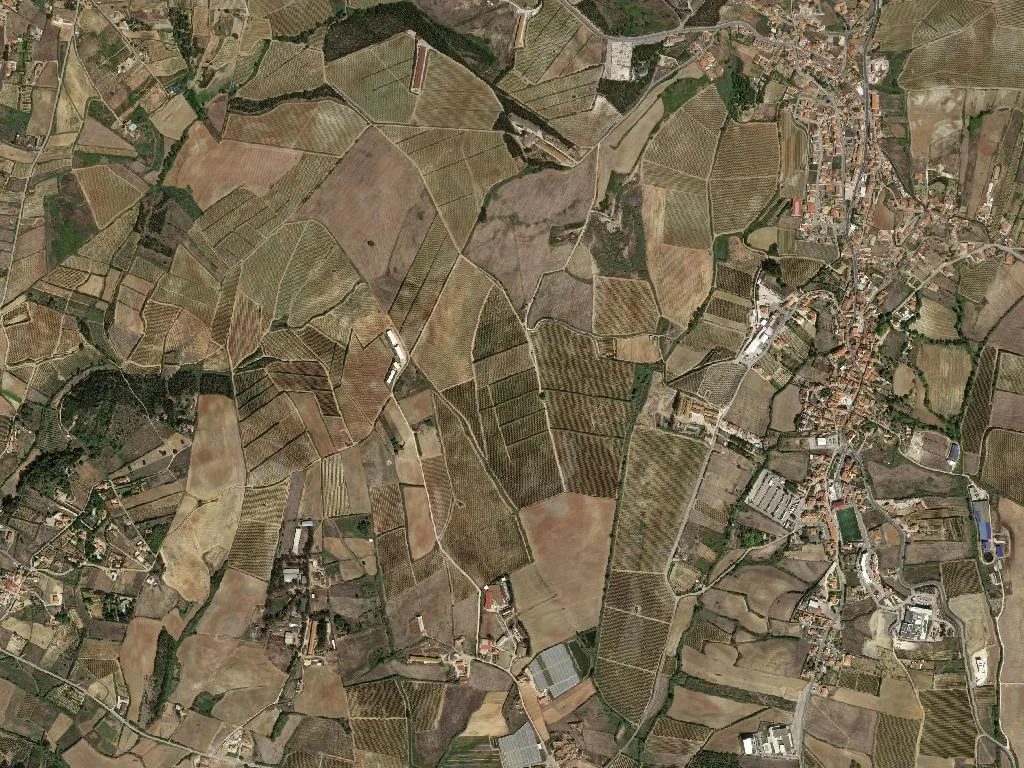
The parish unrolls across 30 km² of creased land where Rocha pear orchards are pinned to the contours like regimented green quilts. Here, the Rocha isn’t just a PDO label; it is the opening gambit in Café Progresso when frost is late, the excuse that delays lunch in August (“five more trees, then we stop”), the reason Sr Armando declares, straight-faced, that “decent fruit still grows west of Lisbon.” Gnarled veterans twist between younger plantations netted in silver mesh that turns to mercury mazes at dusk.
Threading through the trees runs the Caminho da Costa, one of the Portuguese routes to Santiago. Hikers emerge with dust-powdered boots, ask how far to Mafra and brighten when you point to the palace dome floating above the eucalyptus. There is no marble statuary—only the Ribeira spring where you can drink without boiling, a low wall outside the Boa Viagem chapel that invites rucksacks off shoulders, and Sr Joaquim who, on warm afternoons, offers passing foot-sore pilgrims a tumbler of chilled white from the galvanised jug he keeps by the gate.
The neighbour on the hill
Living here means sharing horizon space with Mafra’s Baroque colossus. Unesco signed it up in 2019, yet its real weight is measured in smaller currencies: the Lioz limestone scars in retired quarrymen’s thumbnails, the ruler-straight roads ordered by eighteenth-century monarchs, the shorthand phrase “I’m going up to the Convent” that really means a dash to Lidl. Encarnação owns only one listed building, but trades monuments for elbow room, night silence and the certainty that tailbacks are religious events—literally, when the procession lumbers down the N116.
Proximity now translates as commuter flow. The A8 skirts the parish, catapulting residents to Mafra, Ericeira or Lisbon’s Marquês de Pombal roundabout in 30 minutes flat. Of the 46 registered holiday lets, none cater for stag weekends; most host German couples googling “authentic Portuguese village” (who learn the hard way that the nearest restaurant turns off its grill at 22:00) or diaspora grandparents scheduling grandchild time.
Generations doing the maths
Demography tilts grey: 1,074 over-65s, 710 under-14s. The ledger is visible on the square’s benches by 10 a.m., in primary-school classes that fit a single coach, in conversations that open with “your grandfather and I used to…”. This is not abandonment but cyclical balance: children chase footballs across the same cobbles their grand-parents did, while parents WhatsApp car-pool strategies for the 17:00 pickup.
Daily rhythm is carved in small certainties: bread warm at 07:00 (only baguette left by eight), the nod to Sr António who has noted your car outside his house for a week, neighbourly radar that renders sat-nav redundant. Crowds and anonymity are equally unlikely; footfall is calibrated so you always meet someone you know in the café, never enough to feel urban.
As the sun sags, wood-smoke perfumes the air. Pear silhouettes stand ink-black against a copper sky and, somewhere beyond the irrigation ponds, the church bell counts the hours—or whatever minutes the sacristan feels like adding. No urgency, only the assurance that tomorrow the café opens at seven, the loaf will be soft, and someone will remark, “Colder today, innit?”