Full article about Pêra Rocha bells ring over Igreja Nova e Cheleiros
In Mafra’s merged parish, medieval wheat tolls echo amid 112,000 pear trees
Hide article Read full article
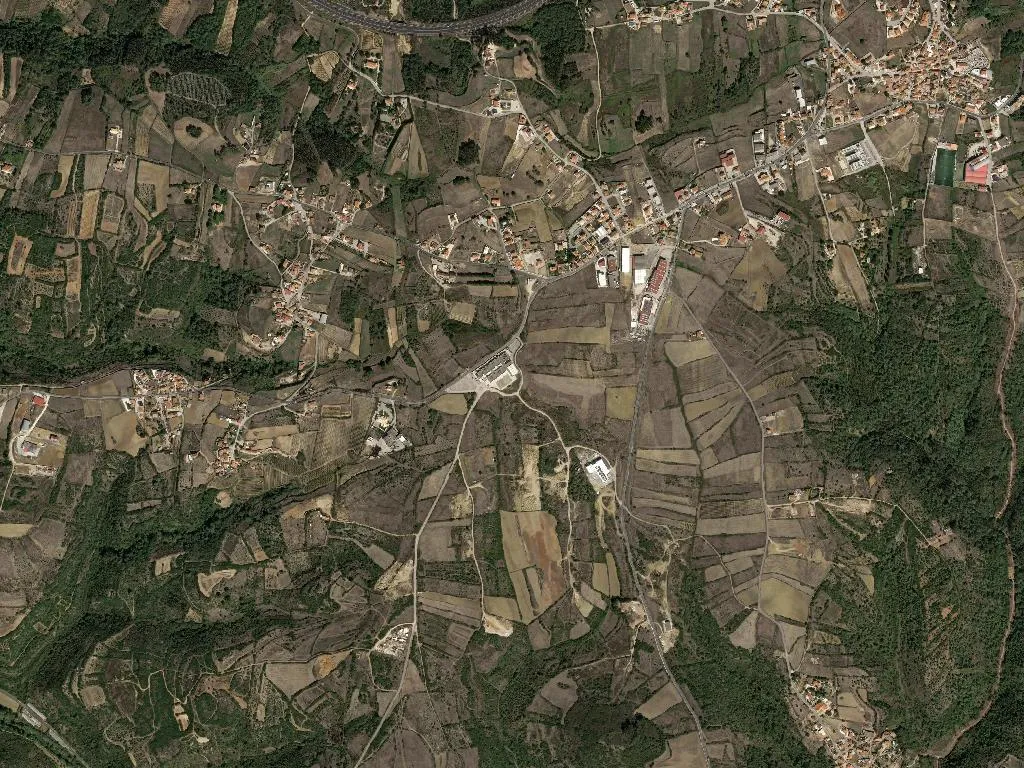
The bell of Nossa Senhora da Conceição strikes the hour and the note rolls across the September haze, skimming pear orchards where Pêra Rocha is blushing to gold. Below, the Cheleiros stream threads a silver seam between low hills, its surface catching the low sun like polished pewter. Tractors from the 1957 agricultural co-op kick up warm earth; the air carries diesel, leaf-mould and a trace of fructose that warns the pickers’ ladders will be out by dawn. In the combined parish of Igreja Nova e Cheleiros, 35 km north-west of Lisbon cathedral, the modern day is still calibrated by fruit sugar and church time.
Six centuries of town-hall swagger
Cheleiros was a municipal seat for 623 years—an almost unheard-of distinction for a settlement that never topped two thousand souls. King Sancho I raised it to vila status in 1195, King Dinis re-confirmed it in 1305, and the medieval tolls on wheat and tithes kept the settlement fiscally alive long after bigger neighbours had eclipsed it. The toponym itself—derived from the medieval ‘Chyleyros’—means ‘granaries’, a reminder that these slopes once fed Lisbon’s armies. Igreja Nova (‘New Church’) earned its label in 1560 when the parish junked its dilapidated chapel and erected the present Manueline São Pedro. The 2013 merger yoked the two communities into one administrative body of 37 sq km, home—according to the 2021 census—to 4,693 residents and 112,000 pear trees.
Stone ledgers of faith
Cheleiros’ mother church, rebuilt in 1544 on Romanesque footings, sits in a shallow bowl of land where the stream bends like a comma. Engineers of the Counter-Reformation knew their terrain: the façade catches first light, the apse is screened by hills, and the belfry acts as a way-finder across the orchards. Three kilometres east, Igreja Nova’s church keeps its original 16th-century portal—roped columns, armillary spheres, the confident stone handwriting of the Age of Discoveries. Both buildings have been listed since 1977, joined on the heritage roll by the Centro de Interpretação, a 1953 infants’ school turned micro-museum whose glass floor floats above Islamic irrigation channels and a fragment of Visigoth masonry.
Pears, palomino and pilgrims
Pêra Rocha do Oeste, Europe’s first pear to gain DOP protection, has been logged here since 1832. The variety needs the Atlantic swing of Mafra’s hills—204 m average altitude, cool nights, morning dew—so that sugars accumulate without collapsing into mealiness. Between the rows, small plantings of Arinto and Fernão Pires supply Lisbon’s vinho regional, light, saline whites that taste of sea-spray even though the ocean is 20 km away. Since 2016 the coastal branch of the Camino de Santiago has cut straight through the parish: way-markers with the yellow scallop lead walkers from the stream bridge up to Igreja Nova’s pillared porch, then out along cobbled mule tracks toward Ericeira and the open Atlantic. Hosts stamp credenciais with the same rubber stamp once used on fruit crates.
Living space
Demography here is a tight-rope: 754 children, 966 seniors, a median age creeping upward as Lisbon’s commuter belt exhales remote workers. Density—126 people per sq km—still allows breathing room; a farmhouse can be 300 m from its neighbour, a nightingale can practise scales without human hiss. The 2018 riverside footpath, way-marked by Mafra town hall, follows the Cheleiros for 5 km beneath willow and bulrush; kingfishers clack over the water, and on still evenings the air smells of wet basalt and bruised orchard windfalls. Accommodation is limited—21 beds registered in 2023—yet that scarcity is part of the contract: no boutique swarm, only the hush of fruit heavy on the branch and, at 19:30 precisely, the same bell that has tolled since 1952, scattering swifts across a sky rinsed with pear-gold.