Full article about Pontinha & Famões: windmills, coup plots, quince
Lisbon’s edge where 30 windmills once spun, 25 April was hatched and waxed quine boxes still sell
Hide article Read full article
Where the revolution began to the sound of windmills
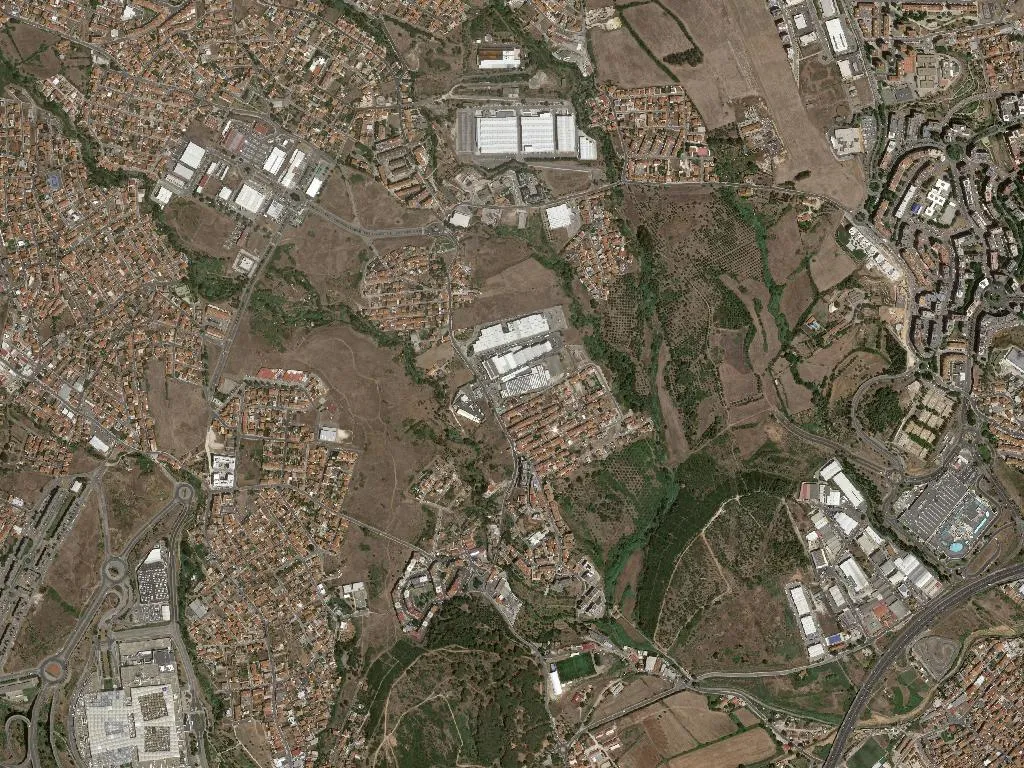
The Atlantic wind climbs 105 m and slams into rendered walls. It once spun thirty windmills; today it stirs brake-dust and the 35,000 voices packed into nine square kilometres. Plant yourself beside the Moinho da Laureana. Hear the axle groan, then the hush between gusts.
Bridge & estate
Pontinha – “little bridge” – recalls a crossing long since buried under tarmac. Famões sprouted around a medieval manor and lived off orchards and quarries. When Lisbon’s concrete reached them in 2013, the civil parish缝合 already existed in all but name; the merger simply rubber-stamped geography.
Stone from the Trigache quarries rebuilt the capital after the 1755 earthquake. You can still spot its ochre grain in Chiado façades.
Stained glass & barracks
Júlio Pomar’s expressionist panels – cobalt and arterial reds – turn the Igreja da Sagrada Família into a secular light-box. Five minutes away, the Rosário church keeps its baroque sobriety, tethered to farm-era devotion.
Inside the 1st Engineering Regiment headquarters, officers plotted the 25 April coup that toppled the dictatorship. The small MFA museum preserves wall maps, Bakelite radios and the moment Portugal blinked into democracy.
Millrace & gears
Of thirty watermills and sixteen horizontal wheels, only the Laureana survives. Whitewashed stone, chestnut cogs, the ghost-scent of stone-ground rye. From Casal do Bispo ridge (289 m) the Tagues glints on clear winter days.
Pine & quince
The Pinhal da Paiã has zip-wires and hacked-out footpaths that thread past backyard fig trees. The parish still makes IGP-certified “white” quince cheese – a translucent, low-sugar paste sold in slim waxed boxes.
The Caminho de Torres, an old drove road, now threads roundabouts and retail parks. No pastoral cosplay here: it admits the suburb for what it is.
Painter & plough
Court artist Vieira Lusitano swapped palaces for a country seat at Casal do Falcão; the Marquis of Pombal summered nearby. Meanwhile, the Escola Profissional Agrícola D. Dinis keeps furrows of kale and a working stud farm in the shadow of apartment blocks.
At dusk the ocean wind returns. For a second you catch the flap of canvas on mills that exist only in the air.