Full article about Ramada e Caneças: Lisbon’s Forgotten Springline Plateau
Walk above the buried Ribeira where windmills rot and custard tarts steam at 7 a.m.
Hide article Read full article
The water Lisbon once drank
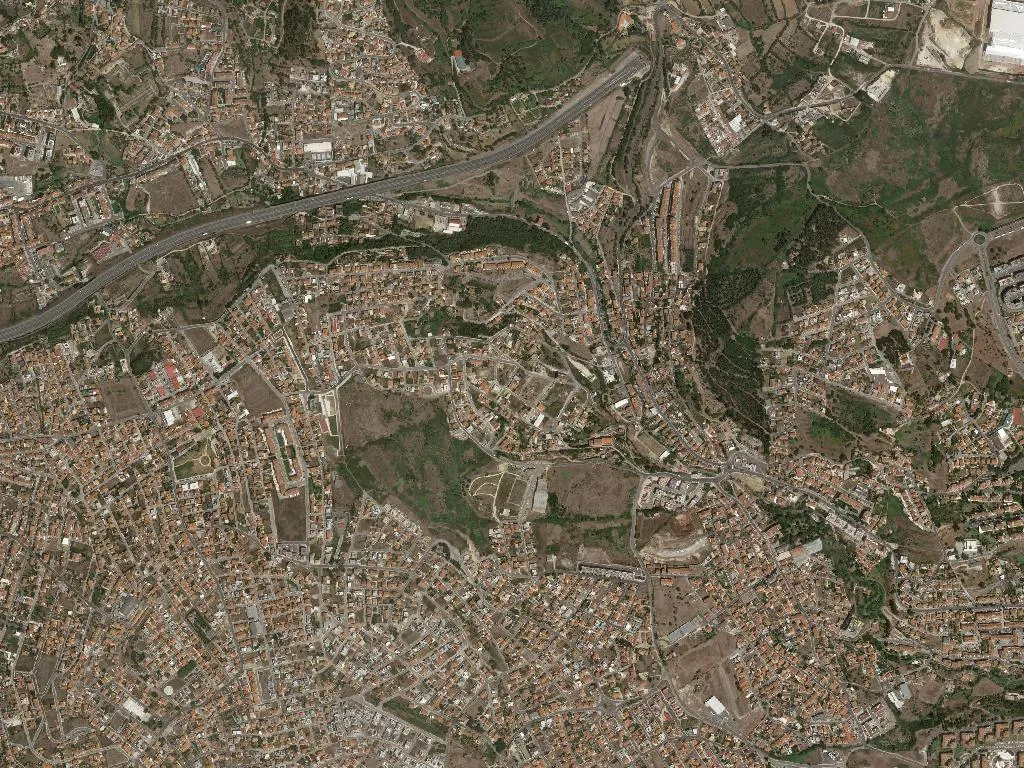
The wind carries the smell of sun-baked soil from the serra and the sweet-acrid tang of burnt hay in the fields that still hold out between the logistics parks. It is the scent of winter afternoons at my grandmother’s when she lit the bread oven and smoke drifted like a weary ghost. We are 230 m above sea-level on a plateau the city swallowed but never managed to digest. The civil parish of Ramada e Caneças covers just under 1,000 ha in Odivelas, yet anyone walking here – between the dry glare of fresh tarmac and stone walls where moss grows like green ink – senses an older layer beneath the roundabouts and apartment blocks.
Where the plateau keeps its springs
Caneças has existed as a settlement since 1719, but its importance to the capital is older than any charter. Springs that rise here once slaked Lisbon’s growing thirst: the water ran to the Mãe de Água Nova reservoir in Carenque, then down the Águas Livres Aqueduct. Today the Ribeira de Caneças slips between concrete walls and nettles, so discreet that most residents pass over it without a glance. Stand on the bridge at Rua da Eira when the schools empty and you will hear water clattering over stone – the same sound that turned millstones and filled stone troughs when wind-sails still turned on the ridges. At Amoreira a windmill survives, sails stripped, yet the wind still circles it like a dog who has not understood that its master is gone.
Two parishes, one marriage of convenience
Ramada only became a parish in 1989, hived off from Odivelas and Loures; Caneças earned its status in 1915. The 2013 merger left the border intact: cross the EN250 and you know. In Caneças, Café Zé serves bica in glass tumblers and the custard tarts are warm at seven. In Ramada, Avenida’s plastic tables face the road and Sunday afternoons drift to Brazilian forró. With 34,500 inhabitants this is urban territory, but of a kind that still breathes through the cracks – vacant plots where wild oats turn blond in summer, farm gates that squeal at dawn, a rooster crowing while diesel idles on the main street.
The poet who came for the air
After the 1755 earthquake, Lisboetas fled the rubble for these higher, healthier fields. Caneças was one of their refuges. Cesário Verde boarded in Lugar d’Além – lanes without pavements, cottages with vegetable patches behind. You can still walk the grid he walked, boots muddy, breathing the same dry air that stings cheeks in January. The light here is raw, as though the plateau has bargained it closer to the sky; winter afternoons turn it metallic, slicing façades in half and leaving the rest in cold shade.
Quince, sugar and patience
Odivelas white quince paste is nothing like the supermarket slab. It is pale, almost translucent, yielding to the tooth before releasing its sweet-sharp perfume. At the factory on Rua dos Combatentes, Dona Alice stirs copper pans with wooden paddles for hours until the quince loses its colour. The secret, she says, is “no hurry and no fear of burnt fingers”. Eaten warm with maize bread, it tastes of the place itself – something that refuses to be hurried.
Footsteps that still pass
The Torres pilgrimage route cuts across the parish, but few notice. Pilgrims share the pavement with children in school uniforms, mothers pushing prams, old men playing Sueca over coffee. Fifteen households offer beds – from neat flats to spare rooms in family houses. At Casa do Avô, stone walls enclose a sleepy ginger cat and Dona Fernanda brings yesterday’s tomato jam to breakfast.
The parish claims two national monuments – the 16th-century mother church of Caneças and the Palácio do Conde de Penafiel – and a demographic seesaw: 5,600 under-25s, 6,500 over-65s. You feel the balance in the rhythm of the streets: benches claimed by mid-morning, playgrounds coming alive after four, teenagers swapping vape smoke behind the sports hall.
Stay long enough and you will detect something no atlas records: the sound of water. Not the obvious rush of a waterfall, but a low subterranean murmur that seems to rise through the asphalt, the old pipes, the stream that refuses to dry up. It is the same water that once quenched Lisbon – now running unheard, a secret the plateau keeps to itself.