Full article about Algés-Linda-Cruz Quebrada: Lisbon’s salt-sprayed river rim
Three parish memories merge where tide, motorway and 17th-century fort collide
Hide article Read full article
The estuary wind arrives before the water does, carrying a low-tide perfume of silt and iodine that settles on skin like cold sweat. Along Avenida Marginal in Algés the river does not roar – it mutters, a broad, indecisive ribbon hesitating before the Atlantic. Rigging clinks on a moored sailboat; a grey heron lifts off the wooden walkway with a croak that sounds almost mechanical. Morning light, strained through the Tagus’s damp breath, bleaches the riverfront façades to the colour of wet sand, as if the architecture itself were slowly dissolving back into the water.
Almost 48,000 people share just over seven square kilometres here – one of the highest densities in the municipality of Oeiras – yet a five-kilometre littoral acts as a release valve against claustrophobia. This 2013 amalgamation stitches together three former parishes: Algés, first named in 1254; Linda-a-Velha, documented since 1292; and the administratively younger Cruz Quebrada-Dafundo, born in 1843. Three histories, three temperaments, one estuarine horizon.
The broken cross and the island between tides
Algés itself still carries its geography in the name: from the Arabic al-jaz, “island” or “land between waters”, a reminder that the estuary once pushed further inland, isolating strips of ground between tidal channels. Linda-a-Velha – “Pretty-the-Old” – must once have balanced a vanished Linda-a-Nova, while Cruz Quebrada (“Broken Cross”) memorialises a stone cross found snapped on the old royal road. These are honest place-names; they promise no grandeur, merely record accidents of terrain and chance.
The 18th-century Palácio dos Anjos, built as a summer retreat for the royal family, now houses the parish council. Classified as a Property of Public Interest, its pale plaster and carved stonework retain a domestic scale that belies the regal title. Five minutes away, the 17th-century Forte de Dafundo stands square to the water, thick stone walls erected to guard the Tagus from Atlantic threats. Between 1943 and 1945 it served as a logistics hub for Allied submarines escorting convoys – a salty wartime footnote the stones keep to themselves.
Operator-free calls and a collection worth millions
Algés nurses a discreet pride: on 11 October 1924 the country’s first automatic telephone exchange connected calls without the help of an operator. A century later the parish is still engineering firsts. Every July the Passeio Marítimo de Algés mutates into one of Portugal’s largest music arenas when NOS Alive moves in; bass frequencies rattle coffee cups in the nearby cafés.
A quieter cultural gesture takes place inside a 16th-century mansion that shelters the Centro de Arte Manuel de Brito, home to one of the finest private collections of 20th-century Portuguese art – admission free, daylight sliding through sash windows onto canvases that chronicle a nation’s modernist journey. The 16th-century Igreja Matriz de Algés and the riverside Capela de Nossa Senhora da Boa Viagem complete a walkable morning itinerary, punctuated by a rest in the Jardim Municipal where, on Saturdays, small producers lay out crates of lettuces and lemons, and monthly antiques stalls occupy the plot once reserved for Algés’ own “thieves’ market”.
Eels, razor clams and rice from the Ribatejo
The cooking here tastes of estuary. Fried eel or caldeirada stewed in vinegar, swordfish with tomato rice, razor clams seared on a hot plate that still sizzles when they reach the table – it is the food of people who have always kept one foot in the water. The rice that anchors many of these dishes is the protected-origin Carolino from the Ribatejo floodplain, each grain plump with shrimp and cockle fumet. Vineyards of the Lisboa region supply brisk Arinto and Fernão Pires whites that flatter rather than flatten the seafood. In the pastelarias the Algés custard tart – whose recipe predates Belém’s more famous rival, dating from the nineteenth-century Fábrica de Pastéis de Algés – vies for counter space with local queijadas and dense slices of home-made cornmeal cake that dissolve on the tongue with the sweetness of toasted maize.
Thirty hectares of pine and winter flamingos
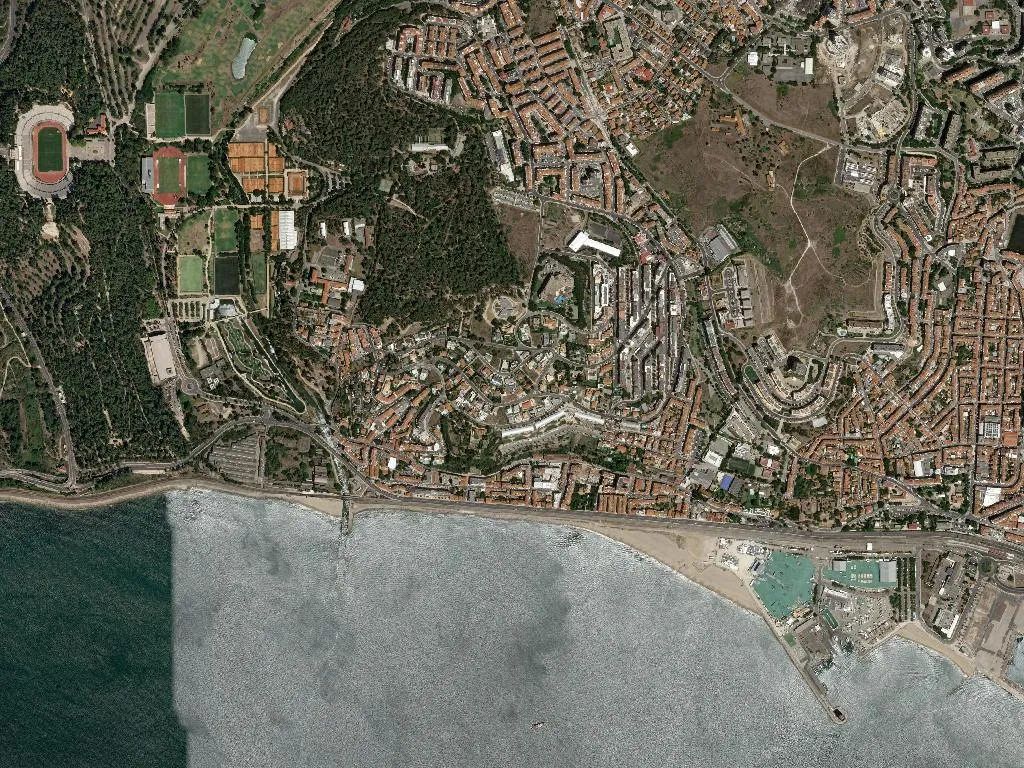
Inland, the Parque do Jamor suddenly swaps apartment blocks for thirty hectares of closed-canopy pine, golf fairways, athletics tracks and the Olympic pool of the national sports centre, its water that particular chlorine-scented blue of effort. Along the river in winter, migrant flamingos touch down in the shallows, unlikely flashes of rose against the estuary’s pewter. The short Rota dos Moinhos links the old tide mills of Cruz Quebrada and Dafundo – a low-key path, barely sign-posted, but enough to show how the moon’s pull once turned millstones long before anyone dreamed of power stations. The Mata de Algés, a fragment of native woodland squeezed between tower blocks, acts as a green corridor and shade refuge on July days when the sun liquefies the asphalt and the air shimmers above the blacktop.
Lupins at sunset, New Year’s in the drink
Dusk has its own ritual: cycle or stroll the Passeio Marítimo until the sun slips behind the Tagus bar, then claim one of the riverside café terraces – 3ª Pedra keeps its chairs in the last triangle of warmth – order tremoços (brined lupins) and prawns you peel yourself, and let the estuary breeze dry the day’s sweat. In early September the Festa de Nossa Senhora da Boa Viagem fills the quay with the smell of grilled sardines and candy floss and launches a flotilla of decorated boats in procession.
On 31 December, while the rest of the country reaches for champagne, swimmers of every age sprint into the river for the Sport Algés e Dafundo’s São Silvestre swim – a tradition since 1975 that ends the year with the Tagus’s cold teeth in the skin. It is that bite – brief, razor-sharp, absurdly alive – that lingers, not the view or the monument, but the precise memory of December water rushing the chest, and the uncontrollable laughter when you surface, gasping, into the new year.