Full article about Almargem do Bispo: roast pig & Roman bones
Sintra’s secret village where bishops gambled, ovens roast leitão and Roman ghosts guard springs
Hide article Read full article
Almargem do Bispo: where stone keeps Roman bones and the scent of roast suckling pig drifts uphill
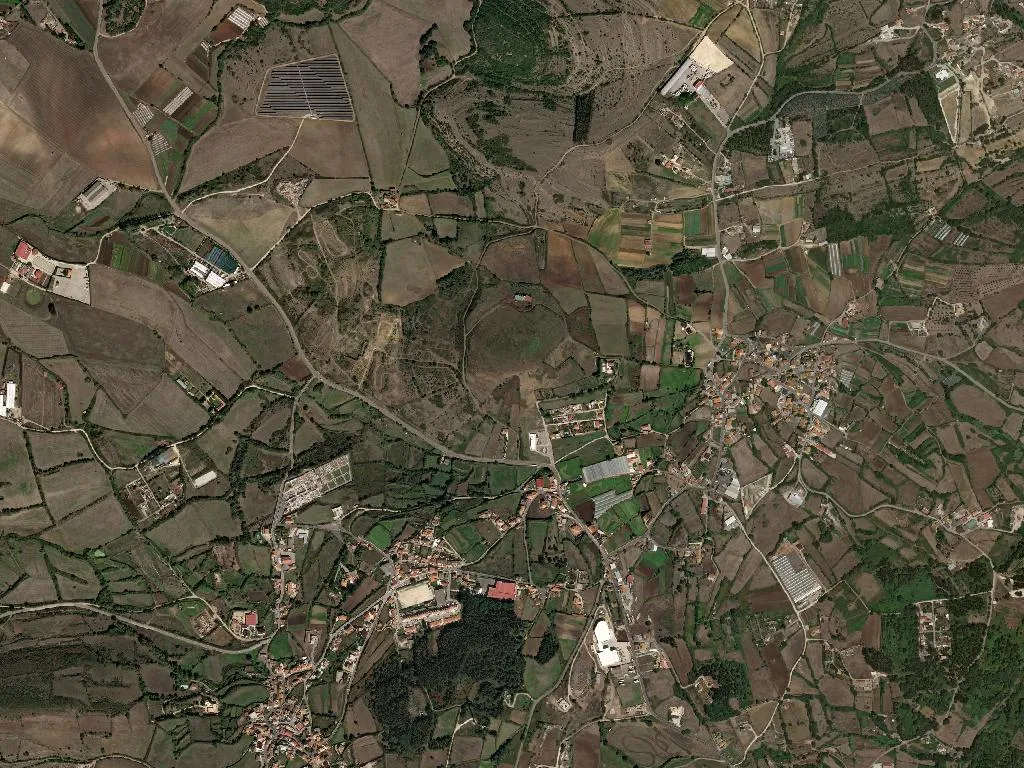
The bell of São Miguel rings once, twice; its echo slips between whitewashed walls and is gone. Eight-thirty on an ordinary Saturday, yet Café Diana’s metal tables are already on the pavement and Zé do Leitão has fired his brick ovens. The road that splits the parish is the old 117, the same artery the Romans drove laden with olive oil and wheat bound for the Tagus. It now wears zebra stripes and fresh tarmac, but its compass heading hasn’t changed in two millennia.
Land a bishop won in a card game
In 1277 King Afonso III handed these 14 square kilometres to the Bishop of Lisbon—whether to settle gambling debts or buy political favour the chronicles never quite confess. The Arabic al-margem (“land beside water”) stuck to the ecclesiastical addendum and nobody saw reason to unpick it. For centuries the parish tithed grain to the diocese and buried its dead under the churchyard cobbles. Even today a drainage trench can spit out a copper as of Marcus Aurelius or a 17th-century azulejo.
What to look at (that isn’t on the coach itinerary)
Inside the parish church a Mannerist altarpiece earns five silent minutes—Americans photograph it as though it might disappear. Five minutes on foot, the Fonte dos Pisões still fills grandmothers’ five-litre bottles; the water is cold, iron-sweet and mercifully absent from Instagram.
At Casal do Rebolo a gated Roman necropolis lies behind a farm gate. Knock at the low house opposite and D. Lurdes will fetch the key. She’ll tell you, in the same breath, that the bones inside prayed to both Jupiter and the saints, back when no one could guarantee heaven over Hades.
Where to eat without falling into the trap
Zé’s suckling pig is famous, but telephone first—only what is ordered is roasted. On the road towards Pêro Pinheiro, Restaurante O Serga stews chanfana—old goat braised in clay-pot red wine. Order the Alentejan bread to mop the sauce and surrender your car keys; you won’t need them afterwards.
If the sun is out on Sunday, an impromptu tavern appears in the churchyard: charcoal-grilled sardines, cloudy white wine poured from five-litre flagons, conversation that ends only when the priest locks the door at dusk.
The festival for people who never left
On 29 September—the feast of St Michael—Lisbon number-plates flood the parish for the arraial. There’s Berliner-doughnut roulette, a carousel my cousin swears still carries the same painted horses from 1987. A week earlier the Festa da Piedace is quieter: blessed bread after mass and a silent contest among grandmothers as to who secures the crustiest loaf.
How to arrive, and why
Leave the A37 at Pêro Pinheiro, follow signs for Bucelas. When cork oaks outnumber road signs and the phone drops to one bar, you’re there. Almargem offers no postcard miradors, no souvenir bazaars; instead it retains what the rest of Sintra has bartered away—time enough to hear spring water run and neighbours argue about last night’s clasico.
Pack walking shoes and an appetite for crackling. Switch the mobile to airplane: the GPS still works, but you’ll miss the point.