Full article about Belas: Sintra’s fog-draped ridge above Lisbon
Limestone air, commuter pulse and 16th-century stone wedged between post-war blocks
Hide article Read full article
The first thing you notice is the gradient
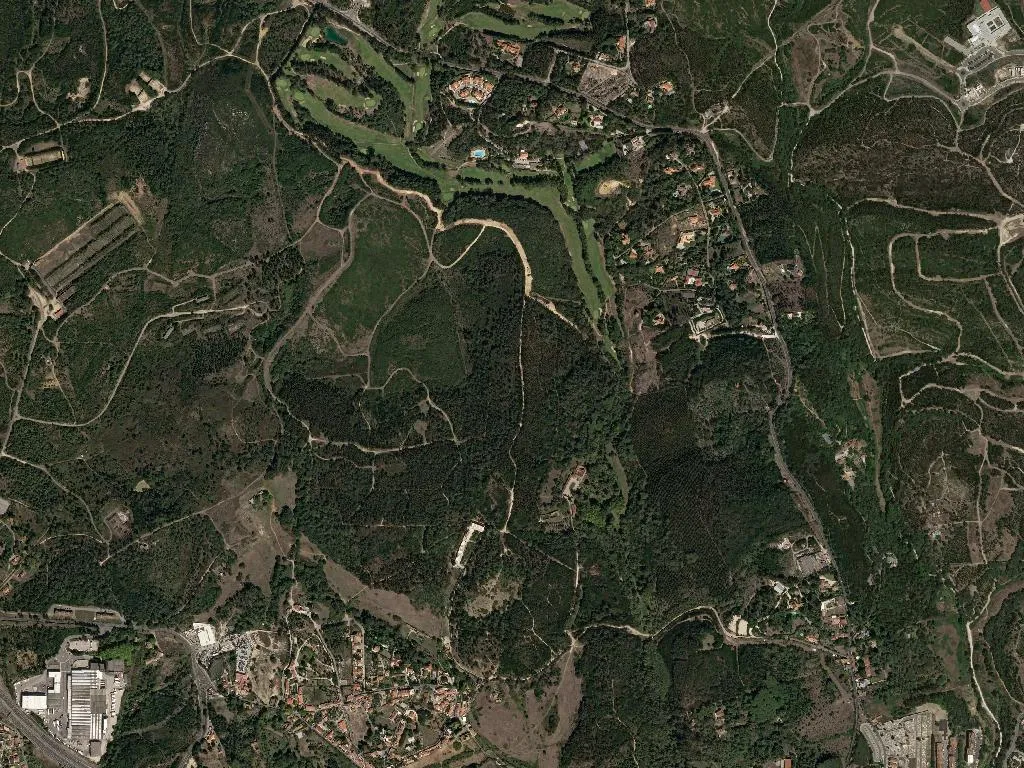
The pavement tilts, obliging calf muscles to engage and shoulders to pitch forward as if in permanent apology. Belas sits 244 m above the Tagus, a limestone ripple where the Serra de Sintra exhales and Lisbon’s coastal plain begins. Air arrives cool and mineral-scented, freighted with eucalyptus vapour from the Parque Natural that nudges the parish boundary. On January mornings Atlantic fog slides over the ridge, erasing rooflines and turning street lamps into pale, hovering moons.
A parish that refuses one identity
Twenty-six thousand people share 10 km², a density that would feel urban if pockets of woodland and smallholdings did not push back. Post-war apartment blocks rub shoulders with small 19th-century quintas; mothers wheel designer prams past octogenarians carrying shopping in crocheted bags. The A16 and A9 motorways meet nearby, so the capital is 20 minutes away—close enough for civil servants to commute, far enough for restaurants to charge suburban rather than city prices.
Five stone bookmarks
Only five buildings enjoy formal protection, but they act as spatial punctuation. Most striking is the Igreja de São Pedro de Canaferrim, its 16th-century portal wedged between 1980s social housing. A short walk away, the Quinta da Bela Vista still grows vegetables inside original basalt walls; beyond the gate, modern villas imitate its whitewash and blue trim with varying conviction. Elsewhere, manor houses survive as condominium entrance features, their azulejo panels now lobby art for residents who rarely notice the dates—1634, 1721—glazed beneath their feet.
Wines that remember the coast
Belas falls inside the Lisboa wine zone, specifically the sub-region that yields Arinto de Bucelas. Night-time sea breezes preserve acidity, giving a white that tastes like lime pith and brine. You will not find quintas here—vines occupy the sandier soils towards Loures and Bucelas itself—but the varietal appears on every restaurant list. Ask for a glass with açorda de marisco and you receive a bowl of coriander-scented bread soup, the broth sharpened by a final squeeze of the same Atlantic-touched fruit.
The mountain as neighbour and corridor
Way-marked paths leave from street ends, climbing through eucalyptus coppice into stone-pine and, higher, evergreen oak. The GR11 long-distance route brushes the parish, and one variant of the Caminho da Costa—the coastal branch of the Portuguese Camino—crosses the centre. Pilgrims pause for bica and pastéis de nata at Café Avenida, then follow yellow arrows past the Intermarché, proof that sacred itineraries are not immune to retail parks. Sixteen small guesthouses provide beds, none larger than fifteen rooms; owners assume you are walking, driving to the coast, or visiting the palaces of Sintra 12 km west.
The sound that lingers
Leave Belas at dusk and the memory is not visual but aural: a thin ribbon of water slipping through a stone channel beside the road, too constant to be recent rain, too delicate to be called a stream. It is the serra draining itself, drop by drop, into daily life—a reminder that the hill is never more than a glance away.