Full article about Colares: vines in Atlantic sand, wine in time-worn cellars
Ramisco roots cling to Sintra’s dunes, yielding iodine-scented reds Europe forgot
Hide article Read full article
Colares: where vines claw at the Atlantic dunes
Salt-laden wind rolls in from the ocean and flattens itself against vineyards that look like no others on earth. Ramisco vines lie prostrate on bleached sand, their canes trained into shallow trenches, anchored to clay three metres down. Around them, waist-high palisades of woven cane break the sea breeze that would otherwise scorch the leaves. From the ridge behind, the Sintra range exhales pine resin and eucalyptus; below, waves detonate against limestone cliffs. Colares occupies the narrow margin between the two—33 km² of stubborn agriculture squeezed between granite and salt water.
The vineyard that phylloxera forgot
Vines have been documented here since 1255, but it is the soil—not the cellar—that makes the story. The DOCa Colares regulation is adamant: only grapes rooted in pure sand may bear the name. When phylloxera tore through Europe’s vineyards in the 1880s, the louse could not navigate these shifting dunes. While the rest of the continent grafted onto American rootstock, Colares carried on ungrafted, its Ramisco (red) and Malvasia de Colares (white) vines still standing on their own roots 150 years later.
At its pre-war peak the region covered 1,000 ha; today 18 ha remain, yielding a miserly 50,000 bottles a year. The Adega Regional de Colares, a cavernous 1930s cooperative, ages its reds for at least six years in Brazilian mahogany casks before release. A 1990 Ramisco, poured in the dim barrel hall, smells of iodine, sun-baked brick and dried sour cherry—£110 a bottle, and still adolescent.
Stone, lime and the echo of centuries
The parish church of São Martinho mixes 12th-century Romanesque bones with 16th-century Manueline embroidery—ropes and armillary spheres carved in the same limestone that paves the cliffs. Colares counts 15 listed buildings, four of them National Monuments: manor houses painted the colour of fresh buttermilk, windmills reduced to stone cylinders, their sails long gone. Nothing rises above three storeys; the Atlantic insists on horizon.
Sand between your toes, mountain at your back
The Sintra-Cascais Natural Park loops around the entire parish. Walk east and you are instantly in humid Atlantic forest—giant ferns, granite boulders quilted with electric-green lichen. Thirty minutes later you drop to Praia da Adraga, where the tide funnels between schist stacks and retreats, leaving glass-smooth tram lines in the sand. Surfers favour Praia Grande for its consistent north-wind swell; parking is €5 and the beach bar serves excellent grilled squid.
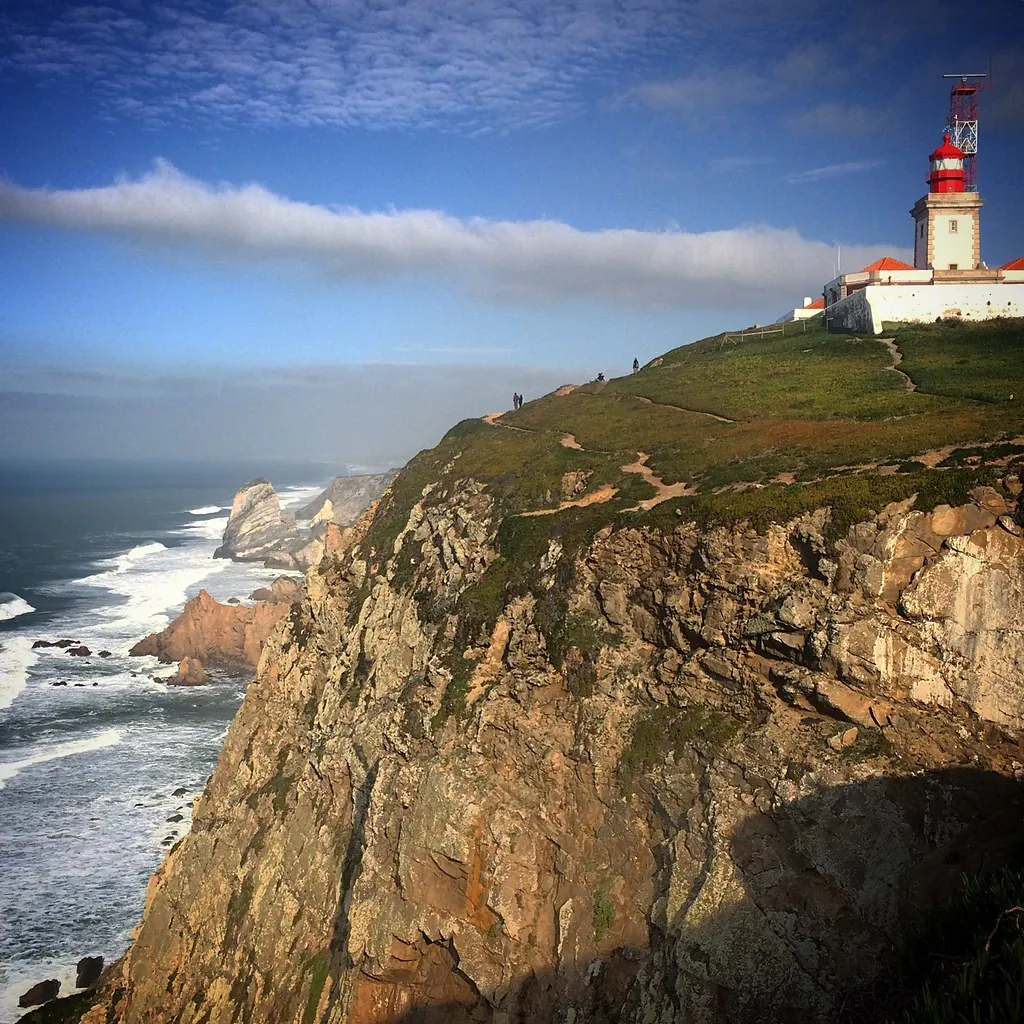
The coastal Way of Santiago cuts straight through: 13 km of yellow-arrowed cliff path from Colares to Cabo da Roca, Europe’s westernmost lip.
The taste of the tide-line
At Taberna do Cuco, a fisherman’s fish soup sharpened with coriander and tomato costs €12; Adega das Azenhas pairs eel stew with a 10-year Ramisco whose tannins have mellowed into damp earth and bresaola. In the village grocery, Rocha pears from the inland orchards sell for €2 a kilo. A glass of Colares white in any café is €4—salty, beeswax-scented, the liquid equivalent of a cold oyster.
Seven thousand souls, one foot in the dunes
Census 2021: 7,746 inhabitants, 1,050 under 25, 1,959 over 65. Ask the older ones and they will show you black-and-white photographs of barefoot workers burying young vines in trenches, sand flying like confetti. There are 367 tourist beds—villas, cork-clad studios, a lone hostel—but numbers swell in August, when doubles climb from €90 to €200.
At dusk the wind swings landward, carrying Atlantic salt into the old vineyards. It is then you understand the stubbornness of the place: vines that should not survive have done exactly that for two centuries, their roots corkscrewing through sterile sand until they strike clay and water. Nothing here is picturesque; everything is improbable—and therefore alive.