Full article about Pêro Pinheiro: Chiselled Fog above Sintra
Limestone ridges echo with 800-year quarry songs outside Sintra’s palace belt
Hide article Read full article
Pêro Pinheiro: Where the Stone Talks
The first thing you hear is the sound – a dry, metallic heartbeat of chisel on limestone. Only afterwards do you see the white dust hanging in shafts of morning light like flour in a bakery. In Pêro Pinheiro, 20 kilometres north-west of Lisbon, stone is not scenery; it is syntax. Every house wall, every roadside calvary, every windowsill is a sentence quarried from the same Jurassic reef that underlies this ridge. Romans, Templars, 19th-century railway engineers and today’s kitchen-worktop installers have all taken turns at reading the page.
A medieval name, a two-thousand-year trade
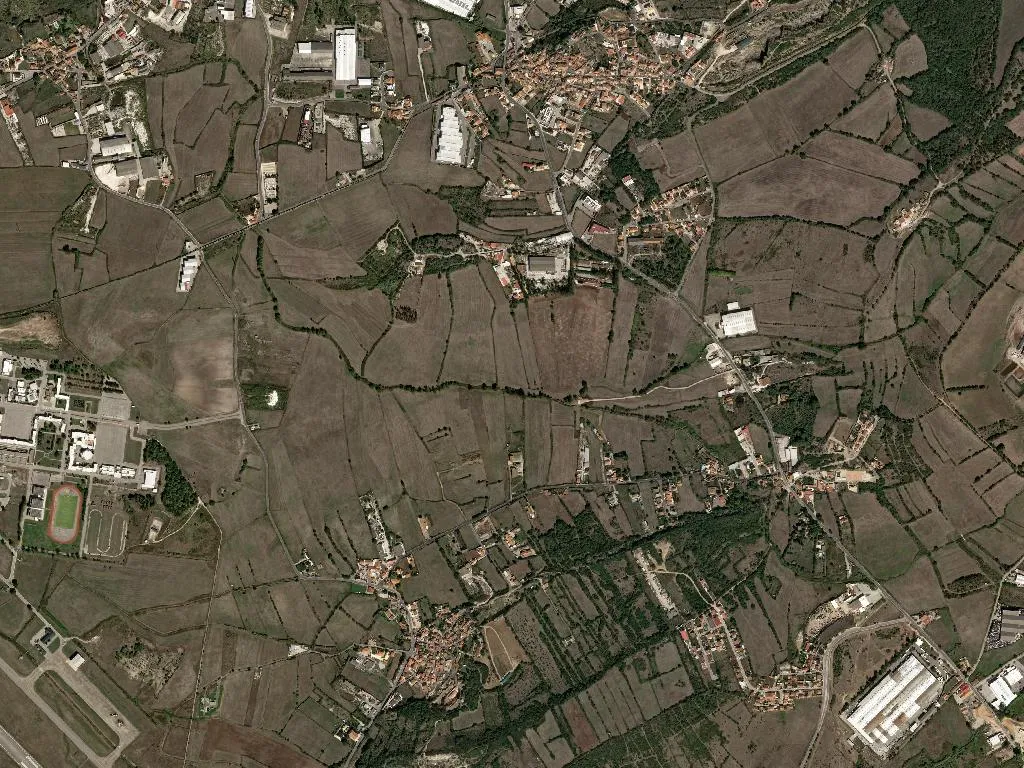
The parish’s 16 km² roll between 100 and 200 m above sea level, shielded from Atlantic weather by the Sintra massif yet already outside the Unesco buffer zone of palaces and coach parks. Pine plantations once gave the settlement its prefix – Pêro is an archaic form of Pedro, Pinheiro means pine – but the trees were cleared long ago to feed lime kilns. Documents from 1238 refer to “Pero Pinharii”; a century earlier the crown had handed the hill to the Templars, hoping they would coax villagers into quarrying enough stone to build a Christian frontier.
The gamble paid. For 800 years the local economy has orbited three suns: vines, orchards and the white marble-like limestone known locally as pedra de Ançã. Until the 1950s you could still watch ox-carts drag six-ton blocks to the railway at Mercês, bound for Lisbon’s banks, theatres and, ironically, the neo-Manueline restoration of Sintra’s own National Palace. Today 5,754 people live here, but only 815 are under eighteen; retirement-age residents outnumber teenagers two to one. Mid-afternoon, the loudest noise is the bread van horn at 10:30 sharp.
Mist, medronhos and Portugal’s favourite pear
The ridge’s average 143 m altitude traps cool, humid air that drifts in from the Sintra hills. Dawn often begins in low fog; by eleven it has condensed on the red berries of the arbutus trees (medronheiros) that colonise abandoned quarries. Locals turn the fruit into aguardente de medronho, a clear firewater that tastes of strawberry and pepper and is best served at cellar temperature with a slice of queijada from nearby Malveira.
The same Atlantic dew that ripens the berries also fattens Pêra Rocha do Oeste, Portugal’s only pear with DOP protection. Orchards are planted in grids between the vines; in late August the fruit is still crisp, the skin freckled with rust-coloured lenticels that look like oxidation on pewter. Drive the narrow lane between Quinta do Barreiro and Casal do Rato and you pass parcelas where the identical white blossom of pear and vine once fooled even bees.
Tracks through vines and karst
There are no signposted footpaths, yet the web of farm tracks is public right-of-way. Follow the dirt road west from the Capela de Nossa Senhora da Luz and you drop into a dry-stone corridor of abandoned walls. After two kilometres the Atlantic appears – a silver seam above the cork oaks – and the Caminho Português da Costa, the coastal variant of the pilgrimage to Santiago, cuts across your route. Pilgrims usually arrive dusty from Lisbon’s suburbs; by the time they reach Pêro Pinheiro their boots are white with limestone dust and their water bottles need refilling at the stone tank by the chapel.
Accommodation is scarce: three registered guesthouses, all converted farmhouses. The council has resisted the temptation to licence more; instead, money from the EU’s Leader programme has gone to restoring terraces and dry-stone walls. The result is a landscape that feels lived-in rather than looked-at – television flickers from café corners, neighbours shout across vegetable plots, washing flaps beneath satellite dishes.
Scars that heal
Unesco’s designation of the “Cultural Landscape of Sintra” extends beyond palaces and gardens to include the entire human geology of the massif. The disused quarries of Pêro Pinheiro – vertical white cliffs now filled with emerald rainwater – are therefore World Heritage by association. Lichen has colonised the saw-marks; ferns root in fissures; peregrines nest on ledges once reached by timber derricks. Stand at the rim at dusk and you watch the same light that gilds Pena Palace slide across a wound that industry forgot to close.
When the sun drops behind Sintra the temperature falls four degrees in minutes. The limestone dust that has hovered all day settles, a ghost-grey film on car bonnets, jacket sleeves, camera leather. Three wash cycles later you will still find it in the turn-ups of your trousers – Pêro Pinheiro’s quiet way of insisting that its story travels with you, written in the only alphabet it has ever needed.