Full article about Railway Ridge of Clay & Cinnamon Aroma
Campelos & Outeiro da Cabeça share kilns, orchards and a whistle-stop Linha do Oeste past.
Hide article Read full article
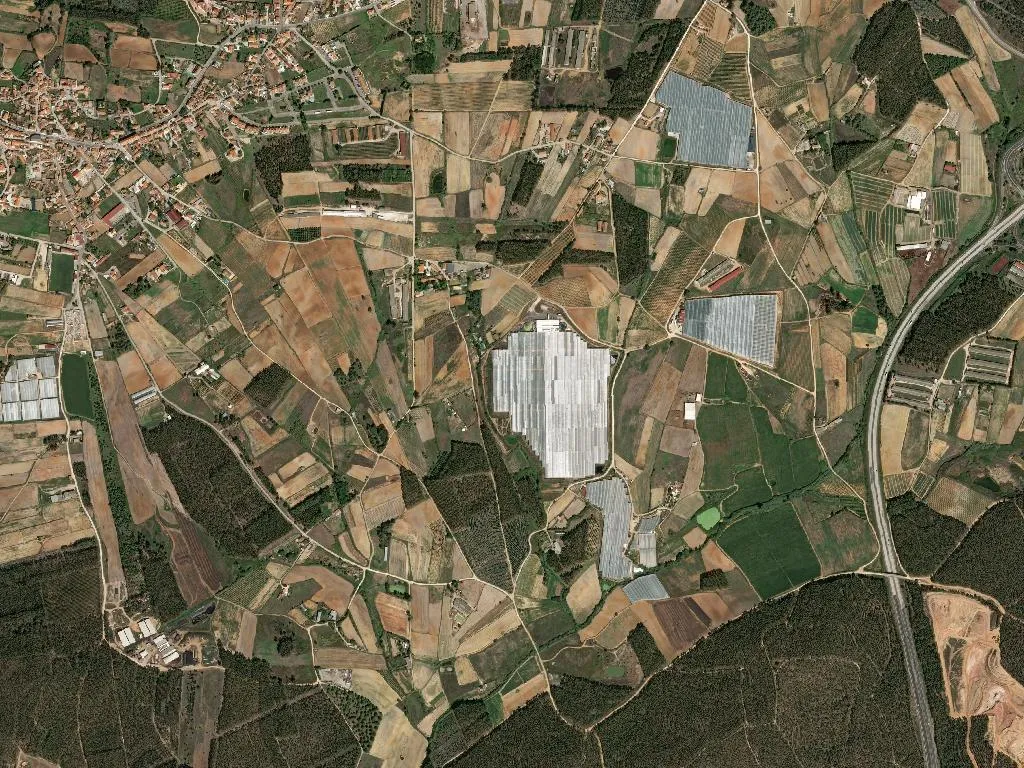
The 21h27 to Lisbon whistles and the afternoon snaps in half. Climb the slope above Outeiro station and the air smells of scorched clay: four brickworks still feeding their bee-hive kilns with local red earth. At 80 m above sea-level Campelos and Outeiro da Cabeça share the same ridge, the same railway cutting, the same 3,795 neighbours and an almost even share of olive groves and Rocha-pear orchards.
Two villages, one railway
Outeiro began as a water stop in 1887 when navvies laying the Linha do Oeste discovered the marl here made a tile that rang like china. Their temporary shacks became permanent; the siding changed name three times before shrinking to plain “Outeiro” in 1984. Two of the surviving yards welcome drop-ins when the kilns are cold—ask for the Romão workshop, where hand-thrown roof-tiles are still stacked in second-hand strawberry punnets.
Campelos grew along the old royal highway that once hurried mail coaches from Lisbon to Porto. The parish church of Santo António is barely Edwardian (1910), but the bandstand in front of it predates the building and still commands the Sunday vegetable market that opens at eight and closes whenever the last cabbage is sold. Promoted from “place” to “town” in 1995, Campelos was formally married to Outeiro in the 2013 local-government reshuffle.
Clay, brass and bean paste
The Ethnographic Museum in Campelos (Tue–Fri 10–12.30 & 14–17, free) keeps a disassembled water-mill from the Sizandro river and a loom you can work with your foot. Across the tracks, Outeiro’s red-clay quarries supply the Romão pottery; handmade quarry tiles cost 40 c each and travel home in re-used tomato boxes.
Torres Vedras has IGP protection for its pastel de feijão—a fragile, cinnamon-dusted bean-paste tart. The rule is rigid: unless it is baked within the municipality it may not carry the name. Buy them for €1.10 at the Saturday market or from Padaria O Trevo by the roundabout. Pears follow in September; roadside growers will sell you a 5 kg box of Rocha for €7.50 if you bring the cardboard. Rehearsal night for Campelos brass band is Wednesday at the community hall; visitors sit on the stage steps and are never asked for money.
Walking the Geopark
The PR 1 footpath links the two villages in 7 km (two hours, yellow-yellow waymarks). Start by the churchyard tap, finish at the station platform; carry water—there is no café en-route. Outeiro’s windmill, 200 m below the bus stop, is locked but makes a useful sundial for the sunset over the Sizandro valley.
Mafrense buses leave Torres Vedras’ Praça 25 de Abril at 07.15, 12.30 and 17.30 on weekdays; 20 min, €1.95. Regional trains halt at Outeiro six times daily—12 min from Torres Vedras, €1.20. Track upgrades are under way to let electric units run at 140 km/h; expect 30 minutes shaved off the Lisbon–Caldas da Rainha journey when work finishes in 2025.
Five legal guesthouses—three in Campelos, two in Outeiro—offer self-catering kitchens but no 24-hour reception. Book early for mid-August when the parish stages its romaria to Nossa Senhora da Saúde and the vineyards begin their harvest.
After the 21h27 departs the smell of cooling kilns drifts back into the night, mingling with crushed vine leaf. Dogs settle; a compressor sighs itself quiet, and the ridge returns to the low hum of tractors left in neutral—two parishes held together by a single line of steel.