Full article about Dois Portos: Apple Blossom & Limestone Trails
Vines, windmill and pilgrims’ scallop shells in Torres Vedras’ quiet parish
Hide article Read full article
The scent of turned earth and apple blossom
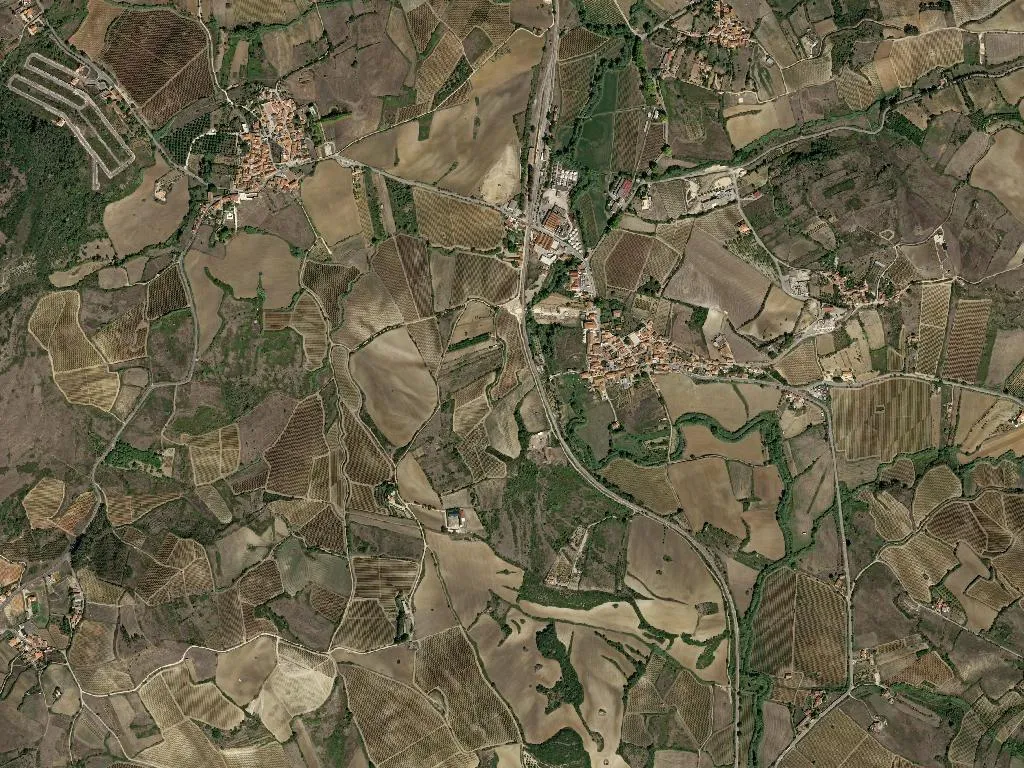
Dawn in Dois Portos smells of soil and nectar. Tractors already tick over among the vines, their tyres leaving chevrons in the loam while the first bees orbit the apple trees. Spread across 3,657ha of low, chalk-boned hills, the parish sits exactly 101m above sea-level – high enough for Atlantic breezes to polish the grapes, low enough for the horizon to dissolve into pear orchards. Rows of vines run to the ridge-line; beyond them, the same limestone that built the Jerónimos Monastery in Lisbon lies in tidy Jurassic slabs beneath the tractors’ tracks.
Three monuments, three centuries
There are no turnstiles, no audio guides. The heritage inventory is three buildings and a windmill, all quietly present in the landscape.
- Igreja de São Bartolomeu – erected in the 1530s over a 14th-century chapel, its baroque altarpieces still flash with original gold leaf.
- Casa do Terreiro – a 1640s manor house wearing the weather-worn coat of arms of the Goulão family, once lords of half the valley.
- Muleta Windmill – rebuilt in 1936 with the same pinewood cogs that survived the 1755 earthquake; one of the last working wooden machines in Torres Vedras.
Walk between them and you are walking through a pocket-sized survey of Portuguese rural history: Manueline, Pombaline, Salazar-era pragmatism.
The Costa Way passes through
The coastal variant of the Camino de Santiago cuts straight across the parish. Pilgrims arrive with scallop shells swinging from daypacks, boots powdered white with limestone dust. Six simple guesthouses – converted haylofts or 1950s farm cottages – offer beds at €25 a night. No spa, no pool; instead, a shared kitchen where someone has always left half a bottle of Arinto in the fridge. Way-markers are painted on dry-stone walls every kilometre; nightingales provide the playlist.
Apples, pears and a pastry that shouldn’t work
IGP Maçã de Alcobaça orchards occupy the northern slopes; DOP Pêra Rocha do Oeste is trained along trellises in the south. Between them, the pastry shops keep the regional ego intact: pastéis de feijão, a fragile tart filled with sweetened white-bean purée, its casing so thin it fractures like caramelised sugar glass. The recipe is protected under the Torres Vedras IGP and predates the custard tart by two centuries. Locals eat them at 10 a.m. with a bica strong enough to stain the saucer.
September, when the calendar tastes of tannin
Harvest month turns the parish into an outdoor winery. Pick-up trucks block the lanes, their beds stacked with lug boxes of Touriga Nacional and Castelão. In the cellars, stainless-steel tanks exhale yeasty sighs; grandmothers still destem by hand, nails dyed purple. Lunch is ladled from dented aluminium pots: lamb stew with home-dried peas, mint-scented broth thick with chouriço, bread torn while the crust is too hot to hold. By 4 p.m. the men are back on aluminium ladders, secateurs clicking like cicadas.
A geological open book
Dois Portos lies inside the Geopark Oeste, a UNESCO-listed strip where the Atlantic plate kisses the Iberian. Roadside cuttings expose ammonite coils the size of bicycle wheels; farmers plough up shark teeth and echinoid fossils, using them as paperweights. The same limestone ridge that cradles the vines once supplied stone for the nearby Lines of Torres Vedras, Wellington’s 1810 defensive network against Napoleon. Iron cannonballs still surface after heavy rain.
Population 1,394 – and falling
Census data reads like a slow-motion haiku: 432 residents over 65, only 151 under 19. Yet the fields are not abandoned. Retired teachers buy 3ha plots, plant Arinto and commute to Lisbon twice a week on the renovated West Line (37 minutes to Santa Apolónia). Their children, meanwhile, sell small-batch palomino to Borough Market and design labels that quote Fernando Pessoa. Density: 64 people per km² – silence included.
How to do it
Stay: Casa do Valle – a 1720s manor turned three-room guesthouse, fireplaces big enough to roast a goat.
Eat: O Batel, Runa, for charcoal-grilled sea bream and a glass of Quinta da Folgorosa’s barrel-fermented white.
Drink: Quinta da Boa Esperança, where you can blend your own rosé under the supervision of a winemaker who trained in the Yarra Valley.
Walk: Download the Geopark Oeste app; the 7km Fossil Loop starts behind the windmill and ends at a picnic table overlooking pear orchards.
Bring boots, a pocket for fossils, and enough time to let the lane end in a conversation about rainfall.