Full article about Freiria: wind-scoured village of ghost mills and pear perfum
Freiria, Torres Vedras: hear the creak of vanished windmills, taste EU-stamped wine, and learn why locals still whisper “Hat Freiria”.
Hide article Read full article
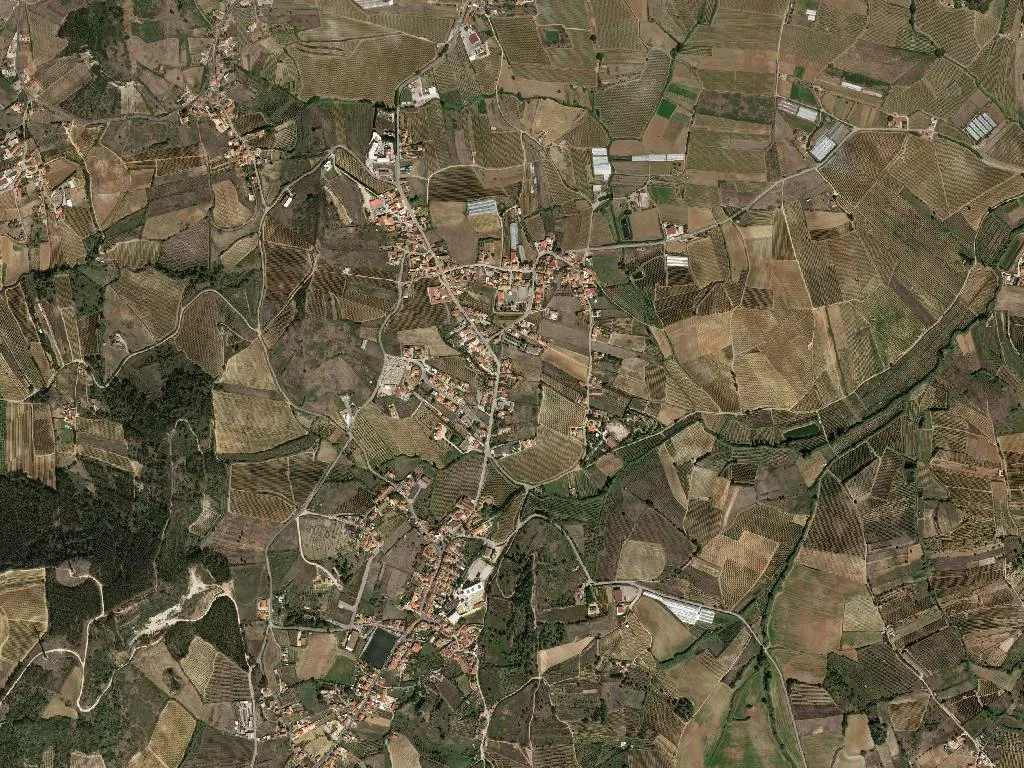
The wind still rattles the bones of the mills that once stood sentry over Freiria. Their sails are gone, yet the Serra da Lomba keeps the vanes grinding against the sky, a dry-tooth creak you can feel in the sternum just before dusk. Down-slope the breeze carries September’s smell of crushed grapes from the village presses and the honeyed musk of bruised Rocha pears.
A nickname nobody can verify
Locals mutter it quickly, as if it might bite: Freiria dos Chapéus—Hat Freiria. Officially the name honours the friars who farmed here in the 13th century, but the story goes that women once wore wide-brimmed felt hats to keep the Atlantic wind from flaying their faces. No parish record confirms it; every café retells it. Between 1820 and 1837 the place even answered to Azueira, until the new municipality map of 1855 clipped it to Torres Vedras for good. White-washed São Lucas, the mother church, has occupied the same ridge of shale since at least 1500; at noon its limewash throws the glare back like a mirror. The chapels of Santa Luzia and São Marcos sit marooned in their own hamlets—doors padlocked all year, bread broken on the walls only on their saints’ days.
When a soap opera moved in
A decade ago the Brazilian telenovela Floribella painted the bandstand candy-pink and strung balloons across Rua da Escola. For three months Freiria played itself: Ana from the grocer’s became the heroine’s mother; Zé Manel served carrot tea to Lisbon extras between takes. When the crew left they took the cameras but not the holes in the tarmac, and the signed still on the wall of Sport Clube is already sun-bleached. Afternoons still dissolve there over bica poured from cloth filters and Maria biscuits fished from square tins, while the parish council argues whose lane gets cobbled next.
A taste the EU has stamped
Harvest starts the morning after the first September soak. Lagar doors swing open, the yeasty fug rises, and by lunchtime your jumper stinks of fermentation. The local red—light, faintly caramel from the clay amphorae—never sees a label; it travels in five-litre jerry-cans to family tables in Loures. Pickers lift the Rocha pears at dawn while dew still beads the skins; EU class I fruit heads north in refrigerated lorries to Rungis market. Rejects—small, russet-scabbed—are eaten on the spot, juice running to the elbow, bees orbiting your wrist. The custardy pastel de feijão isn’t from here but arrives warm from Torres Vedras in paper bags, blistering the tongue if you’re impatient.
Tracks that skim discreet ridges
The coastal camino from Ericeira climbs the Lomba, boots frayed by sand, and drops into Freiria’s font where pilgrims refill plastic bottles and ask how far to Santa Cruz. Answer: always another hour. Geopark loops suit a Sunday afternoon when the rice-pudding ballast needs justification. One switch-backs through creaking eucalyptus to Romeirão’s summit; on a lucid day you can taste the Atlantic salt and bruise thyme underfoot. Below, tractors gut-punch the earth on Saturdays, their drone braided with blackbird song.
Hands that still throw clay
Inside Sr António’s workshop the wheel is chestnut, the clay dug from the bank behind the house. He turns talhas for medronho, mugs for table wine, stew pots glazed only by woodsmoke. The kiln is a brick mouth fed with dry eucalyptus; when the door cracks the heat slaps like a draught from hell. Pieces emerge gun-metal grey, smelling of old rain. Five euros wraps a jug in yesterday’s Diário de Notícias and the warning: “Microwave? Certainly not, sir.”
The bell of São Lucas tolls six times, give or take—whenever the sacristan has locked up and remembers. Sound drifts down to the football pitch, climbs again, and is finally swallowed by the same wind that once turned flour into bread and now turns only splintered wood against the sky.