Full article about União das freguesias de Maxial e Monte Redondo
Taste Maçã de Alcobaça and Pastel de Feijão amid striped vineyards at 79 m
Hide article Read full article
A landscape you can taste
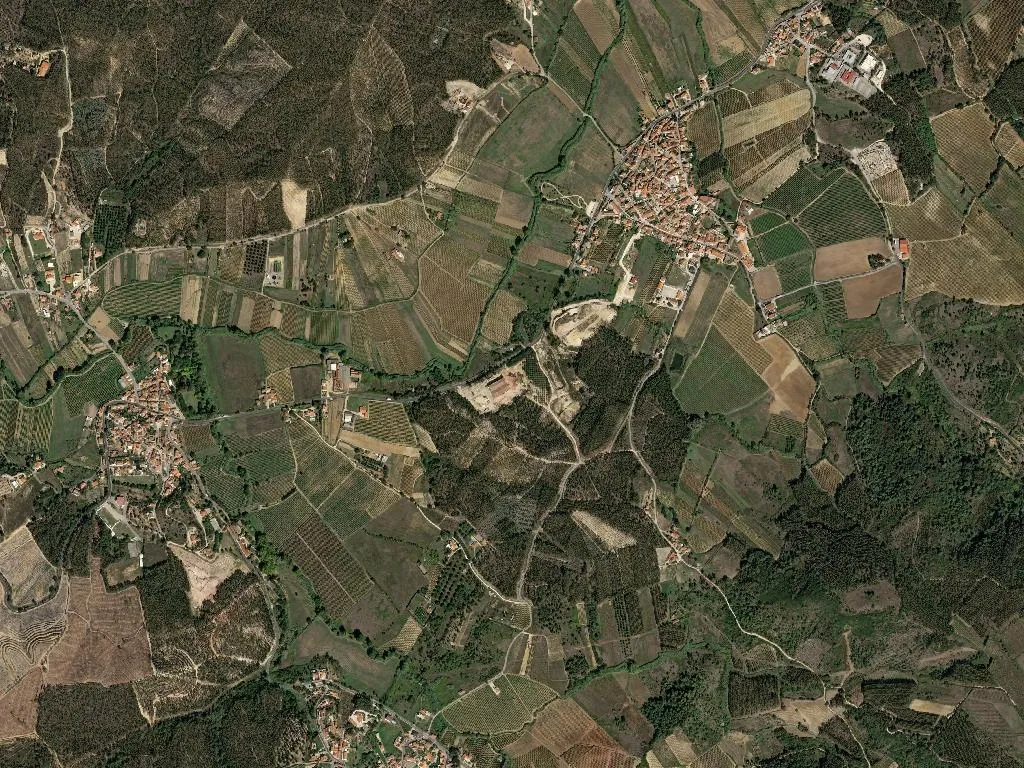
The slate on the cottage walls is still cold when the first tractor groans across the lane. Diesel unthreads the dawn silence, and immediately afterwards comes the scent: damp, newly-turned soil laced with the sugar-bite of apples swelling in the orchards. At 79 m above the Atlantic, the parish of Maxial e Monte Redondo arranges itself in stripes—vine rows inching up soft hills, pear branches so heavy the fruit clings like a child to a hem, ochre tracks slicing between plots where grandparents, parents and grandchildren repeat the same seasonal choreography.
What the land puts on the table
Lisbon’s wine country spills across these slopes like a cloak that changes colour according to the calendar—electric green in May, parched gold by October. Old, low-trained vines of obscure local varieties alternate with certified orchards: Maçã de Alcobaça PGI and Pêra Rocha do Oeste PDO both acquire their razor-edge of acidity here, balanced by a sun that can scorch and an Atlantic breeze that tastes of salt and drying kelp. In Torres Vedras’ Friday-morning market the fruit is stacked in wooden crates before noon, still carrying the waxy bloom that only dawn-picking leaves. Beside the stalls, cafés serve the town’s obsessional sweet: Pastel de Feijão, a brittle-cased conventual pastry that collapses into bean-flecked custard and leaves a sugar-veil on the tongue.
Two hamlets, one parish
Maxial and Monte Redondo were administratively fused in 2013, yet each keeps its own pulse. Maxial evolved as an agrarian crossroads where wine, grain and livestock changed hands; the Centro café still pours Zé’s tank-red into green-glass flagons exactly as it did in 1978. Monte Redondo takes its name from the bread-loaf hill that served as a way-finder long before business cards or Google Maps. In both settlements the parish churches glow white with lime wash that bruises slowly to grey, their stone portals offering shade to children waiting for mothers to finish the rosary. A National Monument and a listed public-interest building remind passers-by that Romans, Moors and Napoleonic troops have all left stones, and names, that no one saw any reason to alter.
Fossils underfoot
The entire parish lies within the UNESCO-designated Oeste Geopark, a fact that cuts no ice with Joaquim, who keeps the ammonites he unearths while hoeing in an old orange box. The exposed rocks recount ancient seabeds—shells locked in limestone, shark-tooth bivalves that look like petrified tongues. There are no beaches here, only rural tracks that dissolve between vines and cork-oak scrub, where the soundtrack is wind and, half a mile off, the unchained bark of Sr Alfredo’s dog. The Coastal Camino cuts through on its approach to the Spanish border; spray-painted yellow scallop symbols on stone walls keep pilgrims’ boots pointed north, dust rising with every footfall.
Silence with an address
Population: 3,222 spread over 3,838 hectares—83 souls per square kilometre, and growing older: 954 pensioners to 352 under-25s. By late afternoon the card table at O Pote is in full swing, the television news muted above the shuffle. Streets empty early; the only engine left is João’s battered Fiat Uno fetching the last loaf. Five tourist cottages—each a whitewashed villa with an unheated pool—rent to visitors who want the “rural experience”: rooster at 05:30, fruit you pick yourself (if the season allows), supper around a long pine table where the wine arrives in a clay jug and the blood-rice clings to every tooth.
Oblique evening light pours over the orchards, syrupy and slow. A Rocha pear drops with a soft thud—too ripe to hang on. The tractor returns, trailing diesel and fresh earth that will hitch a ride on any passing shoe. Tomorrow the cycle begins again, not as empty repetition but as the stubborn continuity of people who know the ground only yields to daily, calloused hands, and who trust, without fuss, that another season will always turn.