Full article about Ramalhal’s Rust-Red Rails & Strawberry Fields
Cycle abandoned Lisbon-Porto rails amid May strawberries above Sizandro
Hide article Read full article
Last Train to Ramalhal
Rust-red rails disappear into strawberry fields where no locomotive has stopped since the mid-1980s. Ramalhal’s 1887 station—one of the first built on Lisbon’s Linha do Oeste—still stands, tiles flaking like dried mud, its clock forever fixed at the moment the timetable was annulled. Cyclists now freewheel over the sleeper beds, tyres hissing where carriage doors once slammed.
Between Trunk and Tarmac
Latin gives the parish its name—ramulus, a small branch—yet the land has always answered to ploughs, not pine needles. The 18th-century Royal Road from Lisbon to Porto rolled straight through, levelling duties in wheat and rye for the Convento da Graça in nearby Torres Vedras. When tithes were abolished in 1834, the monks surrendered their ledgers; the soil kept its own accounts, rotating cereals for grain merchants, then cane for the capital’s sugar refineries, and finally the crop that colours every May: morangos that ripen directly on the ridge, no straw beneath them.
A Quilt of Red
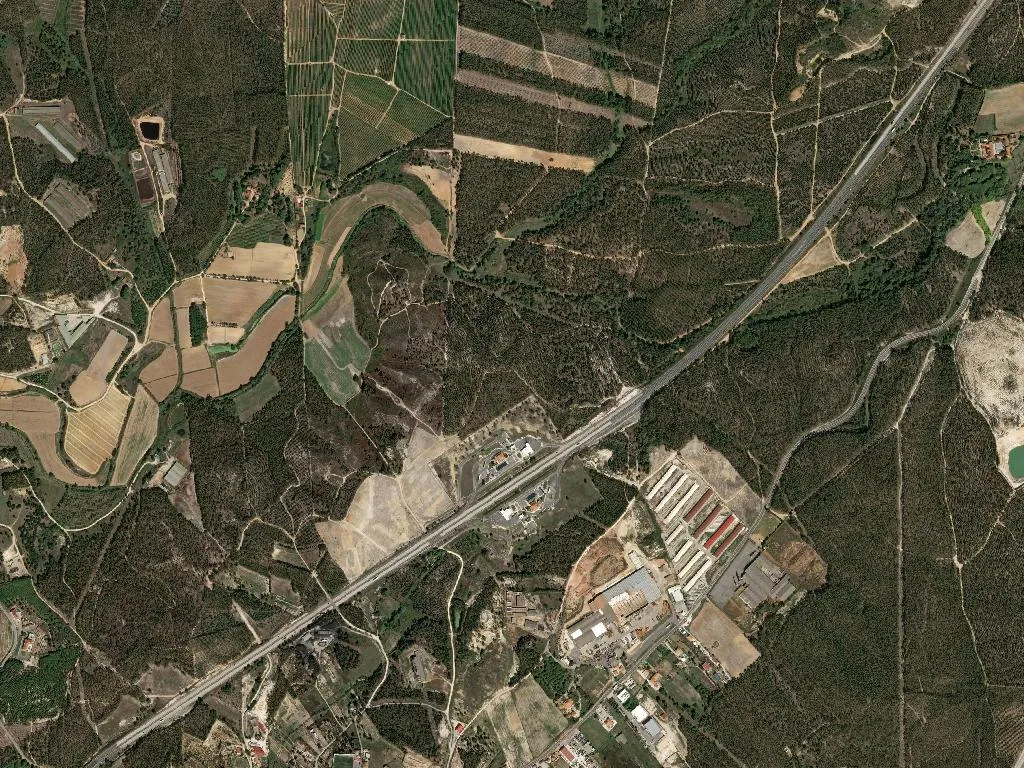
Between April and June the fields look slit open: green foliage peeled back to reveal glossy red seams. The 19-kilometre PR11—locally dubbed the Strawberry Route—loops through polytunnels and eucalyptus shade, splitting into 10 or 11 km spurs. Start at dawn, when valley fog copies the duvet of a pilgrim sleeping rough, and you’ll meet pickers already kneeling, wrists flicking fruit into red crates that stack like Monopoly houses. The trail climbs to basalt outcrops above the Sizandro basin, part of the West Portugal Geopark; buzzards wheel over BTT riders who freewheel past the Pisão watermill, the only sound evaporating eucalyptus sap.
What the Labels Say
Ramalhal sits inside the Lisboa wine GI, but glass pours are only half the story. Alcobaça apples, Pêra Rocha pears and Torres Vedras bean pastries all arrive with EU logos guaranteeing origin; none travel well, so you taste them in situ. Break a sun-warmed strawberry and juice runs over the cuticle, tattooing the nail scarlet for two days—an ink no supermarket punnet has licence to use.
Clocks without Hands
Four places to sleep—three whitewashed rural cottages and a single converted manor—serve a parish of 3,631 souls spread across 36 square kilometres. Population density is lower than the Alentejo, giving the horizon a permission it hasn’t needed since the railway left. The Portuguese Coastal Camino cuts through, so the café in the tiny square serves espresso as short as a farmer’s answer to a pilgrim asking “How far to the next albergue?” before they face the 230-metre grind up Serra do Socorro.
Stand on the platform edge and you can still read “Ramalhal” in azulejo blue, the letters crazed but stubborn. No departure board, no digital display—just the seasonal metronome of berries swelling, leaves bronzing, mist rolling back up the valley. Trains don’t stop here, yet the place remains terminally en route, measured by the quiet between one harvest and the next.