Full article about São Pedro da Cadeira
Where wheat fields dive to Atlantic rollers and 17th-century cobalt azulejos glow inside the sea-buf
Hide article Read full article
The wind arrives before anything else. It comes freighted with salt and iodine, flattening the tall grasses on the cliff-top and setting the few surviving windmills groaning. Drop a gear on the lane that corkscrews down to the mouth of the Sizandro and the air thickens—no longer the warm, vine-scented breath of the interior, but something maritime, metallic, tasting of surf you haven’t yet seen. We are 38 metres above sea-level, on a ribbon of land where river and ocean have argued for millennia over who gets to redraw the map.
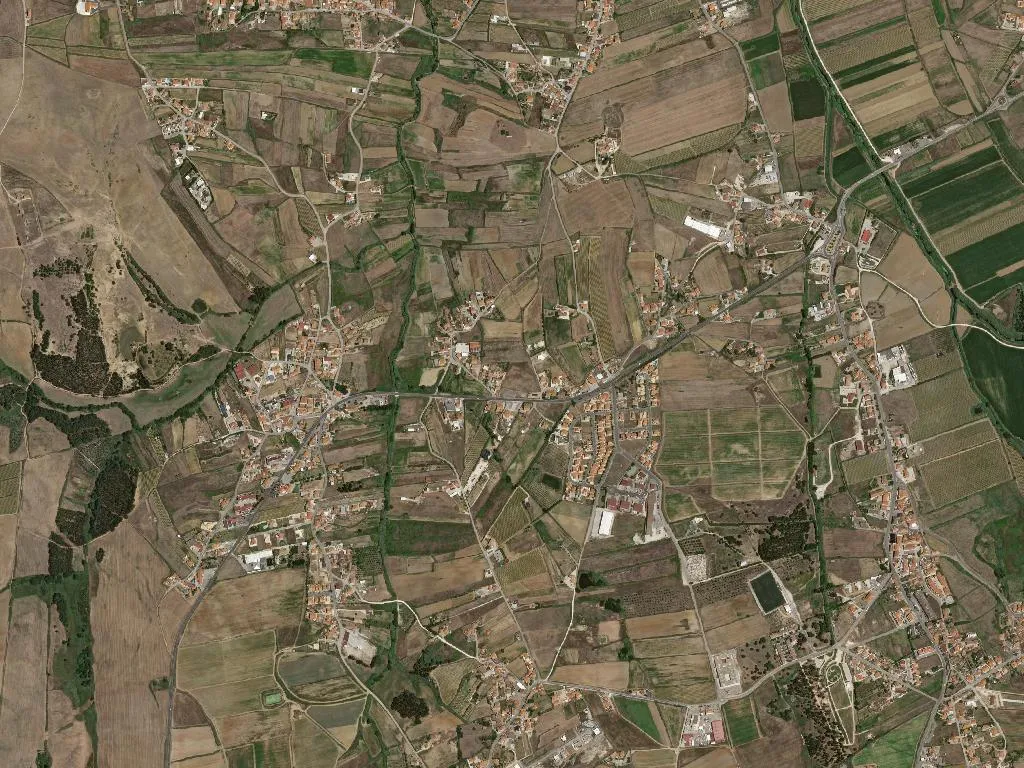
São Pedro da Cadeira stretches from wheat-coloured fields to the Atlantic, and that single sweep—vineyard to wave—dictates everything: what appears on the table, which saint is carried through the streets, how houses angle their backs to the prevailing westerly. Its 5,200 people are scattered across a parish whose human story begins with flint flakes left by Palaeolithic hunters on the knolls of Escaravilheira, Cambelas and Vale Almoinha.
The chair on the hill
The name is literal. A rounded hill once cradled a tiny chapel dedicated to St Peter; from a distance the crest looked like a chair—cadeira—and the hamlet took the shape for its own. The parish crest still shows a scarlet chair bearing the apostle’s keys and mitre. Parish records date to the late 1600s, but continuous settlement runs back thousands of years. In 1926 a slice of territory was lopped off to create neighbouring Silveira, yet São Pedro kept its nucleus: the mother church, the festivals, the gravitational pull of the sea.
That church is the parish’s pulse. Inside, 17th-century azulejos spill deep cobalt across walls, a colour that the narrow slit-windows turn almost liquid. An 18th-century gilded altarpiece catches what little sun penetrates the nave and throws it back as a dust-flecked shimmer. Outside, a granite cross dated 1689 marks the exact moment where sacred ground tips into village street. Panels attributed to the baroque painter Bento Coelho da Silveira add an urbane flourish to an otherwise rural temple—surprising anyone expecting plain whitewash and rusticity. Further out, the chapels of Nossa Senhora da Cátedra and Nossa Senhora da Esperança pepper the countryside like exclamation marks of devotion.
Festivals that mark the year—and one that marks a lifetime
The liturgical calendar here is not metaphor; it is metronome. From Nossa Senhora das Candeias on 2 February, when winter still bites, to Nossa Senhora da Conceição on 8 December, when it bites again, at least eight processions pace the parish. On Good Friday the silent march of the Dead Christ feels heavier than the carved andas it carries. Midsummer brings São João Baptista—bonfires and the acrid sweetness of burnt eucalyptus. September pairs Nossa Senhora da Saúde with São Sebastião, as though locals need a collective digestif between parties.
Then there is the feast that refuses the annual rhythm: Nossa Senhora de Nazaré, celebrated only every seventeen years. A child who saw it once may have grandchildren before it returns. The intervening decades turn the event into inherited memory—something pledged, banked, narrated at kitchen tables with the hush usually reserved for eclipses.
Cachola, horseshoes and an orchard that slopes to the sea
The parish kitchen faces both ways. Cachola—pork shoulder seasoned the morning of the winter kill—tastes of inland seriousness: food built for ploughmen. Smoked chouriço and morcela follow, cured with the patience of people who still count time by moon phase. The bolo de ferradura, a citrus-scented cake baked in the shape of a horseshoe, appears in bakeries every weekend like a sweet metronome. Arroz-doce, thick with cinnamon, ends meals that are never hurried.
The parish sits inside the Lisboa wine zone; the whites, charged with Atlantic salinity, marry neatly with the fish hauled up the beach at Assenta. On the lower slopes, Pêra Rocha do Oeste DOP and Maçã de Alcobaça IGP ripen to a tight, honeyed crunch. And no meal is complete without the local passport stamp: the pastel de feijão of Torres Vedras—flaky pastry, white-bean filling, a ghost of almond that lingers on the fingers.
Between cliff and flint
The beaches at Assenta and Cambelas are not picture-postcard stretches; they are open-air geology lessons. Sedimentary layers, catalogued by the UNESCO-stamped Oeste Geopark, rise like pages in a stone library. From the clifftop miradouros the Sizandro finally gives up, slipping into the Atlantic through a wide, shallow mouth. Late-afternoon light paints the cliffs the colour of toasted bread against the indigo fretwork of the sea.
The Coastal Camino cuts through here; pilgrims arrive with rucksacks crusted in salt and the dazed look of people who have been walking since Porto. For them, as for the rest of us, thirty-odd beds—scattered between cottages, villas and a single small guesthouse—offer the essentials: linen that smells of line-dried cotton, a window you can crack to let the wind keep talking.
Bell and spume
There is a moment at day’s end when the mother-church bell tolls and the note travels the valley until the surf swallows it. For a few seconds bronze and foam share the same syllable. In that exact interval—between the last bell-beat and the next wave—São Pedro da Cadeira shows its cards: a parish where the ploughed field ends in a 40-metre drop, where a 17th-century cross points at an ocean that was already here when the first flint was struck on these hills.