Full article about Chancelaria
Visit Chancelaria, Alter do Chão, for DOP Queijo de Nisa, National-Monument chapel, empty horizons and zero tourism gloss.
Hide article Read full article
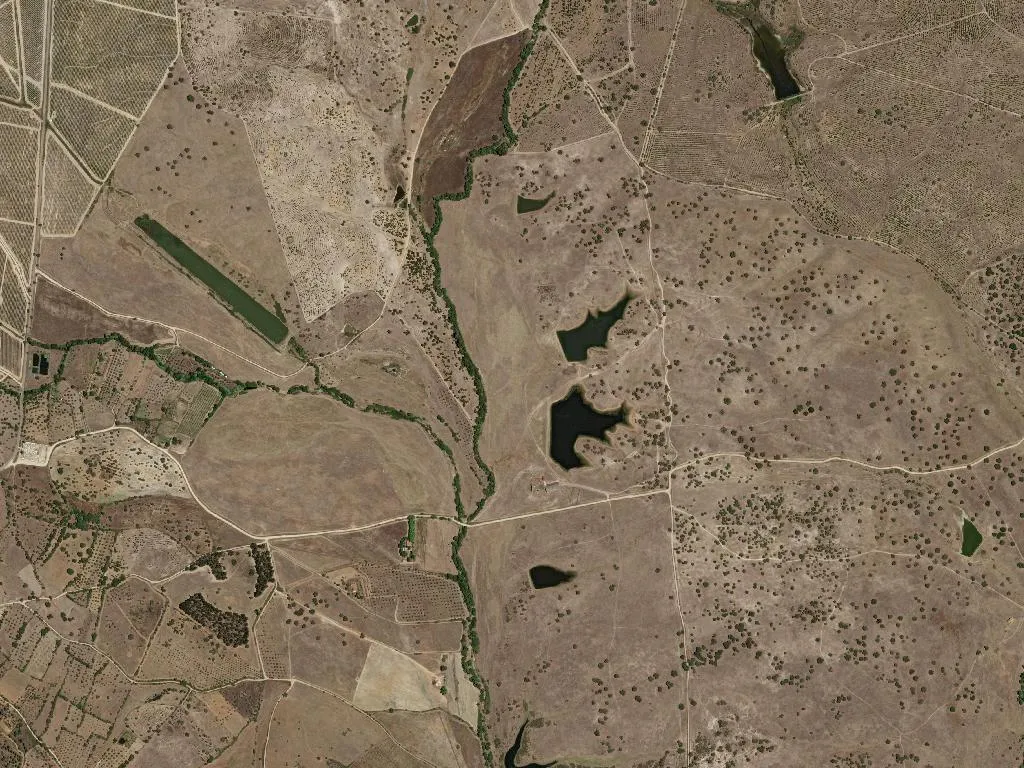
The limestone glows, the air is thick with heat, and a single tractor drones somewhere out among the wheat. Chancelaria lies so flat that the sky feels weighted, its 152 m of altitude doing nothing to lift the pressure. Seven thousand hectares hold only 382 souls – five neighbours per square kilometre – and the silence is the kind you can walk into, like the dust that rises from the threshing floor.
Two monuments, centuries apart
Officially, the place has just two listed buildings. One of them – the 16th-century rural chapel built by the Order of Christ after the expulsion of the Jews from nearby Castelo de Vide – carries the coveted “Monumento Nacional” plaque. The other is a modest stone threshing circle, older than any atlas, still used each July for communal wheat winnowing. They are the only vertical punctuation in a landscape that refuses to rise.
Sheep’s milk that travels
The economy is stubbornly pastoral. Morning and evening, mechanical bells call the flocks in from the montado; the milk travels 18 km to the cooperative in Nisa, returning as wheels of Queijo de Nisa DOP, its rind stamped with the town’s medieval seal. Alongside it, smaller discs of Queijo Mestiço de Tolosa IGP – a fifty-fifty blend of sheep and goat – are wrapped in chestnut leaves and left to firm in cool cellars dug into the limestone. Both cheeses board the morning Rede Expressos coach to Lisbon, reaching the capital’s delicatessen counters before their second day.
The logic of the plain
Tourism here is measured in single digits. The parish council lists two private houses that accept paying guests; both require a phone call and a tolerance for geckos. There is no café, no petrol station, no mobile signal beyond 3G. What you come for is the scale: cereal steppes that recall the Meseta, holm-oak silhouettes copied from a 1950s tourism poster, and the feeling that nothing has been tidied for you. At dusk the light turns metallic, the temperature drops eight degrees in twenty minutes, and the smell of straw and warm stone drifts through open windows. It is a fragrance you cannot bottle, only inhale slowly, like the place itself.