Full article about Assunção: Where Time Melts into Alentejo Stone
Stand alone before Manueline portals in Arronches’ quiet high-plains village
Hide article Read full article
The Morning Sun on Assunção's Irregular Paving
The morning sun beats directly onto the irregular paving of the square, warming the stone until the heat rises in almost visible waves. A dog crosses slowly, unhurried, as the church bell strikes ten with a cadence that seems longer than it should. Assunção is not a place for rushing — it is where you go to forget the clock.
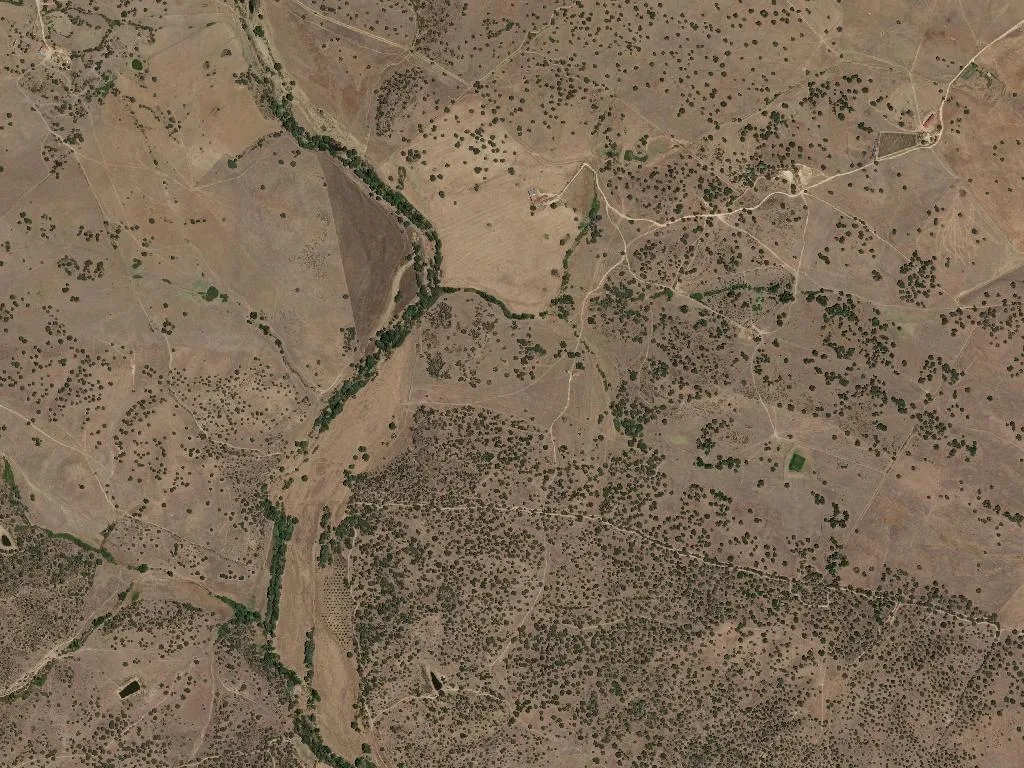
This is the seat of the municipality of Arronches, anchored at 251 m above sea level in a landscape that unfurls in ochre and green according to the season. With 1,834 inhabitants scattered over more than 200 km², space is the one thing that is never rationed. When the wind sweeps the plain you hear the olive groves before you feel the air on your skin.
Stone that refuses to yield
Three classified monuments punctuate the street plan. One — a National Monument — fixes the place in Portugal’s architectural memory; the other two, Buildings of Public Interest, complete a tight heritage triangle that justifies walking slowly, eyes up, palms against stone warmed by centuries. You will not find the tourist saturation of Évora or Óbidos here; instead, the rare luxury of standing alone in front of a Manueline façade or a Renaissance portal, with no queue behind you and no selfie-stick in front.
What is eaten, what is kept
The cooking is not theatre — it is sustenance. North Alentejo DOP olive oil is poured onto bread that is still hot, leaving a green-gold tear that tastes of grass and almond. Nisa DOP cheese is cracked into irregular shards that melt slowly on the tongue; the milder IGP Mestiço de Tolosa balances the board when the palate asks for mercy.
In the tascas the menu is short and unadorned: pork from local acorn-fed pigs, stews that have been murmuring for hours, migas that soak up the sauce until they turn almost translucent. Wine is the honest red made by the Arronches cooperative — it will not perform miracles, but it does not lie either.
The slow-motion census
The demographic pyramid tells the familiar interior story: 204 children under fourteen, 546 residents over sixty-five. The streets fill at dusk when the elderly wheel chairs onto the pavement to gossip in the cool air; children burst out of the primary school in a brief, noisy flock that dissolves into the lanes within minutes.
There are just eleven places to stay — a handful of cottages, a couple of rooms above a café, a small guesthouse in a former olive mill. Windows are left open at night; the soundtrack is crickets and, every so often, a distant dog.
When the darkness finally settles and the sparse streetlights flick on, the countryside’s blackness seeps into the village like a slow tide. The sky becomes dense with stars; the air cools quickly. All that remains is the sound of your own footsteps on the cobbles, echoing off whitewashed walls as if each walk left a sonic footprint that lingers long after you have gone to bed.