Full article about Esperança: silence, shale and sheep-cheese Alentejo air
Walk granite lanes where 589 souls guard DOP olive oil, cork groves & smoky Queijo de Nisa
Hide article Read full article
Between stone and cheese
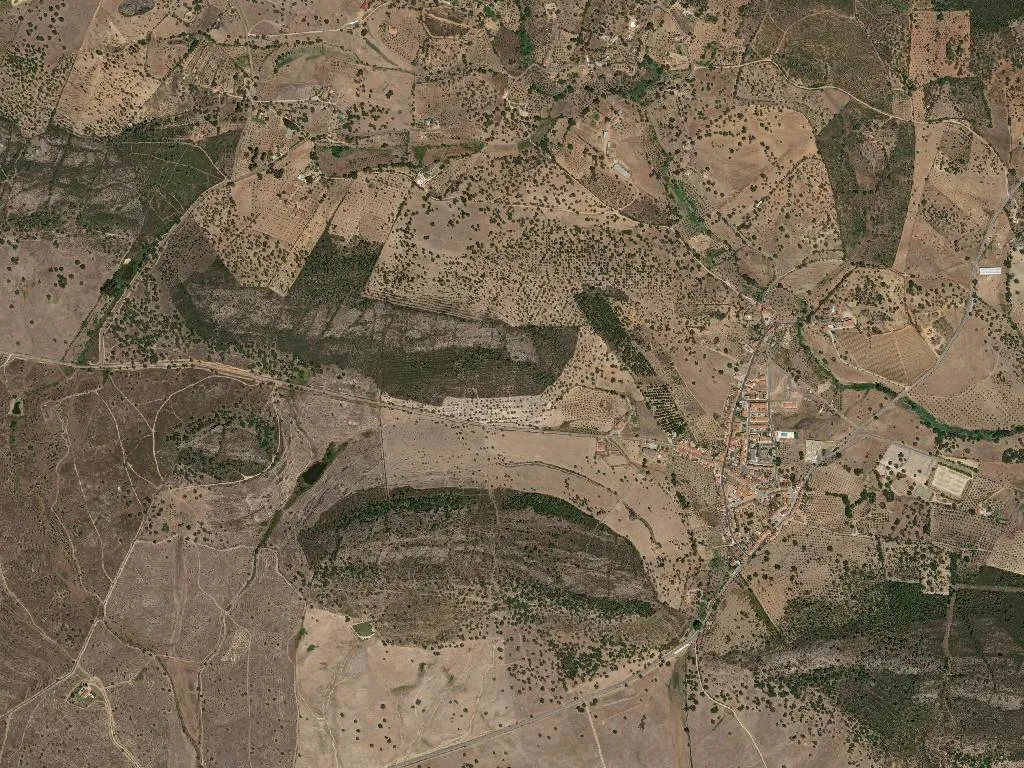
The late sun strikes the whitewash and flares back so brightly you have to narrow your eyes. In Esperança’s lanes silence has mass: not vacancy but weight, compacted of granite and centuries pressed into the walls. A single dog barks somewhere beyond the façades, the sound ricocheting through the narrow grid of alleys. We are 396 m above sea level, on a ripple of northern Alentejo where the land remembers it once belonged to the Serra de São Mamede and rolls in slow red waves, shale outcrops glinting like rusted armour.
589 people live here; 213 are over sixty-five. The arithmetic translates into space, hush and horizons that seem to exhale. Yet Esperança is not abandoned – only reticent. Single-storey houses line streets that climb and drop without urgency; backyards still shelter fig trees older than the republic and olive roots that have tasted five centuries of drought. The parish spreads across 5,700 ha of cork oak and olive grove that feed the protected DOP oils of Norte Alentejano and the sheep whose milk becomes Queijo de Nisa DOP and the rarer Queijo Mestiço de Tolosa IGP.
Inside Sr António’s grocery, wheels of Nisa harden on a deal counter older than the Carnation Revolution. He’ll tell you – without being asked – that his father stood in the same spot, ladling oil from a tin into customers’ bottles. The viscous gold comes from the neighbour’s grove, the same trees that shaded the neighbour’s childhood. In Dona Laura’s smokehouse, a December pig still hangs, its calendar marked by church bells and the scent of bay.
Two monuments, one memory
Esperança keeps two classified buildings: the parish church, eighteenth-century baroque with a modest crown of pilasters, and the tiny Manueline chapel of São Brás. No ticket office, no audio guide, no queue. You trade words with stone. Approach the chapel’s 1600s doorway low enough to graze your knees; inside, the uneven slabs are cupped by generations who knelt to ask for protection from drought, war, or simply loneliness. On the church’s corners the original shale shows through, centuries of whitewash weathered back to the bone.
Wine and the table
The village sits inside the Alentejo wine region, though vineyards appear as pocket-handkerchiefs rather than oceans of vine. In the café “O Pão Quente”, house wine arrives in unlabelled plastic bottles that taste of schist and of grapes that saw 3,000 hours of sun. It marries sausages Dona Odete stuffs in her backyard, cheeses Sr Joaquim brings down from Souto, and bread still baked in Zé’s wood-fired oven for the feast of St John. Gastronomy here is not theatre but pantry: milk soured to cheese, olives pressed for winter, every scrap of pig converted into something that will survive the next scarcity.
Sleeping behind white walls
There are five places to stay – all converted family houses whose luxury is the absence of schedule. No infinity pools, no spa soundtracks, just terracotta floors that creak, windows that frame vegetable beds of mint and marigolds, and dawn leaking in slowly: sparrows under the eaves, a tractor clearing its throat somewhere beyond the almond trees. At Casa da Avó Rosa you’ll sleep under linen she embroidered the year she married; on the line outside, sheets still smell of wind rather than detergent.
The weight of silence
At dusk, when the heat loosens its grip and the light turns liquid gold, Esperança discloses itself fully. The air carries dry earth, a drift of burned firewood, and the resin of rosemary and cistus from abandoned plots. On Rua da Fonte water trickles over stone with the same note it sang before women carried laundry here in wicker baskets. The wall beside it still bears the hurried whitewash slogan “Viva o 25 de Abril”, almost fifty years untouched. What lingers is the contrast between the absolute white of the walls and the depthless blue above – a composition as simple, and as enduring, as the people who refuse to leave.