Full article about Mosteiros Alentejo: Where Monks Vanished into Olive Light
Mosteiros, Arronches hides lost monastery streets, peppery olive oil, slow-cured Nisa cheese and silence broken only by terracotta scrapes.
Hide article Read full article
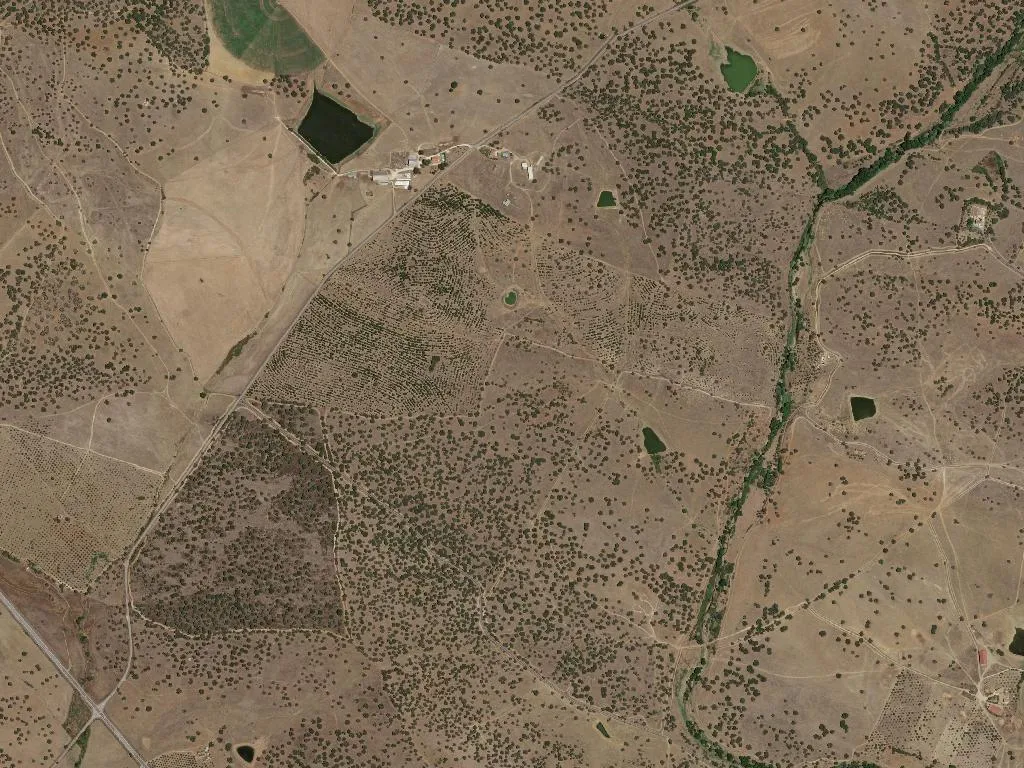
The sun ricochets off whitewashed walls with such force you squint, half-blind, as if walking into a camera flash. At 335 metres above sea level, Mosteiros is a single-storey ripple on the Alentejo’s oceanic plain: 366 souls across 52 km², which translates to one neighbour every hundred metres and a soundtrack of chair legs scraping terracotta and the occasional dog announcing the afternoon. Decades ago villagers counted the daily traffic on the N359 with their fingers; now you might need two hands, but not a third.
The name advertises a monastery that may – or may not – have existed. António, refilling bicas behind the counter, insists it stood beside the chapel of São Brás; Joaquim, nursing a medronho on the bench outside, waves towards the hillock east of town. Cartographers shrug. Still, the street plan betrays a vanished gravity: narrow spokes that once funneled monks, now leading housewives to the parish church, a restrained 16th-century rectangle whose bell tolls the only quarter-hour for miles.
Oil and cheese country
Gastronomy here is infrastructure, not garnish. Olivais do Norte Alentejano DOP stretch to every horizon, their trunks cork-screwed by centuries of drought and January frost. The oil they surrender is thick, low-acid, with a peppery flick that animates breakfast toast, sheep-meat stew and the gas-station employee’s lunchbox. Ask where to eat and she jerks a thumb at the mini-mercado next door: “Ze’s cheese and oil. It’s what I cook with.”
Cheese arrives from flocks that graze the same scrub – Nisa DOP and Tolosa IGP wheels, slow-cured, compact, tasting of thyme and broom. Sliced with a pea-green handled knife onto corn broa, it is simply “o queijo”, never “artisanal”. Plastic plates, no tasting notes, conversation stretching like shadows.
Two places to stay – and that’s plenty
Overnight options are binary: an upstairs apartment let by a Lisbon architect who holidayed here once and never left, or D. Lurdes’ childhood house, unlocked after she decamped to Portalegre for her daughter’s schooling. No infinity pools, no spa soundtrack. Instead you wake to chill dawn air, a rooster’s arpeggio and the faint scent of woodsmoke from the neighbour’s stove. That is the amenity: subtraction.
Demography is lopsided – 34 under-30s, 120 over-65 – yet the ledger of departure is balanced by stubborn continuity. Tuesday brings the mobile butcher; Thursday, the greengrocer’s van; Saturday, the market in Arronches, fifteen minutes west. In between, tractors crawl between olive rows and cheese rooms keep their 16 °C vigil.
When the light drains away
Evening is the village’s only filter. As the glare softens, Mosteiros discloses its economy of means: clay jug of oil on the table, cheese sweating in the larder, wind combing the plain until Spain flickers on the horizon – or so they claim from the churchyard. Stand there at dusk and you’ll believe it. The granite threshold beneath your feet has outlasted whichever monks once sang here; the olive sea rolls on, indifferent to both.