Full article about Benavila & Valongo: Alentejo silence, olive-oil gold
150 km² of cork, frost and skylarks where five souls per km² guard ancient mills
Hide article Read full article
The dust of the road settles slowly over the dry fields. In the distance, a whitewashed house reflects the midday sun with such intensity that it forces you to look away. Here, silence is not absence—it is a tangible presence, punctuated only by the distant call of a skylark and the metallic groan of a gate nudged by the wind. We are in the heart of deep Alentejo, where the plain stretches in gentle undulations to the horizon, and where two villages, Benavila and Valongo, share the same parish council and the same slow seasonal rhythm.
The administrative union of Benavila and Valongo stretches across 150 square kilometres of Alentejo territory—an area that contains more cork oaks than people. With 878 inhabitants spread across this vastness, the population density barely exceeds five souls per square kilometre. The numbers tell another story: 341 elderly residents to 99 children—a demographic equation repeated in many interior regions, but one that doesn't erase the quiet vitality of those who stay and resist.
A Landscape of Stone and Olive Oil
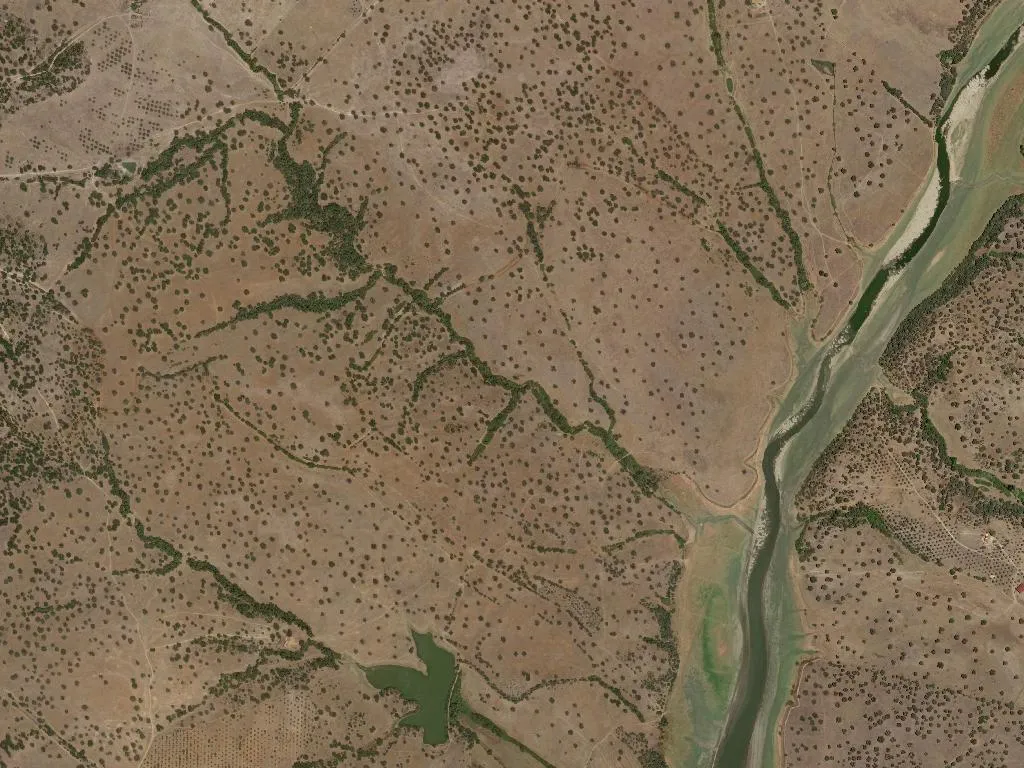
The landscape is organized around two fundamental elements: the cork and holm oak forest, and the cultivated lands where golden wheat alternates with the silvery green of olive groves. We are in the heart of the DOP (Protected Designation of Origin) region of Northern Alentejo Olive Oils, where the olive oil tradition remains alive in the mills and family memories. The olive oil from here has its own personality—green fruity, with notes of freshly cut grass and almond, resulting from early harvest and the granitic terroir that marks this transition between Upper Alentejo and Lower Beiras.
The average altitude is around 136 metres, but it's enough to make the territory breathe differently from the rest of the plain. Winter mornings bring frosts that draw crystals on wild grasses, and summers, though scorching, cool at night with a thermal amplitude that allows for sleep without suffocation.
Where to Eat
The only restaurant open all year is on the national road—it's the Café Restaurante O Gato in Benavila. They serve grilled fish on Fridays and lamb stew on Sundays. Call on Friday to book for Saturday lunch: +351 241 738 121.
During hunting season, from October to December, the Valongo Hunting Club organizes hunting dinners. It's not a restaurant—it's a club. You need to know someone local to get in.
Where to Stay
There are no hotels. There are three registered rural tourism houses, but only two operate year-round. Quinta do Xarrama has two bedrooms, a covered pool, and accepts pets. Casa da Eira is in the center of Valongo—it's a renovated old house with wooden ceiling and fireplace. Both have equipped kitchens: bring food from Avis or go to Benavila's minimarket, open until 7 PM.
Geometries of Daily Life
Walking through these villages is to traverse an architecture of necessity: ground-floor whitewashed houses, short eaves, few south-facing windows. Each element responds to the climate, the wind, the relentless August sun. The streets are wide enough for an ox cart to pass, narrow enough to create shade during the hottest hours.
A national monument marks the territory, though official records don't specify which one. But the true monumentality here is measured differently: in the perfect alignment of a dry stone schist wall, in the exact proportion of an Alentejo chimney, in the secular balance between the built and the cultivated.
At day's end, when the slanting light ignites the cork oak trunks and stretches shadows to unreality, the territory reveals its essential geometry. There is no hurry, no crowds—only the physical evidence that there are still places where human density allows one to hear their own thoughts. And perhaps that, more than any monument, is what stays in the memory: the weight of Alentejo silence, dense as the olive oil produced here, golden as the light we never forget.