Full article about Ervedal
Tiny Alentejo village of 432 souls hides a 5,000-year-old anta, gilded 18th-c. church and Mário Saa’
Hide article Read full article
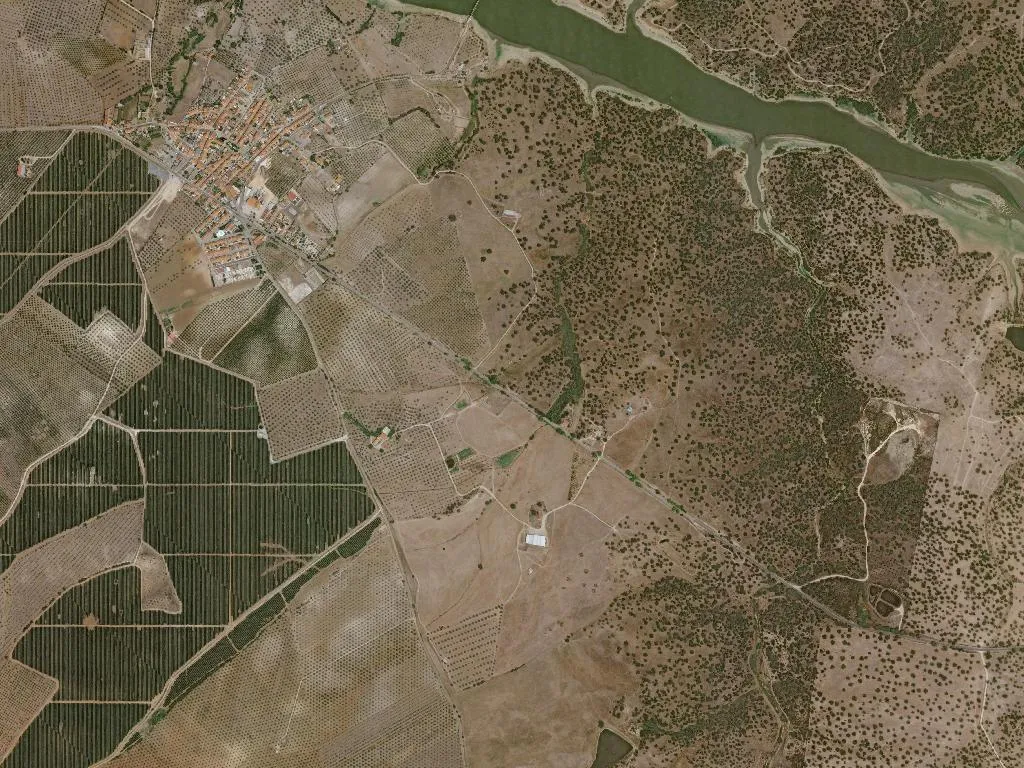
The Avis stream slips past Ervedal on its left bank, a silver thread of water that explains why anyone settled here at all. The name translates roughly as “valley of the herbs”, a reminder of the tangle of green that once carpeted the river flats. By 1315 the place was already Santa Maria do Ervedal; today 432 souls occupy 3,807 sun-baked hectares at 156 m above sea level.
Anta da Herdade da Ordem
A graded dirt track climbs 1.2 km to the crown of a low granite hill. There, five stubby orthostats and a fallen capstone mark a passage grave raised around 3000 BC. Excavations have produced Late-Neolithic human bone and burnished pottery; no guard, no ticket desk, only a single evergreen oak for shade. Bring water.
Igreja de São Barnabé
Mass is sung at 11.30 every Sunday. Inside, 18th-century pine is carved, gessoed and water-gilded into curling acanthus. The sacristy safe still holds the 1758 parish ledger: baptisms, marriages, deaths – and the Prior of the Order of Avis’s annual stipend of 180 alqueires of wheat, 120 of barley and 20,000 réis in silver.
Casa de Mário Saa
Modernist poet and physician Mário Saa (1893-1971) spent his final exile here. His 3,500-volume library now fills the old primary school, open Wednesday 14.00-17.00, free entry. The online catalogue (casamariosaa.pt) lists first editions of Rilke, Pessoa and a surprisingly complete run of Orpheu.
Where to eat
Café O Ribeirinho serves breakfast of peppery Tolosa IGP queijo mestiço and skillet-baked pão de testo. Lunch is by reservation only – ring 245 551 234 the day before. Buy peppery northern-Alentejo DOP olive oil at the Avis cooperative on the EN244 roundabout.
Where to stay
Ervedal itself offers no beds. The municipal campsite, 8 km away in Avis, has 30 pitches, hot showers and a pool – €6 a night.
Follow the stream on foot for 4 km of russet track and you reach the 1975 Maranhão reservoir, where locals still fish for largato and boga. Binoculars and a wide-brimmed hat are essential.