Full article about Morning Echoes of Pão in São João Baptista, Campo Maior
Hear crust crack on whitewashed cobbles while Delta coffee drifts past 12th-century granite.
Hide article Read full article
The Sound of Bread Breaking
The morning silence on the Alto Alentejo plateau is so complete you can hear crust shatter. On the café terrace beside São João Garden, a single piece of pão estaladiço fractures like thin ice, the echo rolling across cobbles still cool from the night. Between bites comes the smell of coffee from the nearby Delta roastery—sharp, almost metallic—then the softer scent of wheat browning in someone’s kitchen. Sunlight ricochets off whitewashed walls at 314 m above sea level; you half-close your eyes and let the cicadas mark time instead of your watch.
Stone Older Than Portugal
The parish church predates the nation’s borders. Built before 1176, the granite blocks of Igreja de São João Baptista were declared a national monument when Lloyd George was still in Downing Street. Run a thumb over the Romanesque portal and you’ll feel the polished grooves left by eight centuries of parishioners. Inside, the air is wine-cellar damp; outside, the smaller Igreja da Misericórdia shelters 16th-century panels believed to be by the Abrantes school—colours that survived the 1755 earthquake and every summer since.
The settlement was carved from the older parish of Santa Maria by a bishop’s decree in 1776, the same year the American colonies declared independence. Earlier still, the Treaty of Alcañices in 1297 fixed the Spanish frontier two kilometres east, making this Portugal’s eastern gate. When Wellington’s troops chased Masséna’s army in 1811, Campo Maior held out for weeks; the town hall still keeps the letter that elevated it to Vila Leal e Valorosa—Loyal and Valorous Town—signed by the prince regent himself.
Cork, Olive and Sky
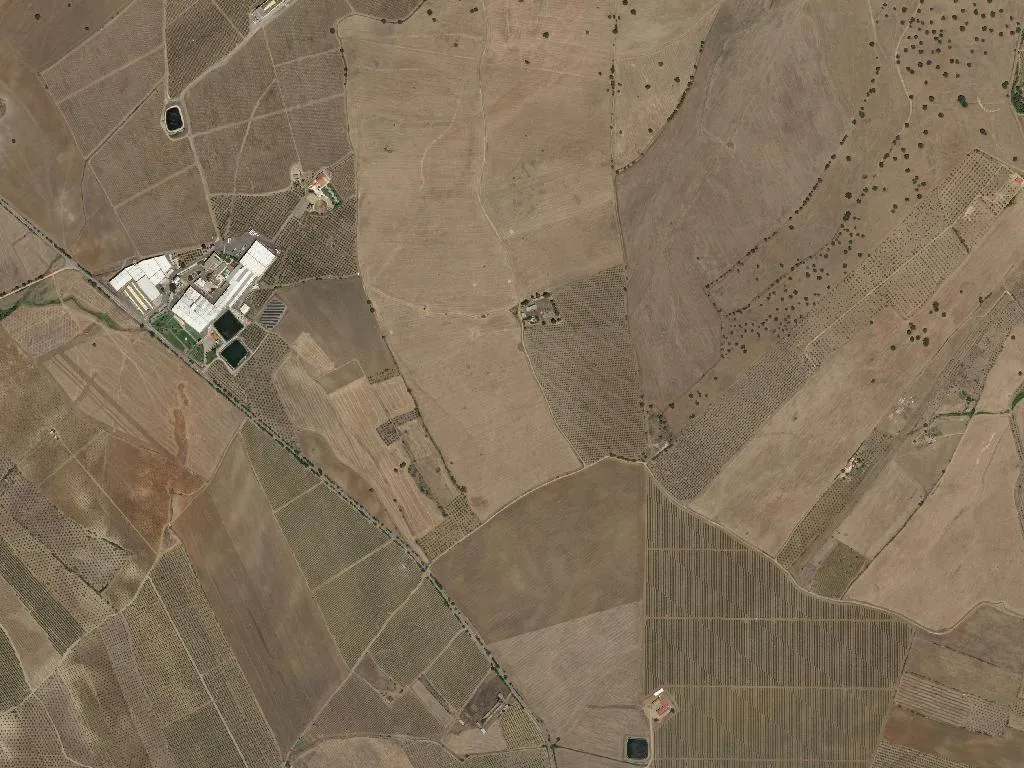
Beyond the last house, the land opens like a book: 106 km² of rolling plain where holm and cork oaks stand alone, punctuation marks in a sentence that never ends. Between them, 200-year-old olives grow on terraces first laid out under the Romans. Temporary streams appear only after rain, slipping silently towards the Caia River and the Spanish line. Little egrets stalk through rock-rose thickets; griffon vultures tilt overhead, riding thermals that smell of wild rosemary and sun-baked schist. There are no sign-posted footpaths—just unsealed municipal roads 514 and 515 that dissolve into the montado until the only sound is your own tyres crunching gravel.
Lunch at Iron-Pan Pace
Lamb stew is started at dawn so the meat loosens from the bone by lunchtime. Migas—breadcrumbs fried in DOP Norte Alentejano olive oil—soak up pork juices until they turn the colour of burnished oak. Açorda de marisco arrives volcanically hot, coriander strewn like green confetti. On the table, cracked DOP Elvas olives and thick slabs of Tolosa IGP cheese, its centre the texture of pressed cream. Finish with sericaia, a convent egg-and-cinnamon pudding that tastes like custard filtered through Iberian history. The regional reds—Trincadeira and Aragonês—hold their own against 38 °C afternoons. At O Campino on Rua da Paz, the stew appears only on Wednesdays and Saturdays; book or go without.
Forgotten Border Keep
Head east on the CM1297 until asphalt gives way to ochre earth. After 3 km the ruins of Ouguela rise—an 18th-century border fort absorbed by Portugal in 1879 and by silence ever since. Stone parapets frame the sunset over an endless horizon; the wind whistles through arrow slits with the same pitch engineers must have heard before gunpowder made them obsolete. In summer the track is baked hard; after rain it becomes a clay rink—turn back unless you have four-wheel drive and a tow rope.
Dusk Notes
Return at dusk when the plain exhales. Wood smoke drifts from chimneys, mingling with the last breath of roasted coffee. Shadows lengthen across São João’s square; somewhere a cockerel rehearses tomorrow. Sit on the church steps, listen for the final crack of bread, and you will understand why the Portuguese measure distance in horizons.