Full article about Santa Maria da Devesa: dawn water murmurs through granite
Medieval wolf-stones, 18 monuments, nightingales in spring-fed meadows above Castelo de Vide
Hide article Read full article
The first sound is liquid. Before the sky pales, before cockerels or diesel vans, you hear water threading itself through the granite under your feet. It slips between kerbstones, drips from moss-lipped fountains, and keeps the meadows at 415 m stubbornly green even when the rest of Alentejo has turned to toast. Stand still on Rua da Fonte at 05:45 and you can cup your hands under a spout and drink melt-water that left the Serra de São Mamede hours before you woke.
A 750-year-old pasture with Unesco-level density
“Devesa” derives from the Latin divisa – land set aside for grazing – and the parish charter dates from 1275, when Castelo de Vide’s hill-top fortress was still a fresh frontier outpost between Portugal and Castile. The name is utilitarian, but the inventory is anything but: 18 classified monuments (five National Monuments, seven of Public Interest) for 1,393 souls. English cathedral cities would blush at that ratio. Walk Rua de São Roque and the white lime wash is cut by granite doorframes the colour of wet slate; every corner reveals a Manueline window, a Baroque chapel, or a medieval wolf-stone carved to stop predators snatching livestock.
Granite ribs and cork-oak lungs
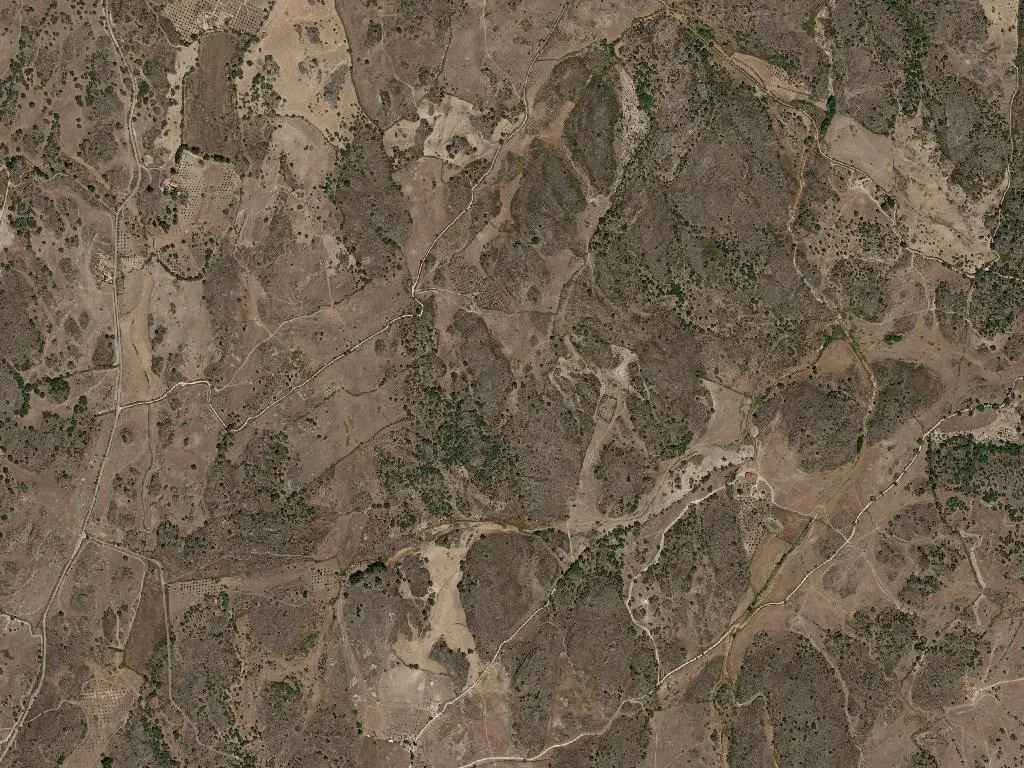
Santa Maria da Devesa occupies 56 km² inside the Serra de São Mamede Natural Park. The relief is a rippled blanket of cork and olive, stitched with quartz outcrops that poke through like bones. At Herdade da Fonte, 3 km south-east of Castelo de Vide, 14 hectares of unfenced meadow are kept perennially moist by springs that even August cannot evaporate. Nightingales use the irrigation channels as flyways; wild peony erupts between the olives; and from the miradouro above the estate Marvão appears as a stone battleship anchored on its cliff.
What the soil registers, the cheese remembers
Altitude and Atlantic weather fronts give the parish its own micro-climate, and the DOP/IGP roll-call reads like a farm-shop wish-list: Norte Alentejano olive oil, Marvão–Portalegre chestnuts, São Julião cherries, Portalegre apples. Yet the most articulate expression of terroir is dairy. The thistle-rennet Queijo de Nisa DOP – semi-hard, faintly spicy – is still produced in open-air sheds where the curd is broken by hand and pressed in linen. Its gentler cousin, Queijo Mestiço de Tolosa IGP, blends cow and ewe milk and tastes like meadow cream with a pinch of salt. Both carry the flavour of the same grasses that fed the transhumant flocks documented in the 13th-century charter.
Slow-motion demography
Population density: 24 people per km², and the age pyramid is upside-down – 413 over-65s to 132 under-25s. The 40-odd guest beds (self-catering cottages, two manor houses, a pair of rural B&Bs) are scattered so widely that silence arrives in intact instalments. Mornings begin with the clack of brass fountain taps and the low comment of a cattle dog; afternoons stretch under cork oaks whose trunks have been stripped to Bordeaux-red smoothness. At dusk the low sun turns whitewash the colour of burnt honey and the granite lintels bruise to pigeon-grey. Through half-open kitchen windows drifts the scent of olive oil hitting a hot skillet – the auditory signature of dinner being started because the light is fading, not because the clock says so.
The taste that travels
Take-away souvenirs are pointless here; the place gives you something weightless. It is the feel of spring water running over your wrist – so cold it hurts – while the thermometer on the bank reads 32 °C. Long after you have closed the gate, that memory keeps running, like the subterranean streams that never wait for permission to head downhill, carving their own letters into the granite long before any charter thought of naming the land.