Full article about Santiago Maior: Silent Alentejo Hamlet Above the Clouds
Cork-oak ridges, stone cottages and DOP olive oil in Castelo de Vide’s forgotten border parish
Hide article Read full article
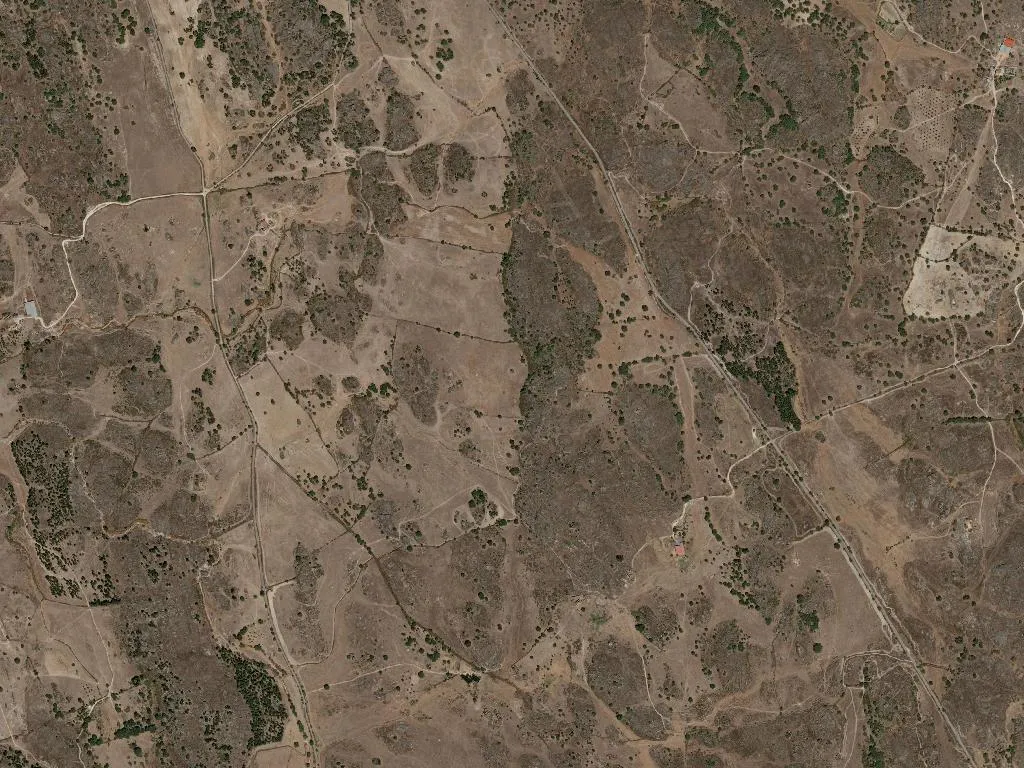
The only sound is the soft scuff of boots on baked earth. At 380 metres above sea-level, Santiago Maior spreads across 5,883 hectares of cork oak and centenarian olive groves where schist ribs push through the soil like the bones of some buried beast. There are 331 souls on the parish roll—fewer than live on a single London Underground carriage at rush hour—and their stone cottages, trimmed with hand-chiselled parapets, stand just far enough apart for a sparrow’s call to dissolve before it reaches the next door.
Stone memory
The medieval parish church still anchors the scatter of hamlets. Dedicated to St James—Santiago—the building went up soon after the Knights of Santiago helped push the Moons back beyond the Tagus, fixing this borderland for Christendom. Nine monuments are listed: three by the town hall, six by the state—wayside shrines, granite crosses, a granary raised on mushroom-shaped staddle stones. Together they amount to one classified site for every 37 residents, a ratio that turns the whole landscape into an open-air museum where the captions are written in silence.
Between plain and sierra
Santiago Maior is neither the flat Alentejo wheat ocean you see from the train at Évora nor the high granite of neighbouring São Mamede. It is a rumpled in-between: schist hills creased like un-ironed linen, dark-holm oak trunks corkscrewed by centuries of Atlantic wind, silver olive foliage flicking light like mirror shards. No nature park status protects the terrain; instead it survives because no one has found a reason to remodel it. At dawn mist pools in the hollows; at dusk the low sun rusts every scrap of exposed rock the colour of oxidised iron.
Tastes with papers
Food here arrives with legal credentials. Around the village, olive groves produce Azeites do Norte Alentejano DOP, a green-gold oil with an artichoke bite. Chestnuts come from the Marvão-Portalegre DOP hills, the milk for Queijo de Nisa DOP and Queijo Mestiço de Tolosa IGP is from sheep and goats that graze the same scrubland you have just walked across. In winter the table is lamb stew thickened with bread; in high summer it is gazpacho of tomato and cucumber followed by almond-sweet “little cheeses” that dissolve like snowflakes on the tongue.
Slow time
There is no annual fair, no procession that blocks the lanes with bumper-to-bumper devotion. Instead you clock the day by the angle of light on a stone cross, by the way a farmer still threshes grain with a wooden flail, by the exact shade of grey-green when a cork oak catches your eye. The rhythm is accretive: one conversation, one black-shuttered window left ajar, one distant bell answered by a sudden sparrow burst. By late afternoon the sky performs its daily alchemy, turning whitewash walls the colour of burnt sugar, and silence stops feeling like absence and becomes instead the space in which the entire parish seems to breathe.