Full article about Monte da Pedra: where silence tastes of paprika sheep cheese
Alentejo’s emptiest parish rolls out cork-oak oceans, thyme-scented cheese and iron-slate reds
Hide article Read full article
Sunlight on Stone
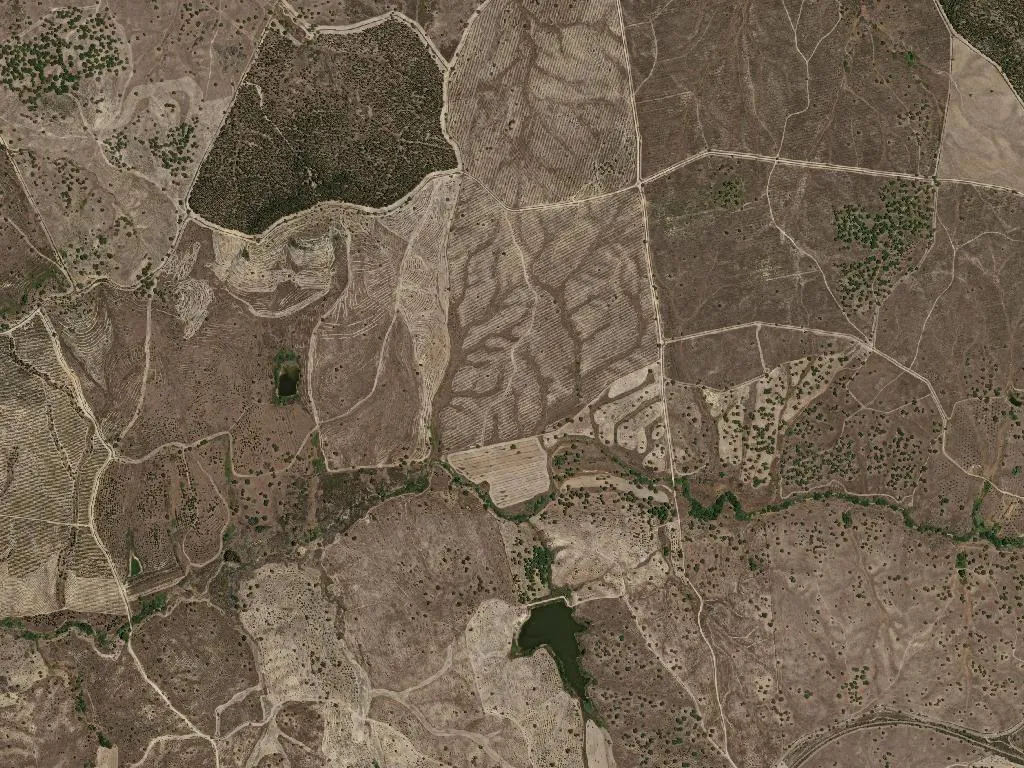
The Alentejo light hits Monte da Pedra like a physical force. At 232 m above sea-level the land lies open, a pale sheet of wheat and grass on which 222 souls are scattered across 6,050 hectares—three point seven human beings per square kilometre, if you do the maths. Between one whitewashed farmhouse and the next stretch kilometres of cork oak and holm oak, their trunks elephant-grey and fissured, canopies clipped into perfect green clouds by decades of heat and goat. Walk the single road at 11 a.m. and the only sound is your own soles on grit; the parish clock, when it remembers, strikes as though through cotton.
Olive Oil, Cheese and the Taste of Distance
The pantry here is dictated by radius. Within it: olive oil stamped DOP Norte Alentejano, pressed from trees that have survived every August since the 1950s; Queijo de Nisa DOP, a sheep’s-milk wheel whose rind is rubbed with sweet paprika and left to firm for forty days; and its cousin, Queijo Mestiço de Tolosa IGP, a gentler blend of goat and ewe that carries the scent of thyme and cistus the animals graze on. The vines, trained low to the ground like obedient dogs, give grapes thick-skinned enough to turn into reds that taste of iron and sun-baked slate. No one rushes the fermenting vats; they keep the same tempo as the cheese cave, the bread oven, the seasons.
Living with Horizon
There is no monument to queue for, no interpretative board. Monte da Pedra offers instead the dazzle of scale: an amphitheatre of land that shoves the sky upwards and makes every human gesture feel miniature. The parish’s two guesthouses—both converted montes, or isolated farmsteads—open their gates onto this contract: you wake, you walk, you listen. The footpaths are unsigned; you follow stone walls that dwindle into nothing, kick up dust scented with wild rosemary, watch a single black-winged kite hang in the thermal. Night brings a silence so complete you can hear the blood in your ears, and a Milky Way washed clean by the absence of city glow. The stone that named the place is underfoot—schist and granite used to build the walls, the houses, the bread ovens—proof that the geology here is not backdrop but building stock, the original and only scaffolding.