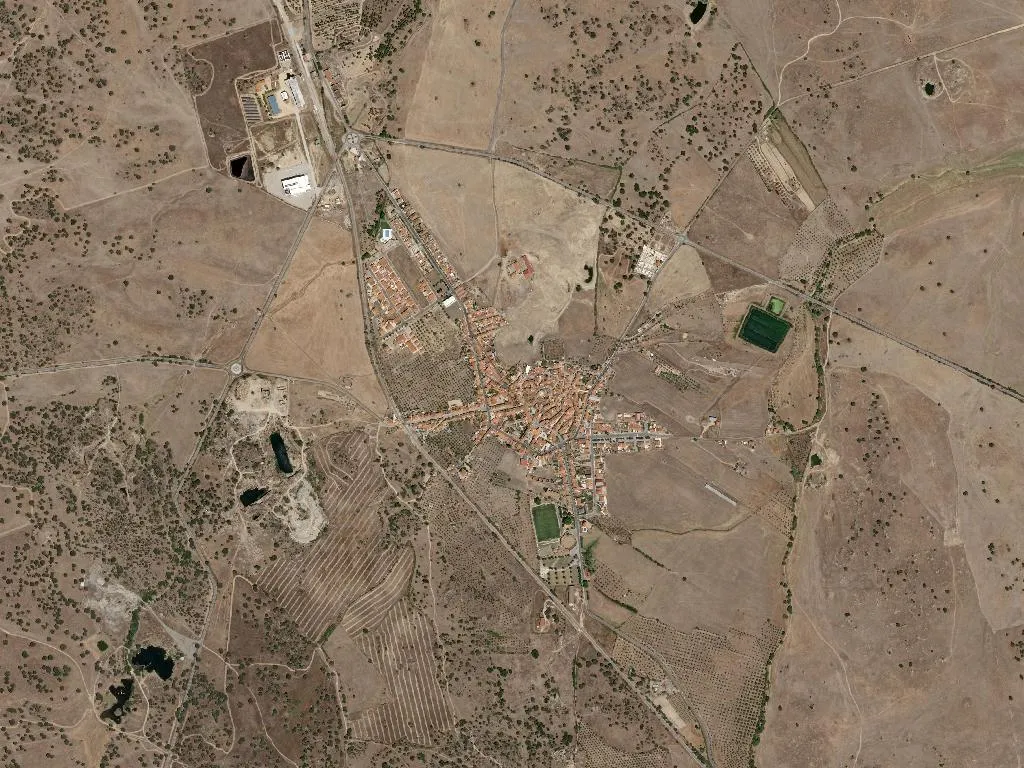
Full article about Santa Eulália: Stone & Saffron on Elvas’s Edge
Granite quarries, Baroque naves, coriander-sharp soup—Alentejo soul 17 km from Elvas.
Hide article Read full article
Granite that once built fortresses
Santa Eulália exists because stone was needed. The same pale granite that now warms under wild thyme supplied, cart-load by cart-load, the building of Elvas’s star-shaped bastions. Locals still point to the quarries—abandoned steps of rock where oregano now grows—and explain how their grandfathers led donkeys the 17 km to town at dawn, sold the stone to the army engineers, and walked back at dusk with just enough coins for bread and olive oil. The parish coalesced in the seventeenth century when the Igreja Matriz went up in sober Baroque dress: three naves, a side balcony where women still gather after Sunday mass to discuss rainfall and grandchildren. Inside, the gilded woodwork was left to darken until a recent priest had it cleaned; now it catches the high windows’ light and throws restless shadows against whitewash, as if the congregation’s whispered gossip had taken physical form.
Smaller, earth-floored Capela de São João stands at a nameless crossroads; the ground still smells of tallow from candles once lit to Saint Blaise for children’s sore throats. Military history lies scattered across the countryside: stretches of eighteenth-century roadway now bruised by bramble, single-arch bridges avoided by tractors for fear of cracking their decks, granite calvaries where funeral processions halt for the last blessing. On ridges, three windmills—Telheiro, Pato, Cepo—keep their broken sails raised like arms refusing to surrender. The Ventura mill, grinding until 1974, still has one blade hanging by a single iron pin, permanently pointing at the sky.
Tastes of the border
Cooking here tastes of Alentejo but listens to Spain. The coriander-sharp dogfish soup is made with yesterday’s country loaf and a thread of new olive oil that blossoms on the surface. Lamb stew is lifted by wild river-mint gathered from the Cuncos stream; tomato açorda receives its poached egg only when the bread is already “spitting” the tomato back out. In the parish hall—plastic tables, strip lighting—the olive oil is always Lagar do Barão, pressed on a stone wheel that Joaquim still turns with his left hand; his right never came back from Mozambique. Olives arrive in September in wide-mouthed jars, filled while the wind carries the sweet reek of grape must from Elvas’s harvest. Tolosa’s mixed-cheese—“sheep’s milk with a goat’s breath”—is never eaten fresh; it is sliced and dried until it can be crumbled over charred bread and washed down with Zé Manel’s rough red made in the adega where his father died.
There are no restaurants, only tables pulled into the kitchen when visitors appear. Food is placed in the centre, wooden spoons cross, and conversation is limited to “pass me that” until a ringtone of Spanish bulls interrupts. Pudding is arroz-doce scented with Chinese cinnamon that Maria do Carmo buys in Elvas market but swears “came from Badajoz—cheaper”. The only souvenir you are offered is a paper twist of dried Elvas plums, their wrinkled skin the exact colour of the town’s seventeenth-century ramparts.
Horizon without haste
Cork and holm oak roll out a tawny carpet, stitched together by dry-stone walls where lizards lay their eggs. From a slight rise beside the N246—nothing more than packed earth and a granite boulder carved “1952”—you can trace the line of Elvas’s castle to the south and the Spanish sierras to the north. At seven o’clock, when the mountains of Extremadura are still rolled in fog, the fortress towers look close enough to touch with an outstretched finger.
Summer pushes 45 °C into the cracked earth; children sprint barefoot for the stone tank at Celeiro. In winter, hoar-frost sheets the pastures and women walk to mass wrapped in blankets and fingerless gloves, the cold sliding straight into bone. Rural footpaths—Canada do Ferro, Barroco, Vale do Grou—invite slow walking across land once scratched for wheat and now bright with rock-rose that smells of honey when the sun hits it. The self-guided Granite Route skirts abandoned quarries where stonemasons from Vila Viçosa once left behind ashtrays and walls that time has folded like pastry.
No nature reserve is sign-posted, yet the montado functions as one. Wild boar uproot vegetable plots at night; red-legged partridge clatter up from maize stubble; griffon vultures circle overhead, confident that here death is still dealt with by humans, not machinery. Even the tiny bullring—capacity 200 if everyone breathes in—keeps its August date: bulls from Badajoz, amateur forcados from Alcácer, tickets €10 with a pork-bap included. In 2021 the parish council turned the priest’s old granary into an after-school club, the only place where children can shout without grandmothers shushing them for the siesta.
By late afternoon the granite relents, its edges softening to a dove colour. Silence thickens, but it is not absence—simply the audible version of space. You hear it in the wind combing through the cork oaks, carrying the scent of warm earth and the first fallen olives, and in the knowledge that the next settlement is half an hour away, the next city an epoch.