Full article about Vila Boim: Alentejo’s Whisper-Walled Republic
Vila Boim, Elvis parish, hides arrow-scarred keeps, DOP plums and 42 souls per km² of silent Alentejo plain.
Hide article Read full article
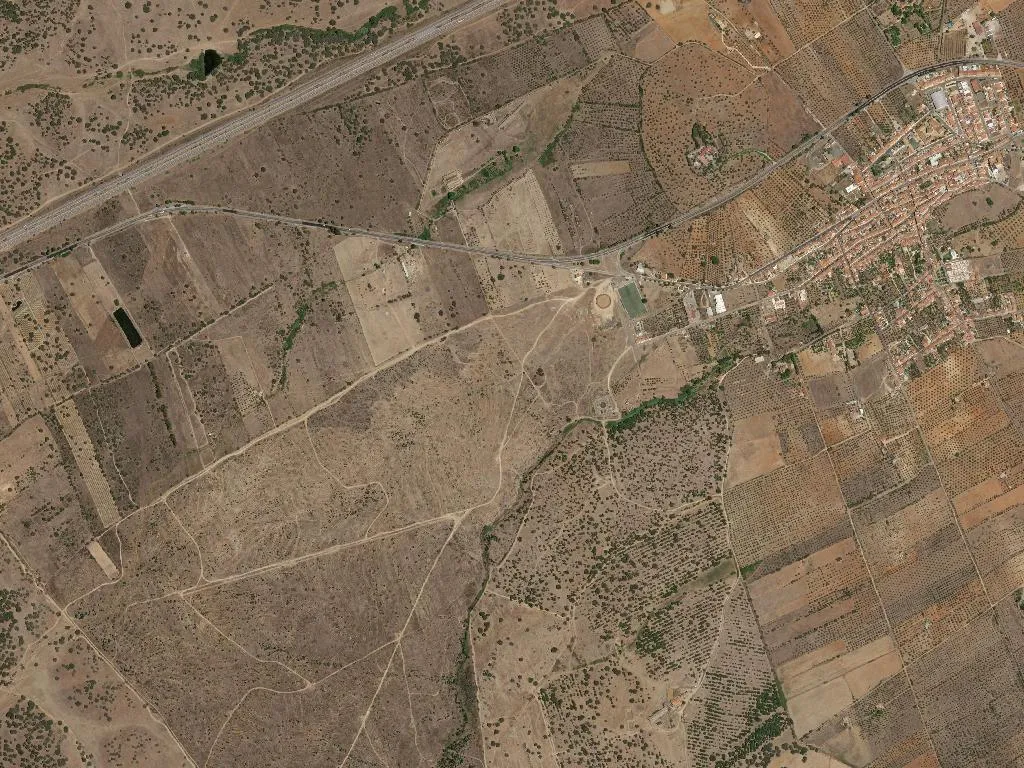
The first light razors across schist walls, striking the granite of doorsteps still warm from yesterday’s sun. At 382 m, the air carries the mineral scent of damp earth blown in from olive terraces that stitch the surrounding plain. Vila Boim wakes reluctantly, as befits a place that once governed itself and still behaves like a small republic.
A Surname Turned Landscape
It is the only parish in the Alentejo named after a 13th-century Minho nobleman. Dom João Peres de Aboim, troubadour-courtier in the household of Afonso III, was granted wasteland here in 1258 and coaxed settlers south. The king’s charter arrived six years later; by 1374 ‘Villa do Boym’ ranked as a municipality, a status it kept until the Liberal reforms of 1836 stripped it back to a parish. The switch from ‘Aboim’ to ‘Boim’ is phonetic Alentejo: consonants softened, syllables sun-bleached. The castle keep still shows Spanish arrowheads: Castilians seized the fortress in 1658 during the Restoration War, and Philip II had overnighted there decades earlier while courting the Duchess of Braganza.
Silence by the Square Kilometre
With 1,052 residents spread over 25 km², the arithmetic is audible: 42 people per square kilometre equals long, echoing pauses between footfalls. The demographic seesaw tips sharply towards age: 282 seniors, 120 under twenty-five. Morning unfolds in decrescendo—shutters open like slow hand-claps, coffee is measured out in conversational lulls, and even the parish priest seems to observe an invisible metronome.
A Plate with Papers
Local produce arrives already footnoted. Plums from the surrounding orchards dry into Elvas DOP greengages, wrinkled and musky, the same fruit shipped to London Victorian Christmas tables. Cold-pressed Gallga olives yield Norte Alentejano DOP oil, green enough to sting the throat. The same varietal is cracked for Elvas & Campo Maior DOP table olives, cured in brine scented with wild oregano and served alongside Tolosa IGP sheep-cheese, its semi-soft paste sharpened by thistle rennet. Wash it down with reds from the Portalegre sub-region, where 30 °C days collapse into 15 °C nights, giving Touriga Nacional the tannic spine to outlive its drinkers.
Within Cannon Range of a World Heritage Site
Six tourist houses constitute the entire accommodation stock, yet guidebooks push the village as ‘bed-space for Elvas’. Ignore the pitch. The walled garrison-city is ten minutes west—UNESCO-listed star-shaped forts, dry ditches, and the world’s longest bulwark bridge—but Vila Boim refuses second-city status. Its own castle ruins host nesting storks, the lanes pre-date the Vauban grids below, and the only queue forms at the bakery when the wood oven is lit at dawn.
Late sunlight re-heats the battlements, casting the olive grid as a bronze tapestry. Somewhere a bread oven is sealed, releasing the resinous smell of holm-oak smoke. Vila Boim offers no spectacle—only the quiet gravity of a place that once minted its own council minutes, repelled invaders, and now, between earth and sky, simply persists.