Full article about Belver: Knights’ keep above the whispering Tejo
Granite castle, schist lanes and one last bell toll above Portugal’s quietest Tejo bend
Hide article Read full article
The Warmth of Granite and the Hush of the Tejo
The pale granite walls absorb the afternoon heat and return it in almost visible waves. Below, the silver ribbon of the Tejo meanders slowly between banks where green clings to the water. Here, at the summit of the hill, the wind arrives without warning, carrying the scent of dried thyme and the distant sound of a bell that marks the hours as it always has — with the certainty of someone who is never in a hurry.
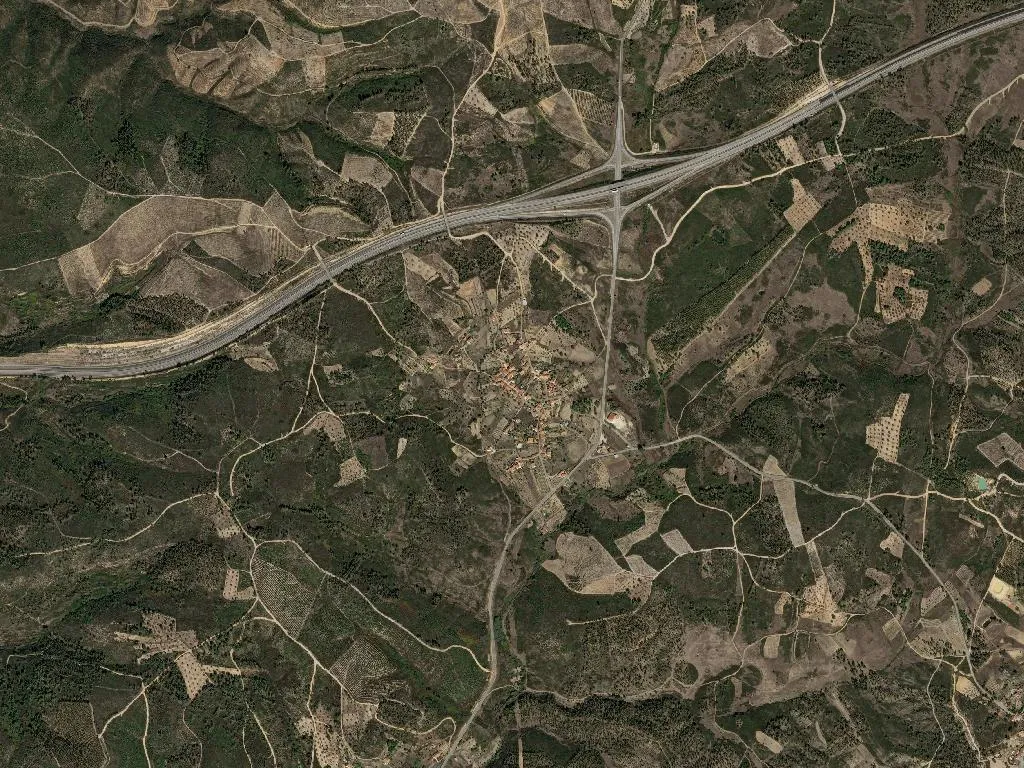
Belver clusters around its castle like a village that has never doubted its reason for being. The fortress, raised by the Knights Hospitaller before 1212, was the order’s first bastion on Portuguese soil. King Sancho I had made his grant of land conditional on the building of this stone sentinel, and gave it a name that still feels apt: Bela Vista, the Beautiful View. From the battlements the eye ranges over kilometres of rolling plain, the invisible line where Ribatejo merges into Alentejo, the geometry of fields that shifts colour with the season.
Stone that remembers
The streets zig-zag downhill, paved with dark schist that gleams after rain. Whitewashed houses reflect the midday light with an almost painful brightness. Five hundred and sixty people are scattered across nearly 7,000 hectares — a density you feel in the hush of morning, the echo of your own footsteps, the minutes that pass before you meet another soul. The population has aged: 344 residents are over sixty-five; only twenty-six children still race across the cobbled squares.
Inside walls classified as a National Monument since 1910, Romanesque stone now shares space with two improbable museums. In the old castle kitchens the Soap Museum displays copper cauldrons and wooden moulds that once belonged to the village’s last soap-maker, Maria do Céu, who kept the craft alive until 1998. Nearby, the Weaving Centre unveils the Belver blanket — red diamonds on undyed wool — shown publicly for the first time since the Évora Museum acquired it in 1976. The women who wove them, nicknamed batuecas, gathered in winter around the pillory square with their small wooden looms, examples of which still turn up in village attics.
Tastes with a postcode
At the grocery "O Cantinho", Rosa Guardado sells queijo mestiço de Tolosa wrapped in olive leaves — a practice that earned her the producers’ association honour prize in 2019. Ribatejo olive oil, DOP-protected since 1996, is pressed 12 km away in Cardigos, where granite millstones still grind the fruit on the first weekend of November. In the restaurant "O Castelo", António Ramires ladles out sopa de tomate à belverense, a recipe his grandmother was already cooking in the 1940s for railway workers who paused for lunch before crossing the Tejo on the flat-bottomed ferry.
Paths that follow the water
The PR1 "Rota do Tejo", way-marked in 2017, drops from the castle gate to the riverside in forty-five minutes. Beside the tiny wharf, the 1906 customs house — built when cork was taxed on leaving the river — now shelters paddle-boarders at high tide. Birdwatching is serious business here: in winter 2022 the Portuguese Society for the Study of Birds logged 120 avocets in the temporary estuary that forms when the river level falls. At 17:30 on summer evenings the passenger boat "Cacilheiro de Belver" returns from Constância, the sun catching the castle tower and throwing a perfect triangle of shadow that reaches almost to the chapel of São Brás — exactly as Father Agostinho de Santa Maria described it in his 1622 "Paradisus".